Showing posts with label details. Show all posts

Wednesday, September 14, 2011

On Being Mentored: Featuring Lynn Austin-7 Time Christy Winner


Not all of us have the opportunity to invest one month to envelope ourselves in research for our story, yet we wish we could. Today seven-time Christy winner, Lynn Austin, tells about her exciting opportunity to research details for one of her book series.


Lynn was the keynote speaker at the Write to Publish Conference the first year I attended. She shared this story. Her messages were inspirational and engaging--I still remember what she said six years later! I've asked her to mentor us today.


Hi Mary,
     Thank you for inviting me to share my research process with your readers. The Chronicles of the Kings series was the first set of books I ever wrote. I was still learning how to research.


     Since this series about Hezekiah was set in Israel, I longed to see the setting for myself. Unfortunately, that wasn’t possible, at first. 


     I began poring over every book I could find on Israel using Jewish sources as well as Christian ones. Since Isaiah was a main character, I read commentaries on the book of Isaiah until I felt as if I knew the prophet thoroughly. I also subscribed to a magazine called Biblical Archaeological Review which gave a host of information on discoveries and ancient practices. The magazine also listed volunteer dig opportunities in Israel—I made up my mind to go on one.


     My kids came down with chicken pox a few days before I was scheduled to leave—and then my husband got them, too! He is my biggest encourager; he told me to GO to Israel! Our oldest son, who was 14 at the time, went with me even though he was still recovering from the chicken pox. Crazy!


     We spent 5 days eachh week on the site, digging from 4:30 am (!) until noon. We spent part of the afternoon with the archaeologists, learning about the culture and the discoveries. We traveled from one end of Israel to the other, listening to lectures at all the sites (and I asked a million questions). It was amazing!


     Of course I knew my research had to include a walk through Hezekiah’s tunnel, still intact beneath modern Jerusalem. I didn't particularly like dark, tight, cave-like spaces, the tunnel was all of those things—plus it still contained ice-cold, thigh-deep water! 


     I walked through the tunnel with only a tour guide and one flashlight. Midway through, the guide turned off the flashlight. “See how dark it is?” I nearly had a panic attack! That's when I decided one of my characters (Eliakim in Book II) would have to experience what I did.


    The best part of the trip for me was to live in Israel for a month and keep a record of the sights, sounds, smells. These sensory details and weather patterns bring a story to life.


    I always purchase books to take home and remind myself of what I learned. Pictures help me a lot. I decorate my work area with photographs and drawings that take me back to the original setting.
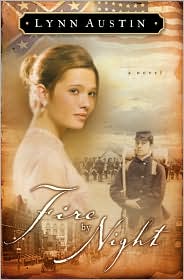

     I actually enjoy doing research. But after completely immersing myself in the facts of the story’s time period, it becomes very “tricky” not to start spewing them out in my fiction. I would say that of all the information I collect, only a very small percentage of it ever shows up in the novel. The rest is in my head and my heart, creating an “atmosphere” in which the story is allowed to breathe.


    It took me much longer to research this first series than it does for books I write now. 
    
    I still spend at least one to two months researching and visiting the site (if possible) before I start writing. And I don’t stop researching. It’s an on-going process throughout the year it takes to complete each novel.


Blessings,


Thank you, Lynn! 


Lynn then blended sights, sounds, textures, information, smells, and tastes from Israel into her story as a weaver would fashion a design into tapestry. When such works of art are completed, the well crafted intricacies go undetected unless pointed out by a guide. 


Here--take a look for yourself--


--from Lynn's book Among the Gods (book 5) p.339


Joshua held the oil lamp in his right hand, feeling along the clammy wall with his left as he slowly groped his way through the meandering tunnel. He had only been inside it once before, with his father, but the suffocating darkness, the weight of the rock closing in around him, the terrible heaviness bearing down on top of him, were all so familiar it was as if he had been inside this tunnel many times. The icy water grew deeper as he sloshed through it, the passageway narrower, like his lungs as he struggled to breathe.


He inched his way forward, searching for nearly ten minutes before he found what he was looking for-Abba's inscription. He held the light close to read the words his father had chiseled into the stone, feeling them with his fingers. "Behold the tunnel..."


Those were the only words he managed to read before a spasm of coughing overwhelmed him. As he fought to catch his breath, the lamp jostled in his hand. The wick sputtered and sank beneath the oil. The flame died. Joshua plunged into total darkness.


"Abba!" he cried out in panic. But his father was dead, and his Heavenly Father was too far away to hear his cries. He knew that his own anger and forgiveness had separated him from God. They were the true source of his darkness, just as Miriam had said. When he'd turned his back on God, he had walked away from the only Source of light.


Joshua's limbs went numb with terror. He wanted to run from this terribly black void, but he was too dizzy and disoriented to move. He shivered, shaken to realize that Manasseh had lived in this eternal darkness, this midnight of the soul, for most of his life; now Joshua was lost in it too. How would he ever find his way out?
from Among the Gods (Book 5) p. 339, used by permission.


Have you visited the setting for your WIP/book in person or with a video media?
How has visiting the setting benefited your story?
How have you blended pages of facts smoothly into your book?


Lynn said she would stop by today to answer questions. What would you like to ask?

Wednesday, August 31, 2011

On Being Mentored: Siri Mitchell's Detailed Accuracy

I sat down at my computer, closed my eyes, and pictured the scene I was about to write. 
I saw______, 
I heard ________, 
I touched ________, 
I tasted _________, 
and I smelled________. 

I painted a picture, a 3-D picture with rich words. Yet for some reason my story seemed superficial.  


Master writers like Siri Mitchell nominated for this year's Christy Award and Lynn Austin 5 time winner of the Christy Award have conquered this problem by: 


**Investing hours, days, weeks, and even months researching their topic
**Filtering through pages of information to include only select valuable details
**Blending the information into the action/dialogue/setting/plot/theme with master craftsmanship

so that....

Readers 

Don't 

Notice 

their great investment.


Take a look at this scene from She Walks in Beauty by Siri Mitchell, page 34

     The corset had placed me in an unnatural position, and I could find no comfortable posture in which to sit. Moreover whenever I moved, at lest one of the corset's six hundred bones poked into my sides. I counted the hours until I would be able to take it off and sleep.
     But that night, after the maid had removed the corset cover, she handed me my nightgown.
     "But you've forgotten to remove the corset."
     She curtsied. "You're to wear it, miss."
     "I know, And I do. I will. But now it's time for sleep." Aunt had trouble finding maids that performed to her satisfaction. I was beginning to think this one's time, too, was limited.
     "You're to wear it while you sleep, miss."
     "While I sleep? But if I wear it, I will not seep!"
     The maid bowed her head and curtsied again. "Twas the missus's orders." 
     If I could have reached the laces, I would have untied them myself. I had tried, in fact, that very afternoon. But they were located at the back of the garment and tucked into the corset where I could not find them.
     "Your nightgown, miss?"

WOW!

I asked Siri to share her research information with us today.  


Mary –

Thanks so much for thinking of me for your series!

I research all of my books the same way. 

I try, first, to read broadly about the period, looking for books on the general historic era. 

After that, I search for social histories that give more insight into the way people thought about themselves and the world in general. 

At this point, I try also to find books that focus on the women’s history of the period. If I can find them, I try to read some biographies or journals kept by women or some books from that era as well. 

After reading generally, I turn toward specifics: books about food, furniture, clothing, professions (if applicable), etc.

I’ve found YouTube to be a great source for old-fashioned dances and sites like SnapFish and Shutterfly to be useful for photos taken of places like Plymoth Colony, Castles in Europe, or other tourist sites that are still in existence.

I usually end up with between 200 and 300 sources for each book. Most of these are from the internet (a great source for digitized primary documents and out-of-print books), but a fair number are books. 

I’m attaching my bibliography for She Walks In  Beauty so you can see the books I read through
She really sent me the list!  Unbelievable!

I usually spend a month or two reading up before I start writing. I prefer to have all the ‘big picture’ research in my head before I start so I can ‘feel’ the era. I don’t mind leaving some of the more specific research (food, clothes, hairstyles) for later drafts.


Let me know if you have further questions. I’d be happy to answer them. And thanks so much for supporting my books!


-Siri
author of A Heart Most Worthy,
She Walks in Beauty, Love’s Pursuit,
A Constant Heart, & Chateau of Echoes

Thanks for the great insights, Siri.

Well, I have more to say on this topic. AND I simply must tell you about Lynn Austin's modeling.
So, I will continue this topic in my next post, September 14th.


Do you have questions for Siri regarding her detailed accuracy craftsmanship?
Have you mastered this skill and are you willing to share tips or examples?
What research did you do prior for your WIP?
How have you changed boring details into exciting text?


Siri not only modeled how to let her reader see and touch the corset--Siri modeled how to let the reader wear the corset

**from She Walks in Beauty by Siri Mitchell, used with permission

Tuesday, August 24, 2010

Seize the Moment

Each step is a promise given.

Each word written is a chance taken.

Each moment lived is another opportunity to dance for the King.

Every day is a moment in time, a drop of ink in the fountain pen of life.

Each experience lived is a gift from God to bloom and grow on the screen of your imagination.

As writers we have a unique mindset. You all know what I am talking about. We see a story opportunity in everything we see. We see every event or mishap or catastrophe or joyous occasion as something that will give fodder. Our ever hungry imaginations, starve to be fed, mulling over and conjuring up a new story idea that will appear in the dark of night-- an idea you are sure to forget by the light of day.

We cannot shy away from this gift. This opportunity from God to grow and grab hold of every opportunity as a chance to add depth to our fiction. Even the most seemly insignificant moment in your life can be ballooned to give that special something to your fiction.

The best fiction has depth. Subtexting those emotions and thoughts lurking just below the surface, but aren't really written. That dialogue that speaks so much while saying so little. We all want to write the fiction that makes the reader think. Even if it is the most comfortable and laugh-out-loud chick lit, we still need to add depth to it. An opportunity for our readers to walk away from that book saying, "I was really entertained, but I feel strengthened in my faith too."

We have a wonderful responsibility in fiction. To entertain, but also to enlighten. To strengthen the walk of our readers in their faith. To let God use our words to speak to their heart.

And we can't do that to our greatest potential unless we learn to seize the moment. To view everything that happens to us and file it away for future use. God gives us these moments in time and as writers we need to take every single one as a golden opportunity.

Friday, June 11, 2010

Spectacular Settings: Avoiding bare walls and 3-sided houses

It never fails.

Except for the occasional low marks for "is this appropriate for the CBA market" (I don't call my books edgy, but they are more so than some) my lowest contest scores are for setting and/or sensory details.

I've tried to analyze why I evidently struggle with this and have come to a few conclusions.
  • I dislike books with too much details. I really don't care what hue the grass is, and need a paragraph describing the details of the room the character just stepped into, because well, *yawn*. So, in my own books, I tend to overcompensate and use too little detail sometimes, which can be just as bad!
  • I am an action kinda girl. I focus a lot of what is going on. I love dialogue, so the descriptions are something I have to work a lot harder at.
  • I'm naturally an "overlooker." Funny story. My husband gets irritated that I *ahem* sometimes forget to close a cabinet door in the kitchen. A few years ago, we all sat down for dinner one night, and I had to get up, walk through the kitchen, and get something out of the garage (can't remember what, go figure!) Anyway, I walked back in, walked through the kitchen, and sat at the table again. My husband sat there dumbfounded. I asked him what his problem was, and his mouth quirked to the side, and he said, "You really just don't notice it, do you?" Then he simply got up, went into the kitchen, and proceeded to close every kitchen cabinet and drawer. He had gotten up while I was in the garage and opened EVERY SINGLE ONE of them, wide as can be, just to see if I would notice. I failed his test, as it didn't even phase me. Some may call this scatterbrained, I choose to call it focused on my task:-)
So, what is a girl to do who tends to breeze over sensory details? Who LOVES a good dialogue and rolls her eyes at flowery descriptions of settings?

First, I realize that it's okay ... to a point. My books will never be lyrical ones that make someone intake their breath at the awe of the setting. They will appeal to those who like faster paced romance novels.

Second, I admit I have a problem. Knowing this is an area I'll always struggle with is important, as I can put extra attention on it during the editing process.

Third, and what I'm going to focus on today, is I equip myself with tools. At my heart, I'm a visually learner. I can describe something much better when I'm looking at it. Once I see it, I can then close my eyes and picture it. But if I haven't seen it, it's fuzzy at best.

Oh, wait, before I give you my tools, another funny note (I love funny stories, SORRY!) The other day, I was writing a scene in my WIP and trying to visualize the room, with not a lot of luck. I tried to draw it out on paper, and I realized quickly what was missing.

A wall.

That's right, my heroine's house had only 3 walls. Kinda like a TV sitcom set. I'd set it up so I could see it in my head, but if I turned around... all I saw was ... the reader (aka audience.) It was also then that I realized the house I was picturing in my head was really the one from Everybody Loves Raymond... Remember that show? Hilarious! Anyway, I digress ... I'd never realized I'd fashioned my heroine's home that way!

Okay, back to my point.

Here are a few tools that might help you fill those walls and have a complete, 4-sided house.
  1. Real-Estate. I've started to go online, usually in the area of where my setting is, and search for houses for sale. Not that I'm going to buy my character a house (wouldn't that be hilarious?) but using a real house as a mock-up is SO helpful. Not only can you see what "normal" houses are like for that area, but you can also find one with a decor that would fit your character and save the pictures you find online for use later when you are trying to visualize and add descriptions for your setting. *Note* Don't do what I did the first time and bookmark the page. Houses do sell occasionally ya know! Instead, right click and save the pics into a folder for your WIP. Some good websites are: realtor.com or your local real-estate agent's website. Here in TN we have realtracs.com which I use a lot.
  2. Maps. Not just any ol' map, though. We live in a techno age where we can get satellite maps that go right down to a curb-side view sometimes. Scary, I can see my van parked in front of my house on google maps! This works great for helping you visualize your town, especially if you don't live near it and need to figure out what exactly is between the pizza parlor and the gas station. Even if you are using a fictional town, sometimes using a real town as a guideline is helpful too and can save some time and effort:-) Google Earth is also a good resource for this.
  3. Zillow. Similar to above, but I love Zillow because it will give you a TON of information on houses including a map and some information about the communities. Depending on the area, you can even find out what houses have sold for to give you an idea of if your character could really afford that 4 bedroom in the suburbs.
  4. SHOPPING. I don't do a lot of shopping online for my family, however I DO shop online for my characters. If I need a fun outfit that I'm having trouble visualizing, I might go to macys.com, kohls.com or any other department store online and pick something out. Having a picture of the outfit my character is wearing sometimes helps me be able to describe him/her better. Or, I might need some cool home decor, so furniture stores online are great places to scope it out (roomstogo.com or ashleyfurniture.com ... just to name a few.)
  5. Take a Drive. Sometimes, when all else fails, get in the car and drive around. Be intentional about taking in the scenery, looking at landscape designs, picking out what your character's tastes would be. For me, I have to have this be my focus in order to take it in, as I rarely do if I'm driving around to "do" something else.
So what about you? Are you one that takes note of every detail, or are you an "overlooker" like myself? Regardless, what do you do to ground yourself in a setting and relay that to your reader without making them yawn?

Wednesday, June 2, 2010

Details Elementary, My Dear Watson

By Mary Vee


Can you imagine driving through a mountain pass, rounding a curve and finding this spectacular view? It’d happen on the Chief Joseph Scenic Parkway in the Rocky Mountains.


Last weekend, as my family drove passed this lake, I shouted, “Stop the car!” I stepped onto the side of the road and heard a single sound. A duck hidden somewhere in the still silence had something to say. Where was it? I couldn’t see it.


I pressed the zoom and focused my camera on the brush. Brilliant details came to life, colors I hadn’t noticed, plants I hadn’t seen, reflections in the water. I snapped the photo.


Still, I could barely see the duck.

I zoomed the lens again until the duck appeared. It was there all the time!

Standing on the outskirts of this magnificent creation, I realized the one component that caused me to dwell on the scene, was the one I couldn’t see. This small practically invisible detail completed God's picture.

Think about your favorite scenery. Something big might have captured your attention, but something small held your attention. Was it the smell of lilac, or the wood-burning stove? Perhaps you saw a splash of indigo barely visible in the rainbow, or the black specks on a flower. Maybe it was the prickly grass under your feet, or the silky material your arm rubbed against. Could it be the pungent dead skunk miles down the road so profuse you could taste it?

In Episode IV of Star Wars, the Dark Side boasted of it’s fully operational death star. Admiral Tarkin demonstrated its destructive power to Princess Leia by obliterating a nearby planet. But the race to dominate the Rebellion resulted in an oversight of details. While this battle station appeared dynamic, designers neglected important details which would thwart an attack by a single, small fighter. The result? Annihilation.

I must say that last paragraph was fun to write.

Details are foundational to our WIP (work in progress). Here is a checklist of some components you can look for in your manuscript:


1. SUFFICIENT DETAILS: Is each setting painted realistically, helping the reader to picture the scene in their mind? Is there a “don’t touch-wet paint” sign on park bench the Sunday before Memorial Day where the homeless person sleeps?

2. INTEGRATED DETAILS: Are details threaded throughout the manuscript? Sugar stirred into brownie batter is delicious, clumped in one area is…well...nasty.

3. ESSENTIAL DETAILS: Do the details add to your story? Sherlock Holmes solved every crime by noticing essential details. During each story his assistant asked, “How did you know?” Mr. Holmes replied, “Elementary my dear Watson …” and preceded to point out the detail right in front of Watson's nose.

4. TOO MUCH!: Is there a page-and-a-half describing a sword? Too many details distract readers from the real story, prevent use of their imagination, and can insult them into saying, “OK I know what a sword looks like!”

5. LOGICAL DETAILS: Do the details flow from one page to the next? Did Carl set his coffee cup on the mantel then a page later take a gulp from the same cup…before he picked it up?


While the grandiose (like the mountain) may pique our interest, it is the small detail that completes the picture and tells us—Yes, this makes sense!

Have you read a book and felt confused as to what was going on, who was doing what, where exactly was the character, or how did something happen? What if you added additional information to the scene, would it have helped? Here is the big question, have you noticed missing details in your own WIP? Tell us your own Sherlock Holmes story of the time you discovered something missing in your manuscript.