Showing posts with label Special Guest Saturday. Show all posts

Saturday, October 30, 2010

Special Guest Saturday: Camy Tang

Tips for Picking an Agent
By: Camy Tang


Picking an agent #1—FINISH THE MANUSCRIPT


Yes, I’m shouting.


Before I go into some tips on how to pick an agent (and possibly receive an offer of representation), I want to point out this very important part of the submission process.


For some people, this is a no-brainer, but I’m always amazed at people who’ve never heard this piece of advice.


Before you query that agent (or editor, for that matter), finish the manuscript. There are TONS of writers who never finish that first manuscript, and agents know this. Therefore, if they are interested in your story, they are going to want to see the full, completed manuscript.


For one, they want to know you finished it.


For two, they want to know if you can sustain your brilliance in the first chapter throughout the rest of the book. Many novels sag in the middle because the writer loses steam. If that’s the case with your manuscript, it’s not ready to submit. Period.


You want that manuscript ready to go if they come back with a manuscript request. You won’t want to make them wait for a few months.


Sometimes, the agent is interested in your particular idea because it’s hot in the marketplace right at that moment. If you wait, they might receive 20 other manuscripts of a similar idea and sell one of those instead. Or the market may be saturated. Or the market changes (which it always does).


Agents are also typically much faster than editors. They won’t often leave you hanging for months at a time.


Strike while the iron is hot. Make sure that puppy is primed and ready to submit.


Picking an agent #2—Do you like them?


This might seem like a dumb question, but think about it—here is your chance to choose who you get to work with. You want someone you get along with and who has the same work ethic as you do. You won’t necessarily be buddies, but you want to at least be happy to talk to them.


That’s why it’s good to research the agents you query. Read online interviews or buy CDs from conferences of workshops the agent gave, or agent panels the agent was on.


If you can afford it, go to conferences to meet them and talk to them. They don’t bite. Just get to know them, even if you don’t have anything to pitch to them.


You will get a good feel for who you’d like to work for, and which agent has the same types of goals you do in terms of career.


Picking an agent #3—To brand or not to brand


I’m going to flash around the b-word, so if you’re easily offended, skip this post.


Some writers agree with branding, some don’t. Some writers like finding a marketing niche, others feel it hampers their creativity.


There’s nothing wrong with either opinion, but your agent should agree with whatever your opinion is.


Some agents are heavily into branding. They not only pitch your manuscript, they’re pitching your brand, you as the writer. They’re pitching you so that the house will take you on and develop you as an author with that particular flavor of writing.


Some agents are more open to writers who want to branch out into different areas. They encourage creativity, no matter where that may take the writer. They can recognize good writing and push whatever genre manuscripts their authors put out.


There is nothing wrong with either side. But you as the author should decide which type of agent you want to target. That’s why reading their online interviews or listening to workshops on CD or meeting them at conferences is so important.


For more tips on picking an agent, check out the full blog post here:

http://storysensei.blogspot.com/2010/08/picking-agent.html


Camy Tang writes romance with a kick of wasabi. Out now is her humorous romance series (Sushi for One?, Only Uni, and Single Sashimi) and her romantic suspenses, Deadly Intent and Formula for Danger. Originally from Hawaii, she worked as a biologist for 9 years, but now she is a staff worker for her San Jose church youth group and leads a worship team for Sunday service. She has coordinated the ACFW Genesis contest for 5 years and runs the Story Sensei fiction critique service, which specializes in online classes and book doctoring. On her blog, she ponders knitting, spinning wool, dogs, running, the Never Ending Diet, and other frivolous things. Visit her website at http://www.camytang.com/  for free short stories and to join her quarterly newsletter YahooGroup!

Saturday, October 16, 2010

Special Guest Saturday: Interview with Susan Meissner!

Susan, thank you so much for being with us today! What a treat. You write such poignant fiction as is proven in The Shape of Mercy, where do you come up with your ideas?


These last few years I have been intrigued by events in human history, like the Salem Witch Trials, and the Warsaw Ghetto during WW II, Lady Jane Grey, and the idea that there are things about us that don’t change from century to century, such as the things we hold most precious and the things we fear the most. When I identify something in the past that has story value to the present, I just start stretching the idea to see how a present-day situation could be influenced by a unforgettable moment in the past. Usually when I come across a poignant or pivotal moment in history, there is something about it that speaks to us right now.

You have taught on writing a novel in just 30 days, would you care to give us a brief glimpse into your work with that?

I have found that if you are on very intimate terms with your novel’s plot and cast of characters you are well-equipped to start writing and enjoy some awesome momentum that - at least for me – allows me to write fast. 10 pages a day. Sometimes it's best to approach a big project with little, organized steps. I think of it as learning to produce 1½ pages an hour or 10 pages a day or one nicely-worded paragraph every five minutes. Before I begin the novel, I get the plot cemented in my head. I make sure I know what felt need I am going to address, and which reader sympathies I am going to appeal to. Then I make a character sketch of each cast member. The first character I develop is the one who is going be driving the plot, usually the protagonist. When I can deeply visualize all my characters, I usually do a better and faster job of creating action and dialogue for them. I give them hobbies, likes and dislikes, quirks, habits, talents, etc. Then I spend some time on their internal characteristics, especially the ones that will figure into the story arc. When I’ve decided on these details ahead of time, I find that I can usually write 10 pages a day for 30 days and not hit upon very many road blocks. Usually.

What inspires you in your writing life?

I guess you could say life inspires my writing life. I am wired to communicate, so as I observe life happening around me, I itch to say something about it, and the form of communication that scratches that itch best is writing. There is a world of truth out there that needs telling.

We all wish we could step back in time at one point or another, has there been any moments like that in your career that you wish you could go back and have a do over?

I can honestly say I can’t imagine doing anything differently and feeling okay with the unknown results. If I could go back and rewrite my own history, how would I know the results would be ones I would love or even like? With regard to my writing, if I did have the power to go back and take a different road, it would lead me to a place where I wouldn’t meet the same people I’ve met on this path. The friends I have made the past seven years I have been writing novels are so incredibly dear to me. I can’t imagine not knowing them or having them in my life to the extent I do now.

What advice do you have for the beginning/ struggling novelist?

First, surround yourself with other writers and begin to get some feedback from people whose opinion matters to you. Join the American Christian Fiction Writers (http://www.acfw.com/ ) and learn all that you can from the questions and answers that are posted to the main loop and in the forums and online chats. Novel-writing is a solitary pursuit so it’s wise to stay in community with other writers so that you can learn from them and grow as a writer.

When you have your novel finished or nearly finished, attend a writer’s conference so that you can share your concept one-on-one with editors and agents. There are many conferences to choose from. My favorite ones are the The Mount Hermon Christian Writer’s Conference (held every year the week before Palm Sunday) and The American Christian Writer’s Conference, held every third week of September. Both of these conferences are top-notch events, loaded with workshops to supercharge your writing. You can also sign up for 15 minutes of face-time with editors and agents at these conferences.

Subscribe to Writers’ Digest or another writing magazine that offers timely advice, interviews, and skill-building articles.

Keep writing, even when it seems like you are just swimming laps in a pool when no one is watching. Every Olympic medalist in swimming started out swimming laps in a pool when no one was watching.

How long did you write before getting “the call” and how did you make your writing available for the publishers?

I waited to post my proposal to an online site until my first book was finished. And while I waited to see if it would attract any interest I started researching for my second. I was found by my first publisher online, but the lion’s share of new writers are discovered at writers conferences during those 15-minute consultations with agents and editors. I definitely suggest you make your writing available for publishers to peruse after you’ve made it the best you possibly can. Have it finished, have it critiqued, have it edited. The competition is pretty stiff. You need to do all you can to have your project shine brighter than the thousands of other book ideas out there.

Of your books, does one stand out as being the “story of your heart” or a particularly moving one that has really stuck with you?

That answer changes every year when a new book comes out! Right now, Lady in Waiting seems the most personal and dear to me. It’s the newest and the closest to my heart. I suppose that might change in the fall of 2011 when A Sound Among the Trees is released!

Thanks so much for stopping by! I know I am very excited for your coming release, Lady in Waiting. Can you share a bit more about that before you go?

Lady in Waiting dovetails the historical account of 16-year-old Lady Jane Grey with a fictional woman named Jane whose husband becomes disillusioned with their marriage and walks out. Both women appear to be victims of other people’s decisions, but things aren’t always what they seem.

Lady Jane Grey was pushed to England’s throne in 1553 by power-hungry people who wanted a lot more than just a Protestant in power. Her story is one that shows the darker side of sixteenth-century politics. Lady Jane Grey is often remembered for being a pawn in doomed bid for power, bereft of choice and in the end a Protestant martyr, but she actually made significant life choices that impacted her fate as much as the choices that were made for her did.

My modern-day Jane, who finds an ancient ring that she believes belonged to Lady Jane Grey, sees parallels in her life and Lady Jane’s, especially when it comes to finding the courage to make a tough decision rather than defer. Through contemporary Jane, who is the collective “us” in the story, I want to convey that we can’t always choose our circumstances but we can always choose how we will respond to them.

We here at the Alley wish you the best Susan and look forward to more books from you in the future!

Thanks for having me!

Thank you for being here Susan, what a treat and honor! You can connect with Susan online here at her:

Website
Blog

Saturday, October 9, 2010

Writing Long Fiction or The Allure of Plus-Sized Books by Jack Cavanaugh

You can't get a cup of tea big enough or a book long enough to suit me.

—C. S. Lewis

My sentiments as well, only substitute coffee for tea.

Lewis and I aren’t alone. Whole herds of bookstore browsing readers are attracted to the width of a book’s spine, the larger the better. Apparently there’s still a place in this skinny-obsessed world for plus-size books.

As a writer, I prefer writing long fiction. I tend to think in stories 120,000 words long (approximately 480 pages) in a time when publishers are wanting books of 90,000 words. My American Family Portrait Series comprises nine hefty volumes, or 1,230,600 words. My Songs in the Night trilogy totals 334,500 words, or approximately 1,340 pages. Like I said, I like long stories.

So what are some of the things I've learned about writing long fiction? Three come to mind:

1. Long fiction is different than short fiction. Deep stuff, huh? But the difference is worth noting. The same disparity holds true for runners. Sprinters are built differently than marathon runners; they think and train differently. Even so, short story writers and epic novelists are dissimilar storytellers.

The difference is pace. Short fiction is a breathless dash, while long fiction—though it has its breathless moments—develops over time with leisurely scenes of intimacy and reflection. This varied pace is not an excuse for bloated detail or meandering storylines. Clean, crisp writing is just as critical in long fiction as short fiction. What attracts readers to long fiction is the accumulative rise and fall of the narrative; like a panoramic landscape, it is powerful and majestic.

So how does one learn to pace long fiction? Beginning marathon runners train with veteran marathon runners. So too, those who aspire to write long fiction must learn from those who write long fiction. Read long fiction. A lot of it. Not only read it, study it until the rise and fall of narrative action becomes second nature.

2. Not all writers can write long fiction. It takes a special talent. I learned this while reading James Michener’s autobiography. Michener is probably the quintessential long fiction writer. He pointed out that long fiction writers have certain intellectual equipment. They must be able to see the entire novel, to remember what every character said and did - and why they said and did it - over hundreds of thousands of words and months or years of writing. I had to know what my first character said in the first book on the first page when I wrote the last word on the last page of the ninth volume fifteen years later.

3. When writing long fiction it's best to have a roadmap. The journey of 1000 miles begins with a single step, and the writing of 1000 pages begins with a single word. So it's important that you have a good idea where you're going when you start out. J. K Rowling said that she knew the ending to the Harry Potter series before she wrote the first book. Having that kind of target makes it easier to aim every story element of your book in the right direction. When J.R.R. Tolkien had Frodo leave the Shire, neither of them knew every adventure that would take place, but they both knew that the journey would culminate at the fires of Mordor.

The map doesn't have to be chronological. For Michener, the map resembled a quilt, its characters and storylines linked by geography. He said, "I would break my narrative into splendid panels, leaving it to the reader to bind the whole together."

Probably the greatest advantage of long fiction is not the story itself—though there is nothing like snuggling in for a good long read—but the depth of characterization. Every year tourists stand at the front counter of the Atlanta Visitors Bureau and request the location of the graves of Scarlet O'Hara and Rhett Butler. What a wonderful testament to author Margaret Mitchell. This is long fiction at its best.

You can find out more about Jack's books on his website at http://www.jackcavanaugh.com/
or his blog at http://www.jcwordforge.com/
You will not be disappointed by the stories he creates. Brilliant, masterful, and definitely on the 'plus size' :-)

Saturday, September 25, 2010

Special Guest Saturday: Joseph Bentz

Voices in Your Head: When Characters Won’t Leave You Alone
by Joseph Bentz


Do characters take on a life of their own beyond the page? As a writer, do you find yourself taking on their worries, their pain, their triumphs? Recently a friend who is writing her first novel emailed me to say that she had been feeling sad at the end of her writing time because she’s writing a portion of the novel in which her characters are sad. Was that normal, she wondered?

My response is yes, it is not only normal, but it was probably a sign that her story is working. If her characters were so flat that she never thought about them or identified with them at any time other than when she was writing, I would be far more worried. One of the joys of writing fiction is the creation of an alternate reality filled with people and places and events that become almost as real to us as the everyday reality in which we live.

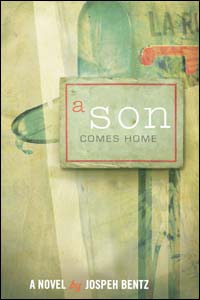
At the university where I teach, some of my colleagues invite me to speak to their classes when they teach my novel, A Son Comes Home. The students talk to me about the people in the story as if they’re real. We probe their motives and their actions. Some students demand to know what happens to the characters after the novel ends, as if the characters are real people whose history I must have kept track of. When I say that I have no idea what happens to any of these people beyond the pages of the novel, some students look at me skeptically, as if I’m deliberately concealing information from them.

As a literature teacher, I also experience this same sense of “reality” of my favorite novels that I teach year after year. Huckleberrry Finn is not a real person? To me he is. Atticus Finish is made up? Hard to believe. Hamlet is not a flesh-and-blood person? He is only words that Shakespeare wrote on the page? You’ve got to be kidding.

I have worlds of people and dramatic moments swirling in my brain, some created by writers hundreds of years ago who could scarcely have imagined me experiencing their vision here in the twenty-first century. Now, as a novelist, I have the opportunity to create a few people and dramas of my own, and those visions now float around in the heads of readers I’ve never met. What a joy! That thought alone makes all the hassles and rejections and insecurities involved in writing fiction worth every minute.

I told my friend to be grateful that her characters keep invading her mind even when she’s not writing about them. She should do nothing to squelch them. Let them grieve and worry and conspire all they want to. That’s where their depth comes from. The more they show up when they’re not supposed to, the better she’ll get to know them. She may need to keep pads of paper around the house to record these characters’ ideas and moods and words. Before long, they’ll begin to seem just as real as her husband or her children. She won’t be making them up. She’ll be listening to what they have to say. She’ll look forward to their next surprise. They’ll become increasingly complex and multi-dimensional, just like the real people in her life. She’ll want to spend more and more time with them. Even better, her readers will want to spend time with them too.

Joseph Bentz is the author of four novels and three non-fiction Christian living books. His most recent book is God in Pursuit: The Tipping Points from Doubt to Faith (Beacon Hill Press, 2010). Among his novels are A Son Comes Home (Randall House, 2007), contemporary novels published by Bethany House, and a fantasy novel, Song of Fire, published by Thomas Nelson. Bentz is a professor of English at Azusa Pacific University in Southern California, where he teaches courses in American literature and writing. More information about his books and speaking is available at his website, http://www.josephbentz.com

Saturday, September 11, 2010

Special Guest Saturday: Cara Putman

Turning an Idea into a Book
By: Cara C. Putman

People often ask me how I come up with my plots. It’s a great question and one that changes with each book I write.

Some books come from reading a newspaper article. Some come from hearing a snippet of a story or memory. Still others come from reading books. But each time is a wee bit different.

My latest novel is Stars in the Night, a story about Hollywood during the early days of US involvement in World War II. Glamour, glitz, and murder –what more could you ask for? Makes sense now, but at the time I was looking for a plot, I wasn’t quite sure where to start.

I was working on the last book for my second World War II series for Heartsong Presents and beginning to think about where I might want to set a future series. My husband, who is as big a World War II fan as I am if not more, and I were brainstorming one night. Since I’d done two series set in the Midwest, I kind of wanted to branch out, and I’ve long had a love of classic movies. As Eric and I were talking, we hit on the idea of Hollywood during World War II.

There were so many different roles that the stars played during the war. Canteens. USO tours. Active service. 4-Fed. The plot options and historical details seemed endless. Then as I researched I stumbled on the original Hollywood Victory Caravan. My imagination kicked into overdrive. What if I created a second Victory Caravan? What if a killer followed someone on to the train? What if people died and you were trapped on the train with a killer? And what if romance blossomed in the midst of the suspense? I got pretty pumped very quickly.

Then I got a call from Susan Downs, the woman who became my editor at Summerside. She wondered if I might be interested in writing historical romantic suspense for them. And as God works, one of the settings they were interested in was Hollywood. It was perfect timing and a great fit.

For Stars in the Night, the research lead to a story set in Hollywood in 1942. When attorney Audra Schaeffer's sister disappears, Audra flies to Hollywood to find her but instead must identify her body. Determined to bring the killer to justice, Audra takes a job with the second Hollywood Victory Caravan. Together with Robert Garfield and other stars, she crisscrosses the southern United States in a campaign to sell war bonds. When two other women are found dead on the train, Audra knows the deaths are tied to that of her sister. Could the killer be the man with whom she's falling in love?

The only problem about all that research is that I have a dozen more plot ideas running through my mind for Hollywood during that era. So many ideas…so little time!

About Cara: Ordinary Mom, Amazing God

I graduated from high school at sixteen, college at 20, and completed my law degree when I was 27.
My writing journey started in 2005 when I decided to write my first novel. Now I have eleven books published with more on the way.
People say I've accomplished a lot and that I must have life by the proverbial tail. Hardly! I grew up as a homeschooled kid when homeschoolers were misunderstood and oddities.

I struggle with balancing my writing and law career, plus being a good mom and wife.

I often fear people won't like my books.
I've walked through the deep pain of miscarriage.
Really, I'm just like you – I don't have it all together and have gone through tough times. But in His strength, I've discovered a strength I never knew I had. A strength I want you to discover, too.
In the end I'm just an ordinary mom who has seen God do some wonderful things as I've been obedient to step into the calling He's led me into.

What about you? What's your story? I'd love to hear it. You can contact me here

Saturday, August 28, 2010

Interview with Author Margaret Browley

Pepper here, and I'm so excited to have Margaret Brownley visiting the Alley today. Her debut INSPIRATIONAL novel, A Lady Like Sarah, came out in April and to learn more about it you can visit Margaret's website at http://www.margaretbrownley.com/

or read my review at http://www.pepperbasham.com/search?updated-max=2010-04-17T15%3A21%3A00-07%3A00&max-results=1

It was a fabulous story.

Okay, okay - enough monologue here. Let's get on with this interview.

Help me welcome, Margaret Brownley.

Margaret,


It is such a pleasure to have you with us today on The Writers Alley – and just in time for your new release, A Suitor For Jenny. It comes out in September and I can’t wait to read it. If it’s anything like your novel, A Lady Like Sarah, it’s bound to be an exciting and heartwarming adventure.


So, we’d love to learn a little more about you. When did you begin writing? A Lady Like Sarah was not your first published work, right?

First of all, I want to thank you for having me.

To answer your question, I’ve actually published more than 20 books and have written for Harlequin, Penguin and St. Martin’s Press. A Lady Like Sarah is my first inspirational novel. It’s a Women of Faith selection, a 2010 RITA finalist and a CBA and ECPA bestseller. Not bad for someone who flunked 8th grade English and could barely get through history. (To this day I can’t diagram a sentence.)

I’ve always wanted to be a writer and wrote my first “novel” in 5th grade, a mystery with no ending. It wasn’t until my children were out of grade school that I began writing in earnest. I wrote four books, including the world’s worst romance, before selling my first.

What inspired you to begin your novels in the West? Is there something in particular you enjoy about that era or setting? ( or both) :-)

I like writing about change and the West meets that criteria with both barrels blasting. The westward migration freed women in ways never before imagined. Women abandoned Victorian mores and fussy, confining clothes. The gun may have won the west, but it was the women who tamed it. They brought churches, schools, and newspapers to remote and even lawless towns. It must have been a shock to the male ego to have to deal with those strong and unconventional women—and this is at the very heart of my stories.

What’s your writing process like, Margaret? Do you plot out the story first, plan a little then write a little, or scribble by the seat of your pants?

Plan a story? I don’t even plan dinner. All I need is a basic idea and I’m off and running. I never know what’s going to happen from day to day—and that’s the fun of it. Since I don’t even plan meals, even dinner is a surprise.

Of the characters you’ve written, who do you like best and why?

Tough question! It’s kind of like choosing your favorite child. I’m kind of fond of Sarah in A Lady Like Sarah because she’s unique and has to struggle so hard to become a lady. But you have to laugh at the heroine of A Suitor for Jenny, the second book in my Rocky Creek series. She knows how to find husbands for her sisters—or so she thinks. Boy, does she ever have a lot to learn about matters of the heart.

When you write your novels, do you go straight through for a first draft, or do you stop along the way and edit?

A little of both. I generally write the book from beginning to end. This means I have to work every day so I don’t lose the rhythm. If I skip a couple of days I have to read everything I wrote prior to get back into the swing of things. I fiddle around with sentences or add research information as it occurs to me, but I don’t do much editing during the creative process. Once I get my story on paper I take a couple of weeks off to distance myself from the book and reintroduce myself to friends and family. I then sit down and work on the final draft.

Why do you enjoy the writing world? Is there anything in particular that moves you most?

I love the idea of creating something from absolutely nothing. I can’t knit a sweater without yarn. Nor can I cook a meal without ingredients. I can’t even grow a garden without soil and water. But I can create a book from nothing more than a wisp of an idea and a blank page. I love that!

Sarah, in A Lady Like Sarah, is such a spunky and compassionate character. How does Jenny measure up when compared to Sarah?

Jenny is very different than Sarah. She’s terribly motivated and is never caught without her infernal notebook. In seeking husbands for her two sisters she surrounds herself with lists, schedules, and etiquette books. Worse, she puts every perspective suitor through the PHAT (Ptotential Husband Aptitude Test). It takes a very strong and motivated hero to peel away her defenses and find the soft, vulnerable and lonely women inside.

What advice would you give to those of us learning the writing craft? What encouragement?

I would say this: Enjoy the process. You have the luxury of taking as much time as you need to write your book. You can give it all the love and attention it needs without worrying about meeting a deadline and having to deal with the business of writing. Write every day, cherish your writing friends, and hold on to the dream.

Thanks so much for your encouragement, Margaret - and I can't wait to find out how you create another fantastic heroine and loveable hero in A Suitor For Jenny.

Thanks for being with us today.
You guys can find out more about Margaret on her website at http://www.margaretbrownley.com/
or on her group blog at http://www.petticoatsandpistols.com/

Saturday, August 21, 2010

Special Guest Saturday: Interview with Angela Hunt

Angela, thank you so much for taking the time to be with us today! It is a treat to have you here. I am sure we will able to learn a great deal from your expertise after publishing over 100 books!


You have risen to great success and fame with your books/writing. What do you credit for that?

Have I? I don’t feel very successful. The work doesn’t get any easier; in fact, it gets harder. But as to giving credit, let me illustrate with a story. Just the other day another writer wrote me and said something like, “You’ve written in so many genres, you speak, you teach—how did you decide to succeed in so many areas?” I wrote back and said that I’ve never had a grand plan—as a Christian, I simply try to listen to the Lord and walk through the doors He opens. The woman wrote back and said that she believes God helps those who help themselves, and she’s often had to break doors down and pry open windows.

And in her answer, I saw the difference between us. Being a Christian is about obedience and walking in faith—it is NOT about barging ahead with our own plans, no matter how admirable they may be. I wrote the woman one more time and said, “That seems like an awful lot of work. Obedience is easier.”

Over 100 books! And your tag line is “Expect the Unexpected”. What made you go that route, instead of sticking with one genre?

LOL—see the above answer. Seriously, I’ve simply always written the stories the Lord laid on my heart or sent in my direction.

What do you personally credit as the best book you have written? Why?

Impossible to answer because they are all so different. Each book has its own special challenges and rewards. They are really like children, and I’d hate to play favorites among them.

After writing for so long I am sure you have a system for each book. Would you care to share?

It’s a little complicated, and hard to describe in a brief interview. But for novels, I rely on my plot skeleton (described in detail in A NOVEL IDEA, from Tyndale House), and I use the same structure for the collaborative nonfiction books I do.

Do you start each book with an overall theme, or does it surprise you as it emerges from the story?

Completely depends. There are four chief elements to a novel—plot, character, setting, theme—and sometimes the plot comes to me first, sometimes the setting, sometimes the theme, and sometimes the characters. When I have a good idea of all four pieces to the puzzle, I’m ready to begin writing, though often the theme doesn’t reveal itself until the third or fourth draft.

Are you a seat of the pants (SOTP) writer or do you like to plot things out well in advance?

I’m a hybrid. When I use my plot skeleton, I have the “bones” of the story, so I do know where I’m going, but it’s spare enough that I have lots of room for new revelations and “fleshing out” the story as I go.

You have a doctorate in Biblical Literature, how does that impact your writing?

My further education (I’m working on my ThD now), helps me to be sure that the things I write about God are true. I’m amazed at how much bad theology is out there—some of it in novels—and at how far some modern Christians have strayed from biblical principles. The deeper I go in my novels, the more I want to be sure that the viewpoint I’m presenting is biblical and true.

You are a well-known speaker at writing conferences, what do you like to see attendees go away with?

I love to teach, and I think I have a gift for analyzing things and explaining them simply and in practical terms. My goal is always to demystify this thing called novel writing. It’s not easy, but it’s not rocket science, either.

Where do you come up with your diverse story ideas?

Usually from my reading—I read a lot, especially in newspapers and news magazines, because I want to know what’s going on in the world around me. My ideas spring naturally from what I read.

Angela I have one other question for you. It was a suggestion (okay a dare! Krista!) that was made to me to include in the interview.

Take these three things and a genre (below) and dream up a short section/ plot. Hopefully that makes sense, I have never done this before. : )
Volkswagen Bug, Doberman pincher, cheesecake and the genre: chick lit.

This is easy—using some of my teaching techniques, we can do this in a snap. To illustrate: A good novel idea WAGS—takes the reader to a different World, features an Active character, with Goals, and high Stakes.

Chick lit: pink and green cover, first person, present tense, featuring 20-something protagonist in search of love and designer labels.

So:

Twenty-three year old Marisa loves three things: her pink and green Volkswagen Bug, her Doberman, Maxine, and strawberry cheesecake. One day she’s invited to work for VOGUE magazine in New York, so she packs her Bug with her designer clothes and Maxine, and off they go. Marisa is determined to make her mark not in the fashion world (that idea is overdone), but as a photographer.

But when she arrives in New York, she finds that certain forces are out to stop her: Claudette Wilson, Vogue’s chief photographer, who instinctively dislikes Marisa; Thomas Goody, the editor-in-chief’s current boy toy, who is deathly allergic to cheesecake, and Toby Sherwood, a cute guy who gets bitten by Maxine on their first meeting.

Marisa struggles through encounters with Claudette, Thomas, and Toby, and makes slow but steady progress until the day she’s hired to shoot the cover with Madonna—and Madonna throws a hissy fit and says that Marisa is a no-talent and her dog is flea-bitten!

But Toby comes to offer solace, and he helps Marisa by pointing out the uniquely dressed people in Central Park. So Marisa shoots those people, some of them with Maxine, and her photos are a big hit—not at Vogue, but at the New Barker.

And, of course, she falls in love with Toby, who happens to work at a pastry shop where they sell New York’s finest cheesecake.

How’s that? : )
LOL! Okay, thank you for doing the interview! What a honor to have you!!


There is so much to learn about today’s writing industry. Thank you, Angela, for stopping by to answer these questions. I hope there are many contracts for you and more life inspiring fiction!

Christy-Award winner Angela Hunt writes for readers who have learned to expect the unexpected in novels from this versatile author. With nearly four million copies of her books sold worldwide, she is the best-selling author of more than 100 works ranging from picture books (The Tale of Three Trees) to nonfiction books, to novels.

Saturday, August 7, 2010

Special Guest Saturday: MaryLu Tyndall

How to make history come alive for your readers
by MaryLu Tyndall

When I wrote my first Christian pirate series (yes, you heard me right!), I knew nothing about the culture or history of the 17th century Caribbean. Of course writing any novel requires a great deal of research, but writing historical novels involves so much more than just researching the facts about a specific locale. Much of writing a good book is getting the “feel” for the location and time in which your story takes place. But how can you do that when it happened nearly 400 years ago? How can you transport your reader to an era that you’ve never experienced yourself? But the truth is, you can experience it in a sort of virtual way by surrounding yourself with things that affect each one of your senses.

First, however, you must do your research. I devoured every book I could find on the history of the Caribbean and the history of pirates. I searched through libraries, local and online. I used Google books to look for out of print books on the topic and/or any original documents I could find. Original documents such as newspaper articles and diaries are great sources of the mindset, language, and culture of the era in which you write.

Secondly, I read great fiction either written in the time period or written for the time period. Fiction written in the time period is best because it gives you a feel for the language and phrases used at the time. I highly recommend reading fiction set in your time period during the entire writing of your book. That way you will be fully immersed in the language and culture. For me, I read Raphael Sabatini’s Captain Blood—the best and most well written fiction set during the era in which I was writing.

Thirdly, if possible, travel to the spot where your story takes place. Everything else will have changed, but you’ll still be able to get a feel for the weather and the flora and fauna. And visiting local museums is a must! For me, I grew up in South Florida so I was already familiar with tropical climates. For my series set in Charles Towne, I spent a week in Charleston, South Carolina, tasting the food and visiting old homes and museums.

Fourthly, prepare and eat food from the time period. This can be quite fun and interesting and will give you a way to describe the tastes and smells of local food in your book. Can anyone say grog?

Next, when you begin to write, surround yourself with as many things from the era that you can: pictures, historic replicas, maps etc... For me, I own a replica of a 17th century sword and a 17th century flintlock pistol. I also had lots of pictures of the Caribbean around me, including an old map I bought off the internet. I had a stuffed parrot (Morgan) sitting atop my computer screen for inspiration. In the picture, you can see my sword and pistol, my exact replica of the USS Constitution, my pirate flag, painting, and other things.

So far, we’ve touched on the senses of sight, taste, touch (replicas). Now all you need to do to complete the experience is add hearing and smelling. To recreate the sounds in my book, I played a DVD of sounds of the sea as well as the soundtrack from the Pirates of the Caribbean movies while I wrote. But you could use any music from the era or from a movie set during your time period. When I was writing a battle scene, I put on sounds of cannons firing. When I wrote a storm scene, I put on sounds of lightning and thunder. I also placed sea-scented candles around me and filled my writing room with ocean smells. These days there are candles for just about any scent you want.

Although I, for one, would love to travel back to those adventurous pirate days to do my research, immersing myself in the era through intense research and then surrounding myself with things which affect each one of my senses is the next best thing to being there!


Author Bio
M.L. Tyndall, a Christy Award Finalist, and best-selling author of the Legacy of the King’s Pirates series is known for her adventurous historical romances filled with deep spiritual themes. She holds a degree in Math and worked as a software engineer for fifteen years before testing the waters as a writer. MaryLu currently writes full time and makes her home on the California coast with her husband, six kids, and four cats. Her passion is to write page-turning, romantic adventures that not only entertain but expose Christians to their full potential in Christ. For more information on MaryLu and her upcoming releases, please visit her website at http://www.mltyndall.com/  or her blog at http://crossandcutlass.blogspot.com/

Saturday, July 31, 2010

Special Guest Saturday: Donna Winters on Victorian Costuming

Costuming of the Late 1890’s and Early 1900’s
by Donna Winters

When I was preparing to launch my Great Lakes Romances® series of historical romances back in the late 1980’s, I decided to have historic costumes created that would reflect the era of my stories. The process would allow me to better understand historic fashion, and would provide a gimmick with which I could promote my titles. Both of those goals have been accomplished and repaid me many times over the cost of the costumes. I will share with you the process of dressing Victorian/Edwardian from the skin out, and what it actually means to wear the confining undergarments that are correct for that period.


The first concern I had in dressing for the late 1890’s/early 1900’s was that I needed a corset to obtain the hourglass figure that was the standard of the time. My corset was made from an authentic pattern, and my seamstress informed me that I needed to protect the corset, which could not be washed or dry cleaned, from contact with my skin. The correct way to do that is to wear a chemise or camisole from an historic pattern. Since I am more concerned with the outward appearance of my costume and less concerned with the parts that would not be seen or affect the final appearance (body shape), I use a modern-day garment, a cotton t-shirt, actually, that does the trick. Over this protective layer of cotton, I put on my corset. The corset is actually two pieces held together by laces in the back and clasps in the front. In Victorian times, one would have a maid to assist with donning the corset and tightening the laces to the proper waist measurement. Since all clothing was tailored to exact waist size with the corset on, there’s no option for wearing it looser if you’re not feeling well or your maid has the day off. In my case, the seamstress created my costume to fit when my corset was laced completely tight, edge meeting edge at the back. And since I often had no one to help me tighten the laces after putting on the corset, I learned to keep it laced tight and then clasp it in front by pulling in my gut and expelling air from my lungs. This can be a major struggle at times because the corset shrinks my natural waist measurement by four inches. Techniques that help, I’ve found, are to first clasp the top and bottom, then work on the ones in the middle. But it seems there is always one clasp in the center that does not want to connect. The corset also has three hooks and eyes below the bottom clasp, and these come together easily once the clasps are hooked.

Although the corset creates a wonderfully feminine shape, the effects of long term corset-wearing are quite damaging, and were known and understood as far back as 1890. In order to squeeze the extra four inches of your waistline into a corset, you have to literally reposition your internal organs. When done only occasionally, the results are uncomfortable but not dangerous. For the Victorians, however, the result could be deadly. Here’s a quote from an article that appeared in Victorian Homes Magazine in the summer of 1990.

Carol’s family has told her the story of her great-aunt who died at age 36 just after the turn of the century. She had been a concert pianist and wore corsets and elaborate gowns regularly. Not knowing what had caused her death, her husband, a doctor, performed an autopsy. He reported that not one of her organs was in its proper place. Already, fashion had taken its toll.


I’d like to tell you some of the drawbacks of wearing a corset aside from those already mentioned. The first time I ever wore my corset, I realized how impossible it is to take a deep (full) breath. You literally cannot expand your lungs enough to do it. No wonder Victorian women fainted! Besides not being able to take a deep breath, the circulation of blood to the brain was being hampered by the tightness of the undergarment. As for eating while in the corset, this is not as uncomfortable as one might assume, but a Victorian woman would certainly never be capable of over-indulging while corseted. I find that I can eat small amounts slowly. I also learned that it is not a good idea to drink anything fast, because liquid is severely hampered en route to your stomach.

I discovered another almost humorous aspect of the corset the first time I took mine off. It’s like opening the dam. You quickly realize that you need a toilet, and you need it fast! I learned to do the unhooking in the bathroom. Another aftereffect of removing the corset is the itchiness from heat rash that sometimes develops. And if your chemise or camisole has a seam, you’ll find it deeply impressed into your flesh.


In true Victorian costuming, one would wear a pair of drawers over the corset, or a combination garment that included both a corset cover and drawers. When I dress Victorian, I do not use drawers. I wear my modern day underpants. The waistband of these, I learned from experience, should be pulled over the corset because it’s really hard to pull them out from under the corset once you’ve cinched yourself in.

The petticoat goes on over the combination garment or drawers and closes with hooks and eyes. You may notice that my petticoat has no lace trim on the flounces. The pattern called for over 40 yards of lace and ribbon trim, but as I mentioned earlier, I was more concerned with the outward appearance. I elected to leave the trim off because it would have doubled the cost of the petticoat and I would have been the only one to see it.

I wear a corset cover made from a Victorian pattern. Inside the corset cover I have added Victorian bust enhancers. Unlike today’s approach to the perfect figure, the Victorian bust enhancers required no surgery, could not leak, contained no dangerous chemicals, were easily removed and 100 percent safe…because they were cotton ruffles! Being thin busted as I am, I have sewn two rows of ruffles into each side of my corset cover. I learned about these from the woman who developed the historic pattern for my Practical Promenade suit. She conducted an historic sewing workshop which I attended soon after I had my costume made.

Stockings of the era were cotton lisle stockings held up with lacy garters. I have a pair of these stockings and some simple elastic garters that hold them up, but after wearing them a time or two I switched to stockings made with modern-day nylon because it’s much easier to keep them up. My shoes are modern ones made in a style that has the same shape as the old lace-up shoes of the era. These are not reproduction shoes. Those are quite costly by comparison. Regarding the order of dress, my seamstress warned me to put on my stockings and shoes before putting on my corset because it is hard to bend over to tie shoes while in the corset. I learned firsthand that she is right, but if I forget, I can manage to get the footwear on. It’s not easy or comfortable, though.

My outerwear is either a wool Practical Promenade suit (for fall and winter) or a white blouse and dark skirt (for spring and summer). The wool suit has a small check pattern that includes burgundy, beige, and black as the main colors and is a very close match to the original suit from which the pattern was created. The jacket includes an attached burgundy front which makes it appear that it is a blouse and jacket, but instead it is all one piece. The front closes with sixteen hooks and eyes and the jacket has its own set of steel stays to shape the waist. Another feature of the jacket that I particularly like is a stayband. This is a narrow cotton belt sewn inside the waist of the jacket. It fastens in front with hook and eye. At the back, the stayband has two hooks that connect with two eyes sewn to the outside of the waistband of the skirt and prevents the two pieces from ever separating. The stayband is a truly great way to stay “perfectly put together” as someone once told me.

My white blouse is a Battenberg lace blouse created from an authentic pattern, and the skirt I wear with it was created from the skirt pattern of the Practical Promenade suit. This white blouse-dark skirt outfit was considered the “uniform” of the late 1890’s-early 1900’s. I have another blouse made of ecru cotton and lace that I sometimes wear. The ecru blouse appears to be sewn from an authentic historic pattern and is extremely feminine and beautifully made. I wish I knew more about it, such as the exact era of the pattern and the person who made it, but I have no information on it since I found it at a thrift shop. It was truly the buy of my life because I bought it on a day when the shop was selling a bagful of clothes for $3, and I had seven other items in my bag along with that blouse!

Accessories were very important during the Victorian and Edwardian eras. I have several “boater” style hats, some of straw and one of wool. One of my straw hats is laden with artificial (silk look-alike) flowers and a wide striped ribbon. That hat works well during warmer weather. My cold weather straw boater is banded with burgundy and black ribbon to match my suit. I also have lace gloves in three colors: black, white, and ecru. And I have parasols: black to go with the suit and white lace to go with the spring/summer outfit.

Also among my accessories are a lace jabot, and an enamel pin that I use to attach it to the neckline of my suit. These were furnished to me by ladies who really knew historic fashion in detail. The enamel pin was hand-painted by a dear friend, now deceased, to coordinate with the colors in my suit. I am especially grateful to have these two items, because they are the perfect finishing touch.

I hope you’ve learned some of the firsthand details that no one else has told you about wearing a corset and that you’ve had a laugh or two. Feel free to contact me with any unanswered questions and I’ll do my best to provide an answer.

I invite you to visit my website, where I list the books available in my series. I always have a free book drawing in progress there. Also visit my blog where I tackle Great Lakes subjects. Here’s the contact information.


Donna Winters
PO Box 85
Garden MI 49835
http://www.greatlakesromances.com/
http://greatlakesromances.blogspot.com/
bigwaterpub@gmail.com

Saturday, July 24, 2010

Special Guest Saturday: Shawna K. Williams

There seems to be an epidemic of e-publishing lately. : ) At least here on the alley, but it seems to be popular and many new authors are entering the scene this way, so check out this new author, Shawna K. Williams and the words of wisdom she has to impart from her first publishing experience.

My experience with an e-press has been really positive. I knew from the beginning that I'd be seeking publication through a small press. If you read No Other you'll understand why. It's most definitely Christian fiction, but somewhat atypical for the genre. Some call it edgy, I prefer Grace-Inspired because that's the focus of the story. Anyhow, given that, and also that I was a first time author, I knew that the story's best chance was with a small press.
I think one of the biggest advantages with a small press is that they are far more willing to take a risk with a new author, and a good story that might not fit the standard mold.
For me, it's been really interesting to see the changes taking place in the industry because of electronic publishing. It's telling that every major book chain has an ebook division and their own version of a reader available now. I love the convenience, efficiency and economy that ebooks/epublishing bring to the table. I also see it bringing reading back to young people. My 12 y/o recently purchased a Nook with her own money and reads about six to eight books per month. She'd borrowed my Kindle before buying it. I'm so glad to have it back! Before we had an ereader in our home she read around two books per month. I've heard other parents who own ereaders make similar comments. Two of my friends recently bought Kindles for their kids.
As far as disadvantages go, it's still a small market and sales reflect that. The idea is to be aware of this so your expectations are in line with reality. Lol!

Also, there's still a lot of educating to do. I hear all of the time, "I don't like reading from a computer screen." Many people are unaware of all the ways ebooks can be read, and also that an ereader resembles a print book and not a computer screen. It even uses ink. With the soft covers they feel like a book in your hands, and it's quite cozy to read from while sitting by a fire.

I have moments of discouragement when people ask, "When will it be a real book?" I know they what they mean, but I also know the effort that went into my book, so it smarts a little. Most people are thinking in terms of tangibility, though, and don't intend any offense. And in that regard, I'd be lying if I said that I don't long to hold my book in my hands. I love ebooks, and actually prefer reading on my Kindle, but there is something about having that physical representation of an idea that's been in your head. Just is. While Desert Breeze is currently only publishing in e-format, it is their intention to expand into print.

Shawna's casual bio:
I'm a lot of things: a Christian, wife, mother, friend, author, artist, rock hound, science geek and animal lover. The first four take priority. The rest tend to jostle for my attention. Since I'm always a dreamer, author usually wins.


Indeed, my first two books are the result of a dream -- an actual dream. It nagged me for six months as I mentally tried to fill in all of the gaps. I finally had to write it down. Since then, God has continued to bless with me inspiration at times of His choosing.


Technically, I'm an Inspirational Romance writer. But I like to think that romance includes more than the relationship between two people. It can also be about the era or place, or even a single moment in time, when an elusive whisper reaches inward and ever so gently taps the soul, saying, "This. Remember this."


It's my desire that my stories create such a moment.
Some of my methods for filling my creative reservoir are reading about the histories of small towns, pouring over old photos in antique shops and people's homes (if I'm at yours, I'll ask to see your picture albums) and asking prying questions about your best family stories. Oh! And if you ever see a lady on the side of the road, taking pictures of old, dilapidated houses and buildings, it's probably me.

Saturday, July 17, 2010

Debuting in the World of E-Publishing with author K. Dawn Byrd

Good morning everyone. Pepper here, and I want to introduce you to my friend and newly published author, K. Dawn Byrd. Dawn and I became buddies about six months ago, when we found out we were only about an hour’s drive from each other. Since we both live in a very rural part of the world, it was nice to make another Christian writer discovery.


Since then, she’s suffered through phone conversations with me – in the middle of my typical (and quite chaotic) life. Btw, if you’ve ever been on the phone with a fellow author, the bill can go up rather quickly. Once we finally have the opportunity to share our story ideas with people who don’t immediately get a glazed expression, we have a tendency to get overly excited. Anyone else know what I’m talkin’ about here? ;-)

So – to welcome in Dawn, we’re going to have bagels (various kinds – from cinnamon and raisin to chocolate chip) and a special GIVEAWAY!! Dawn is offering one lucky commenter an x-large gray t-shirt with the cover of her last book, Queen of Hearts, on the front or if the winner doesn't wear an XL, a mousepad and signed poster.

Dawn’s debut book, Queen of Hearts, came out in June through Desert Breeze Publishing. Her next ebook, Killing Time, comes out in August. Besides fiction, Dawn has a few nonfiction projects in the works too, including a book for motorcyclists.

Okay, so let’s get started. Dawn, so glad to have you here today with us on The Writers Alley.

1. I’m new to ebooks, so I’m curious about your love for them. What do you find so exciting about the whole ‘ebook’ industry?

The thing I love about ebooks is that they can be read anywhere, any time. I read them on my Blackberry. If I carry a purse that's too small to hold a book, I always have my Blackberry with me. Right now, there are twenty-eight books in my Blackberry. Can you imagine carrying twenty-eight books with you everywhere you go?

I love the fact that I can adjust the font. Right now, the words on my Blackberry screen are larger than a paperback's print. Sometimes I read in bed at night and don't have to worry about disturbing my husband because my screen is backlit.

2. Lots of people have stories about publication taking years and years. Your story is bit different. Tell us a little about your journey to publication?

I've been writing for over two years. I'm very much a perfectionist and I spent a long time studying every book I could find on craft. I spent countless hours researching the internet, soaking "craft" up like a sponge. I'm a perfectionist, but I'm not saying I'm the best writer in the world, I'm just saying that I'm not happy unless I've done the best job that I can do at that moment. I want to turn out stories that I can be proud of and hope that I become a better writer with every book.

3. Queen of Hearts was your first release. Can you give us a blurb about it?

Here's the blurb from my publisher:

Daphne Dean is proud to be serving her country stateside during WWII as a reporter and an Office of Strategic Services operative. When the photograph she takes of the crowd at a murder scene places her on the mob's hit list, she's forced into hiding in a vacant mental asylum in the middle of nowhere with terrifying secrets of its own.

Daphne believed herself to still be in love with her ex-fiancée, Kenneth, until she spends several days locked away in the asylum with Vito, the mob boss' son. Can she put the terrifying events that occurred there behind her and allow herself to pursue a relationship with Vito? Or, will she return to Kenneth who has turned his back on his country by becoming a draft dodger and a black market racketeer? One thing's for sure, it won't matter if she can't escape the mental institution alive.

4. Queen of Hearts is not your first novel, although it’s your first published one. Your first book is coming out in August, isn’t it? What’s it about?

My first book, Killing Time, will release from Desert Breeze Publishing. Here's the blurb:

Mindy McLaurin, thinks it's the end of the world when she's incarcerated on trumped-up embezzlement charges. While in jail, she investigates the death of an inmate who allegedly died of an overdose. Mindy suspects foul play when her cellmate dies and she learns that both women had ingested the same drug. Mindy trusts no one, including Drew Stone, the handsome counselor she can’t stop thinking about. She faces many challenges, including constant interrogation by the Major and emotional abuse from the other inmates. Upon release, someone is stalking her and framing her for the murder. Can she prove to Counselor Stone that she’s innocent of all charges before she loses him forever?

5. What do you love best about your hero and heroine in Queen of Hearts?

I love Daphne Dean for several reasons. She's loyal to her country and her employer. She's a Christian with high morals. Another thing that I really like about her is that she's not perfect. She tries so hard to be a good spy, but it seems like she can't do anything right. This makes her more human and more likeable in my eyes.

There are two male counterparts in the novel and the way it's set up, the reader will have a hard time figuring out who she'll end up with in the end. Daphne doesn't even know for a long time because she struggles with feelings for both of them.

Kenneth is Daphne's ex-boyfriend. They've been boyfriend/girlfriend since childhood. He was an all around good guy until becoming involved with the mob. I like Kenneth because he cares for Daphne, but I don't like the choices he makes.

Vito is the mobster's son. He's gorgeous and a Christian whose father can barely tolerate him because of his faith. He's charming, but at times Daphne doesn't trust him and doesn't know whose side he's on.

6. What do you love best about hero and heroine in Killing Time?

Mindy McLaurin is a very strong Christian who is wrongly accused and incarcerated. She's harassed in jail by a bully and her boyfriend detective refuses to bail her out because he needs her to investigate the murder of an inmate. Upon release, Mindy is stalked, held against her will, and almost murdered. Even though she becomes angry at God at times, she never loses her faith.

The hero, Drew Stone, is a jail counselor. His wife died of cancer and Mindy senses that he's suffered a tragedy that he's not fully recovered from upon meeting him when he books her into jail. He falls in love with Mindy, but is very cautious due to the fact that it could cause him to lose his job. At one point, he believes that he's being framed for the murder of the inmate.

Mindy's detective boyfriend, Mitch, is handsome, charming, and an opportunist. He's recently been hired by the murdered inmate's mother who wants to know what really happened to her daughter. The jail ruled it as suicide. She's not buying it. Mitch refuses to bail Mindy out because he needs someone on the inside to investigate.

Who will she choose in the end? The handsome counselor she can't stop thinking about or the detective that's really the first gorgeous man who's ever taken an interest in her?

Oh boy, sounds great Dawn. Thanks for sharing this info with us and introducing us to your work. Btw, did I tell everyone that Dawn is my ACFW room-mate. You all will know how to pray for her now, right?


So, what have you guys read any ebooks? Did you enjoy the easy access? What did you think? We’d love to get your opinions.

Saturday, July 10, 2010

Special Guest Saturday: Vickie McDonough on Building Characters

Developing Characters Using Archetypes
By Vickie McDonough


I’ve often been asked how I create the characters in my books and generally respond, “That’s a tough question.”

It is tough, because like a baby in a womb, a character will start as a tiny idea, then grow and develop as I spend more time thinking about him or her. They sometimes develop because of the plot. Say my character is a marshal—this is probably a good time to mention I write mostly historicals. A marshal is brave, tough, not afraid to put his life on the line, so it’s safe to assume he’s probably an Alpha male. Tall, strong, self-reliant, and a protector of the innocent. Can you imagine a Beta male as a marshal? Think computer geek with a gun. It reminds me of that old Don Knotts’ movie called The Shakiest Gun in the West.

I’m not saying you couldn’t have a Beta male as a marshal, but that would be a whole different type of story, probably about a man learning to conquer his fears to protect the people he cares for.

Some writers use character sheets with long list of questions to develop their characters, while others use tests like the Myers-Briggs or The Four Temperaments. What I’ve found that works best for me is a book called The Complete Writers Guide to Heroes and Heroines: Sixteen Master Archetypes by Tami D. Cowden, Caro LaFever, and Sue Viders.

The word "archetype" was coined by Carl Jung, who theorized that humans have a collective unconscious, "deposits of the constantly repeated experiences of humanity.... a kind of readiness to reproduce over and over again the same or similar mythical ideas...." This shared memory of experiences has resulted in a resonance of the concepts of hero and heroine that transcends time, place and culture. Jung called these recurring personalities archetypes, from the Greek word archetypos, meaning “first of its kind.”

Author Tami Cowden states, “These archetypes are not the inventions of my coauthors and me – they have existed for millennia. All we did was name and describe them, and then gather examples from an assortment of cultural media.

Heroes and Heroines promotes that there are 8 male and 8 female archetypes.
Heroes:
The Chief
The Bad Boy
The Best Friend
The Charmer
The Lost Soul
The Professor
The Swashbuckler
The Warrior
The book gives a complete description of each archetype, including their strengths and weaknesses, which I’ve found extremely helpful in developing 3-D characters. The Warrior is an archetype I’ve used in several books, such as Luke Davis in The Anonymous Bride. Here’s a brief description of

The WARRIOR: a noble champion, he acts with honor. This man is the reluctant rescuer or the knight in shining armor. He's noble, tenacious, relentless, and he always sticks up for the underdog. If you need a protector, he’s your guy. He doesn’t buckle under the rules and he doesn’t go along just to get along. Think Clint Eastwood in Dirty Harry, Russell Crowe in Gladiator, Mel Gibson in Braveheart.

You can see how this type of archetype would work well for a marshal, a determined rancher, or detective.

Heroines:
The Boss
The Seductress
The Spunky Kid
The Waif
The Free Spirit
The Librarian
The Crusader
The Nurturer

An archetype I often use for a heroine—think of Jack (Jacqueline) in The Anonymous Bride—is The Spunky Kid. (For those of you who’ve read my book and are saying, Jack’s not the heroine—just wait until the third book comes out)
The SPUNKY KID: gutsy and true, she is loyal to the end. She is a favorite of many writers, and for good reason. You can’t help but root for her. She’s the girl with moxie. She’s not looking to be at the top of the heap; she just wants to be in her own little niche. She’s the team player, the one who is always ready to lend a hand. Think Meg Ryan in Sleepless in Seattle, Melanie Griffith in Working Girl, Mary Tyler Moore in The Mary Tyler Moore Show, Whoopi Goldberg in Sister Act, Fiona in Shrek.

So, after I’ve thought about my character some and what they will be going through during the storyline, their character begins to take shape. By then, I know which archetype they are and can use the book to help me develop them further.

Another aspect of Heroes and Heroines is that it shows you toward the end of the book how the different male and female archetypes will clash and mesh. This is fabulous info! Let me show you how I used this to plot a book I haven’t yet sold. It’s called Gabriel’s Atonement.

Gabriel is a gambler, and he’s a Chief archetype. He’s knows what he wants and goes after it. He’s decisive and can read people well. On the negative side, he’s stubborn, usually unsympathetic, and has learned to get what he wants by using the System rather than being a rule-breaker. He is well-liked among his peers, but doesn’t have a close friend. If challenged, he tends to be amused rather than angered.

Enter Leah, my heroine, who is—no surprise here—a Spunky Kid. She’s a single mother with a young child, a rebellious teen sister, and a grandfather who is ailing to care for. She is reliable and supportive of others and never looks for a handout. Her gutsy perseverance makes up for her lack of experience.
So…Gabriel has accidently killed Leah’s husband, and when he discovers the dead man has a wife and young son, he seeks to return the money he fairly won from the man. Leah doesn’t believe her no-account husband had any money and refuses Gabe’s help. He’s determined to help her whether she wants him to or not. Enter conflict.
He believes his work (gambling) is important, where she believes in God and family. But, when the chips are down, The Chief and Spunky Kid are there for each other. He realizes she is someone he can depend on, while she discovers he’s a man who follows through when others don’t. A grudging respect develops. He learns she can’t be bullied into doing anything she doesn’t feel is right, while her positive outlook on life and her humor bring laughter into his world for the first time in a long while.

I could go on, but I hope I’ve shown you how Heroes and Heroines can help you develop your characters. This isn’t the only book out there that writers find helpful, but it is the one I’ve used the most.

The key is knowing why your characters do what they do. What motivates them? Tami Cowden states, “Any archetype can do anything – the question will always be why.”

For a little fun, which archetype do you think these commonly known movie characters are?
Leonardo DiCaprio in Titanic

Harrison Ford in Raiders of the Lost Ark

Judy Garland in The Wizard of Oz

Kathleen Turner in Romancing the Stone
Leonardo DiCaprio in Titanic Charmer

Harrison Ford in Raiders of the Lost Ark - Swashbuckler

Judy Garland in The Wizard of Oz The Waif

Kathleen Turner in Romancing the Stone Librarian


Vickie McDonough is an award-winning inspirational romance author, with 18 novels and novellas published. The Anonymous Bride, book one in her debut trade fiction series the Texas Boardinghouse Brides, released in April, with the sequel, Second Chance Brides, to follow this September. Vickie was recently voted 3rd Favorite Author in Heartsong Present’s annual readers’ contest, and her book, Outlaw Heart, placed 2nd in the Favorite Historical Romance category. Vickie is currently the ACFW treasurer, and a founding member of WIN, an ACFW chapter in Tulsa, OK. She is a member of RWA, CAN, Women Writing the West, and OWFI. She is a wife of thirty-four years, mother of four grown sons and grandma to a feisty four-year-old girl. To learn more about Vickie’s books, visit her website: http://www.vickiemcdonough.com/  

Saturday, July 3, 2010

Laugh and Learn with Mary Connealy

Hi everybody. Pepper here and I'm tickled all the way down to my funny bone to have Mary Connealy visit The Writers Alley today. Besides being one my my writing heroes and a fabulous author, Mary is an encourager. If you haven't had an opportunity to read any of Mary's books, check out her website at http://www.maryconnealy.com/ to find out what new book she has coming out about every 2-3 months. Seriously, she's had a new book come out that often AND kept them consistently entertaining.


So what's up next from this marathon writer? Well, THIS MONTH her novel Doctors in Petticoats comes out, followed by Wrangler in Petticoats and Sharpshooter in Petticoats. I can't wait to get my hands on them. To be honest my two favorite books of Mary's are still Petticoat Ranch and Montana Rose, but if you pick up ANY of them, you're in for an knee-slapping, Stetson-toppin', rip-roarin' adventure :-)
Today, Mary is giving away her new book - Doctor in Petticoats for one lucky commenter!!

So, Mary let me pick her brain a bit about her writing process and her characters.
Thanks so much, Mary.


1. You had quite a few finished novels on your computer before you ever became a published author. In fact, I've heard you recommend that to unpublished authors often. "FINISH a book" I think is how you put it once ;-) (kind of separates the serious from the not-so-serious writers). How many books did you have on your computer when you were first published and how many of those original stories have gone on to become published books?


I wrote for ten years before I got my first book published. On that fateful day, when I earned my first contract, I had twenty finished books on my computer. I have now sold nine of them. I just was offered a contract for what will take me up to 25 published books. . .stretching out through 2013. . .I think.


2. Okay Mary, you know I'm one of your top fans. I try to sniff out Connealy Classics long before they are supposed to be taking up shelf-space. How much of your personality comes out in your writing? Do you think you're as funny off the page as you are on the page? (From what I know about you, I'd say YES!), but I'd love your opinion :-)

Off ‘stage’ I am a troubled loner with no people skills. You don’t think I wrote all those books and still had time to talk to people, do you??? I’ve learned to try and fake having a personality. My main goal is to be myself. . .only better. . .and cool. . .and younger. . and prettier. . and thinner.

3. You have some pretty variable characters. From the sharp-shootin' rancher Belle Tanner to the insecure Cassie Dawson. Do you have a firm idea of what your characters look like before you write them? Do you create story boards or print out pictures of 'similar' looking people or is it all just stuck in your head?

I don’t do story boards. I sometimes have a famous person in mind, though not usually. I think it’s just part of creating a character. Honestly I’m so interested in creating CHARACTER that I often don’t spend all that much time creating looks. Does that make sense? I’ll be writing along, sometimes fifty pages into a book and realize I never gave the heroine an eye color. But I gave her a personality. I’m trying to be more disciplined about that because it can be a problem. How many times have I realized I don’t know my hero’s eye color and then I’ll have to do a FIND on the words, Blue, Brown, Hazel, Green. . .hunting through my manuscript to see if I DID give him an eye color and forgot, or just didn’t give him one.

Myra Johnson has an excel spread sheet chart I try to use. In the book I’m writing now I’m really trying to do more with eye color and hair color. The hero’s eyes are cool blue like the sky barely showing through a heavy fog. The hero is a very controlled man. So the cool is what I’m going for. His brother, a lunatic, has eyes I describe as Wild Blue. He smiled and his wild blue eyes snapped with excitement.
4. I'd love to learn a little about your writing process. Do you write out your first draft from start to finish and then go back to edit, or do you make most of your revisions along the way?

I make tons of revisions as I go along. I start the book and write my minimum daily allowance of words. Usually 1000. Day #2, I reread those 1000 words and do a LOT of revision, then write more. . .if I revise enough to reach my 1000 word goal sometimes I only do revisions. Day 3, I start at the beginning and re read and revise my now 2000 words. I do this until it starts to get long and going all the way back is a huge burden, and also I start to be satisfied with the beginning. Though I’ll often go back again and again to it as I write more and discover characters and think of something bigger and more explosive to begin the book. I play with first lines a lot and am rarely satisfied with them because they are sooooooooo important.

5. When writing a series like the Montana Marriages, how do you keep all of the stories and characters straight as the cast grows? By the time we get to Wildflower Bride, there are lots of adults and kids to keep track of and you do it well. Is that a complex process?

Wait’ll you read Doctor in Petticoats, girl. That is the beginning of another three book series that weaves the Lassoed in Texas series and the Montana Marriage series together. I did a TON of work to get that all straight.

How old are Sophie McClellen’s girls? How old are Belle Tanner’s children? How old are the Reeve’s boys? I had to create a really detailed life line for all of them to keep it straight. And the big characters, the MAIN weren’t so bad once I figured them out. But it’s the lesser characters, with only passing references to them, I had quite a time getting it all straight.
6. For those of us in the 'learning' phases of writing, what are some helpful tips for developing memorable characters?

To create a memorable character you need to think in terms of creating them right to the bone. I mean their dialogue, sure, but their thoughts, their internal musings. The word choices they make inside their heads.

Here’s a really BAD example. some guy is trying to flirt with her and says, “Hey, baby, I can tell you’re trying to make an good impression on me.”

If your heroine is a carpenter she might say, “If I want to make an impression on you, I’ll use a hammer.”

If your heroine is a cook, she might say, “If I want to make an impression on you, I’ll use a cast iron skillet.”

Like I said, dumb examples. My hero in my current book thinks, I’m tired of the cowhands extolling the virtues of his perfect big brother.

Well, that says what I want it to say--but it’s LAME. No COWBOY says extol the virtues. I just typed that and I know it’s wrong. I need to go back and rewrite it to say, “I reckon if I hear another word about the way my big brother runs this spread I won’t be able to keep the food in my belly.”

Or something like that.

Get the thoughts right, the voices right, set the scene, the clothes, the eyes support the thoughts and the voices. (PS I always get fearful when I give advice. I usually lead people terribly astray)
7. What do YOU like about your own characters?

What do I like about my own character? Yeesh. I like that I’m content to be at home. I enjoy writing. I entertain the heck out of myself when I’m writing. I am mostly dissatisfied with myself in the details and pretty content in the big picture. Does that make sense? I should eat right, exercise more, keep my house cleaner, write more thank you notes. I’d change so much about myself. But those are details, the big picture, I’m honest, have a solid faith in God, a good work ethic, I’m am a faithful wife, have an easy going personality, which means I take abuse well (four teenagers and ten years of rejections from editors and agents. I had a lot of practice)

8. If you could be any of your heroines, who would you want to be...and why? ;-) (don't you just LOVE questions like that)

I think the closest to my heart is either a compilation of the three heroines in the Nosy in Nebraska three in one collection. The mouse fearing Carrie, the shy bookish, Bonnie and the klutz Maddy. Or maybe the heroine in Clueless Cowboy. She’s a ranch girl, lifelong country dweller. I could really write her story with some honesty. As for who I’d want to be? I love writing strong, strong heroines, Belle, Sophie, Glowing Sun/Abby, but really being ‘in your face’ isn’t a great way to conduct your life. So I think those heroines are who I wish I could be, but never will be. And that’s probably for the best. Someone’s gotta remain calm and restore the peace. (That’s a reference to the four teenagers again)

Thanks so much for being with us today, Mary.

Other places you can find Mary tossing out some words of wisdom and sharing her hilarious sarcasm are:

Seekerville
Petticoats and Pistols
Her blog
or her website.