Showing posts with label movies. Show all posts

Wednesday, December 7, 2016

Christmas and My Favorite Christmas Movie Lessons


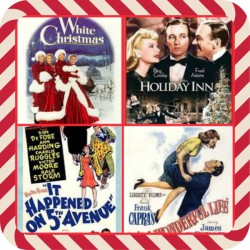
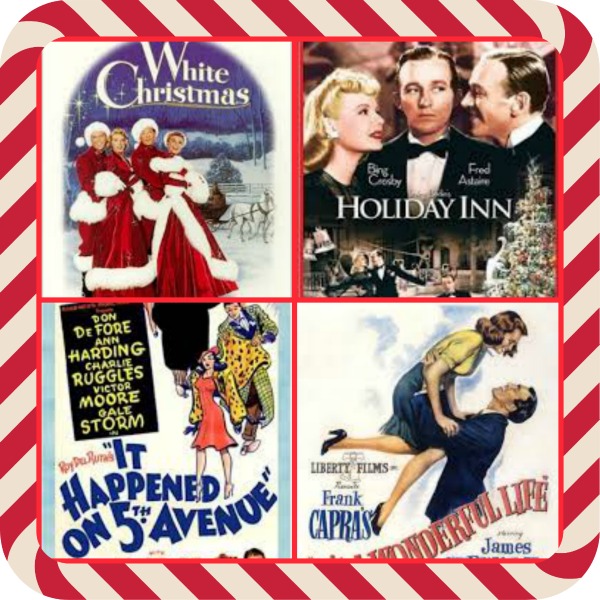
moviesEver since I researched 1940s Hollywood for Stars in the Night, I've been a bigger fan than ever of classic movies. Growing up, my favorite movies were from the 30s and 40s...that hasn't changed. There's something I love about the simplicity of that time that shines through in movies that make me laugh and feel. So today I thought I'd share a few of my favorites and writing lessons from each.
[Tweet "Love #Christmas? Have you seen @cara_putman favorite Christmas #movies? #traditions"]
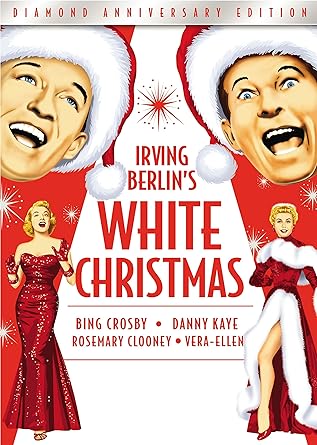
White Christmas: I adore this relatively simple story set during the post WWII years. I love the theme of honoring those we admire...even at great cost to ourselves. The ending scene with the general makes me tear up every time. And hearing Bing Crosby croon White Christmas? And Danny Kaye is the perfect comedic foil. Sing with me "Sisters, Sisters...." Perfection! My family adores this movie. 

  •  The writing tip? Slapstick comedy of Danny Kaye paired with a story of making assumptions about intent, this story makes you feel. And that's what readers want: an emotional experience. What can you do to add emotional layers to your story.
Holiday Inn: This is more than a Christmas movie because it features 13 Irving Berlin songs that are set around the holidays. Fred Astaire's fire cracker dance has always been a favorite of mine, but I love the theme of letting a loved one go so they can chase their dream. Happy sigh. 

  • Writing Tip: Add Fred Astaire to Bing Cosby and the movie is unstoppable. But it's the backdrop of music that adds life. What are you doing to add the senses to your scenes? 
It Happened on 5th Avenue: I shocked some folks last year, because I'd never seen this movie. Oh my! They were all right. I love it! It's the story of a rich girl who stumbles on some homeless men who are living in her father's seasonally abandoned mansion in NYC. She joins them and their friends, and before long her dad and mom have joined them -- while pretending to be people other than they are. This is a story of realizing the hold things and money can have on us and turning instead to the value of people. A beautiful story.  

  • Writing tip: How can you take characters that people have pigeon-holed and flip their presumptions? Can you put them in uncomfortable positions and watch the sparks fly?           
It's a Wonderful Life: I have to admit that I watched this so many times growing up, it lost some of its appeal. But my husband loves this movie, and it's growing on me again. Who hasn't felt like their dreams died and in the process their life didn't matter. I love the way this story shows the long-lasting impact we can have on people without realizing it. The imagining what life would be like without us. It's a definite keeper and one to watch each year for the reminders that we do matter -- even when we feel like our story has no meaning or value.  

  • Writing tip: Your characters will have blindspots just like George Bailey does about what they add to the world around them. Have you highlighted those? Can those become plot points?
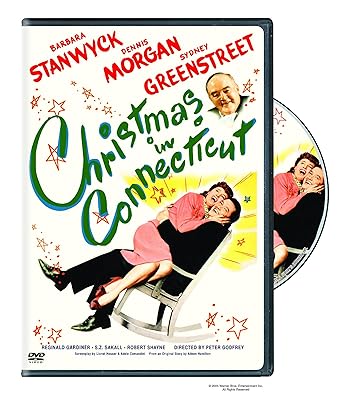
Christmas in Connecticut: Here's another classic that we've recently discovered and enjoy as a family. A woman in post WWII America is desperate to keep her job as a domestic column writer. Her readers think she knows everything about cooking and child-rearing. But she isn't married, has no child, and doesn't cook. It's not a problem until her editor decides to join her for a perfect Christmas. Then the fun begins. This is a comedy that the whole family can enjoy. (And I'm giving away a copy!) 

  • Writing Tip: How can your characters get caught in a web of seemingly white lies? Can they extricate themselves from it? On the romance side, is there a third person to make a love triangle with all the plot opportunities that entails?
So these are a few of the classic Christmas movies that my family loves to watch. I'd love to know which ones are part of your traditions. Is there a favorite holiday go-to movie in your family?
a Rafflecopter giveaway


____________________

Tuesday, December 22, 2015

What I Learned About Writing from Star Wars: The Force Awakens

I had a nice, outlined blog post for you about 2016 goals. But then I saw Star Wars: The Force Awakens for the second time today, and my post has officially been hijacked by my nerddom.


There are major, major spoilers ahead, so if you haven't seen it yet, 1) bookmark this post for a later time and 2) get thee to your nearest movie theater!

This was my first Star Wars movie to view with fresh eyes since I began my journey to publication, so naturally in was the first in which I paid attention to the writing. Here are the writing tips this movie affirmed...

And, I repeat, there are major, major spoilers ahead! 


1) First, it's okay to include popular story elements as long as you do you and as long as you do it well. I read somewhere that there are really only a handful of plot lines in existence when you whittle them down to their bones. The Force Awakens "borrowed" a lot of similar themes and events from its predecessors in the series -- maybe not exactly, but close -- which I loved. In particular, the father vs. son theme stood out to me. Han Solo and Kilo Ren have the whole good vs. evil dynamic working for them just like Luke Skywalker and Darth Vader did. Han's death also mirrored the statement Darth Vader made in the murder of his mentor Obi Wan Kenobi in A New Hope. Another example? The Death Star vs. the Super Star Destroyer. Same spherical weapon station, different day.

I'm going to go out on a limb and assume you haven't been commissioned to pen the next installment in a beloved series, so I'm strictly speaking of story elements and structure and tropes. They can be similar in format to others you've read as long as you put your own original, compelling spin on it and spin it well. You have a great opportunity to draw readers in through your characters and what's led them to this point. Many who are familiar with certain patterns and rhythms in fiction love the predictable nature -- or at least seeing where the writers take it. But this also gives you the opportunity to tastefully weave the unexpected into your story to give it punch. The wow factor. Like a female-for-once protagonist with a lightsaber who kicks some serious booty.

2) I also realized that you have to put as much thought into your villain as your protagonists. I don't write suspense or mystery, but I think this applies to any kind of antagonist. The best kind of villains in my book (the figurative one) are the ones who garner my sympathy even though, on paper, they might not deserve it. I loved the dimension they gave Kilo Ren and can't wait to see what they do with him. His parentage, his betrayal, the devotion to Darth Vader, the fear that he doesn't have what it takes to complete his training.

Since we don't have the three-dimensional benefit of phenomenal acting, we have to convey our antagonists' motivations, goals, and layers in dialogue and our heroes' observations during their interactions. Doing this effectively creates a higher contrast between antagonist and protagonist, raises the stakes, and makes the plot all the more riveting, in my opinion.

3) It's important to be willing, as writer, to obliterate the path to happily-ever-after in order to maintain authenticity. 

Were you surprised that, despite their happy ending at the conclusion of Return of the Jedi, Han and Leia were separated decades later? I'm not, to be honest. Unfortunately, the real-life statistics are staggering for marriages after the loss of a child. In grief, the amplified self-preservation instinct can be devastating for a relationship as people deal with a loss in their own way. I'm glad the writers chose to mirror reality for many, because even though it was shell-shocking and sad, it felt real and authentic.

At the end, we want our characters to find peaceful resolution. But it doesn't always have to look like a fairy tale to be a happy ending.

4) Readers can fall in love with your characters from the start, and you don't even have to completely destroy their mystery in the process.

Let's begin with Rey. The story introduced her by showing her daily life with purpose. Though wordless, it spoke of hard work with little return on investment. Hunger. The desperation in scratching the day's tally mark into the wall of her abandoned AT-AT walker dwelling. We later learn, through her conversations, that she's waiting for her family to return after a long absence. We learn through her actions that she's loyal and determined to get the droid BB-8 back where he belongs.

Similarly, Finn's first sequence reveals his internal conflict with the life of a Stormtrooper, unwilling to kill and distraught over the death that's happening all around him. Through his actions, we learn that he has a strong moral compass And even though he doesn't have a plan most of the time, he will do whatever it takes to do what's right.

See the commonalities there? Without giving away the crucial mysteries of these characters that keep the audience thirsty for more, strategic portraits of characters' lives and actions are effective ways to reveal their goals, give a glimpse into why they tick, and help readers fall in love. 


---

The writers had a huge challenge ahead of them with this film, the successor to one of the most beloved franchises in history. But I think they did a great job of maintaining their brand and showing that with a lot of bravery, extraordinary things can happen to broken people.

Have you seen The Force Awakens? (I sure hope so if you've read this far.) What did you like and dislike about the movie?

---

Laurie Tomlinson is a wife and mom from Tulsa, Oklahoma, who is passionate about intentional living, all things color-coded, and stories of grace in the beautiful mess. Previously a full-time book publicist, she owns a freelance copywriting, editing, and PR consulting business called 1624 Communications

She's a member of the American Christian Fiction Writers, a two-time Genesis Award winner, and the runner-up in the 2015 Lone Star Contest's Inspirational category. 
Her work is represented by Rachel Kent of Books & Such Literary.

You can connect with Laurie here:
Twitter - @LaurieTomlinson

Wednesday, December 16, 2015

My Favorite Christmas Movies & Writing

movies
Ever since I researched 1940s Hollywood for Stars in the Night, I've been a bigger fan than ever of classic movies. Growing up, my favorite movies were from the 30s and 40s...that hasn't changed. There's something I love about the simplicity of that time that shines through in movies that make me laugh and feel. So today I thought I'd share a few of my favorites.

Movies are a great way to learn how to write great dialogue and chacterization. Watching these actually counts as writing research!
  1. White Christmas: I adore this relatively simple story set during the post WWII years. I love the theme of honoring those we admire...even at great cost to ourselves. The ending scene with the general makes me tear up every time. And hearing Bing Crosby croon White Christmas? And Danny Kaye is the perfect comedic foil. Sing with me "Sisters, Sisters...." Perfection! My family adores this movie.
  2. Holiday Inn: This is more than a Christmas movie because it features 13 Irving Berlin songs that are set around the holidays. Fred Astaire's fire cracker dance has always been a favorite of mine, but I love the theme of letting a loved one go so they can chase their dream. Happy sigh.
  3. It Happened on 5th Avenue: I shocked some folks last year, because I'd never seen this movie. Oh my! They were all right. I love it! It's the story of a rich girl who stumbles on some homeless men who are living in her father's seasonally abandoned mansion in NYC. She joins them and their friends, and before long her dad and mom have joined them -- while pretending to be people other than they are. This is a story of realizing the hold things and money can have on us and turning instead to the value of people. A beautiful story.
  4. It's a Wonderful Life: I have to admit that I watched this so many times growing up, it lost some of its appeal. But my husband loves this movie, and it's growing on me again. Who hasn't felt like their dreams died and in the process their life didn't matter. I love the way this story shows the long-lasting impact we can have on people without realizing it. The imagining what life would be like without us. It's a definite keeper and one to watch each year for the reminders that we do matter -- even when we feel like our story has no meaning or value.
Is there a favorite holiday go-to movie in your family?
By the way, have you met The Grove? We're doing a massive giveaway and I'd love to have you join us! You can learn more about the giveaway here. Merry Christmas!

-----------------------


An award-winning author of twenty books, Cara is a lecturer on business and employment law to graduate students at Purdue University’s Krannert School of Management. Putman also practices law and is a second-generation homeschooling mom. She lives with her husband and four children in Indiana.

Monday, April 14, 2014

Melody Plotting Along with Disney - The Song of Hope

Welcome to the second part of my series, Melody Plotting along with Disney, where I’m taking the general ‘songs’ in Disney movies and applying them to novel writing.

As I said before, Disney is brilliant at using songs to portray the emotions and forward motion of its stories. The first post discussed the Song of Longing. You can read about it here:

The three song-types I'm discussing are:

Song of Longing
Song of Hope
Song of the Antagonist/Villain

And I might end the series with a Happily-ever-after post, but for now, we’re going to talk about the second ‘song’ we can learn from as authors. 

The Song of Hope.

In almost every Disney movie (especially the ‘princess’ ones) there is a Song of Hope. This song is the moment when the ‘longing’ (from the first post) seems like a real possibility for the protagonist or it shows a ‘change’ in the protagonists previously ‘hopeless’ circumstances. Lots of times, it involves a love song of some sort. It’s the ALMOST-but-not-yet.

http://www.zastavki.com/eng/Cartoons/wallpaper-27238.htm 
A few examples?

A Whole New World from Aladdin – Aladdin’s song of longing to be seen as more than a street rat is realized in the carpet ride with Jasmine. (the fun doesn't last long as Jafar has him kidnapped right after he lands Jasmine on the balcony)

At Last I See the Light from Tangled  displays Rapunzel’s deepest dream of her heart, she finds hope in being with Flynn. (Yet again, it doesn't last long before Mother Gothel and the gruesome dudes mess things up.)

Belle and the Beast have a clear ‘change’ in their relationship when they sing Something There that Wasn't There Before, followed pretty quickly by the title song, Beauty and the Beast. The adventure and romance Belle had been searching for became a possibility. (But when she leaves to rescue her father, the tables turn and the beast’s life is in danger)

Kiss the Girl clearly displays the hope Ariel has to be ‘kissed’ by Eric and gain her voice back, as well as her future. Her dream is literally a pucker away, but due to the magnificently maniacal Ursula, a hurricane of trouble is soon to follow.

Frozen succeeds in flipping this idea on its head by giving Ana false-hope through the song, Love is an Open Door, while Elsa’s song of hope is the extremely popular, Let it Go. Ana believes her longing from For the First Time in Forever has been revealed in Hans (boy, is she wrong) and Elsa’s biggest fears represented in the same song are replaced by her new-found freedom from her ‘concealment’ of her magic.

If we want to switch gears and look at popular movies?

The Song of Hope in a movie like Titanic is the night Rose and Jack spend together dancing, painting…and other things. There is hope that Rose will no longer be confined by the expectations
placed upon her – it’s a taste of her dream-come-true. But only a taste. We’ll discover near the end of the movie, she has to make that final choice to bring her dream to reality.

The Song of Hope in The Princess’ Bride is when Wesley and Buttercup are reunited before going into the Fire Swamp. Sure they’re almost killed by lightning sand and R.O.U.Ses, but they’re together. (but the sweet happily-ever-after moment ends as soon as they get through the swamp and come face-to-face with Humperdink)

In my historical romance, it happens after a horse-riding incident that ends in a kiss. In one of my contemporary romances, it happens in a tower that ends in a kiss.

Do you know what the Song of Hope is for your story? Is there a part of your novel where the protagonist realizes his/her dream is possible, almost palpable? The Almost-but-not-yet part of your book?

Would you like to share?

Monday, January 6, 2014

Saving Mr. Banks - Bringing Real-Life to Fiction

I had the wonderful opportunity to go to the movies before Christmas at watch the much-awaited Disney movie, Saving Mr. Banks. Needless to say, the simple awareness that Emma Thompson and Tom Hanks were the main actors was enough to spark my excitement, but add to it the story behind the ‘creation’ of my much loved Mary Poppins movie and I was all –in!

Disney hand-picked the info it wanted to use - and then refined its fiction to make a good movie-story, because there are plenty of real-life elements to P.L. Travers (the author of Mary Poppins) that wouldn’t have given the warm-oozy feeling we get by the end. And in the Mary Poppins’ books, Mary probably wouldn’t have been quite as lovable on the screen as she is in the Disney version.

 
I’m doing research for my new WIP right now and I’m watching my collection of Christy  movies. The t.v. movie series inspired by Catherine Marshall’s classic books does the same thing. It takes real-life and glazes it with enough fiction to bring out a great story. That’s why the series and Saving Mr. Banks are labeled as ‘based on true events’ or ‘based on a true story’ – but they aren’t biographical. It’s adding the fictional twist to a true tale.

My WIP is based on a family story of a young male school teacher coming to the backwoods of Appalachia and falling in love with one of the young women there. I take tales from my family history to deepen the canvass of the story, but there are PLENTY of elements I have to fictionalize. I have four other stories from my family's history which I hope to someday fictionalize, but how do I know which ones will work?

Here are a few tips on how to take real-life and transform it into good fiction?

1.       Passion – is there are story worth telling? Let's face it, most of our regular lives aren't that interesting to place in the plot of a book, but sometimes we come across a story worth telling. Careful consideration of the 'true events' and how those events can be crafted into a novel is important to consider.

2.       Protect the real-life characters - When you spin 'real life' into fiction, things can get a little sticky with characters and stories. To keep Uncle Joe, Great Aunt Marge, or whoever else's decendents from making your life pretty tough, we need to use pseudonyms. It's not difficult when you're creating characters from scratch, but using a true story that can be identified by others carries special care with it. Make sure the names and very specific details are changed for fiction.


old school early 1930s
3.       Relatability - Just like with any good story, readers need to be able to relate to the characters, their goals, and the journey of the story. Are the people in the real-life story relatable? Can we make them relatable? Is the journey one of universal understanding? (or at least does it have a broad audience for understanding)? Many of us can't relate to being a school-teacher in the backwoods of the Smokies at the turn-of-the-century, but in Christy we can relate to her insecurities, her passion to help the children around her, the struggle to decide between two good men in her life, or the desire to prove herself.

4.       Truth/Message - Good stories need heart - a purpose. Ones gleaned from real-life need that too. Just because Uncle Ralph was a soldier in World War I and came back to tell the tale - doesn't mean HIS story is a novel. Does it have a message? Does it hold all of those other wonderful elements of a good story - conflict, goals, character growth?? What's the point of the story?


picture of some of my ancestors in 1909
My historical WIP is about preconceived notions and dreaming beyond your circumstances.

5.       Don’t let Real-Life events stifle your fictional story - If Disney had gotten all the details right in Saving Mr. Banks, it would have broken the HEA mold Disney is so well-known for - so instead it kept some fictional aspects (or glazed with real-life with a whole lot of faerie dust) to make their story work. Novelizations do this quite often - that's one reason the book is fiction instead of nonfiction. The true events become our guide, our inspiration, but then we fill in the rest with our own creativity. Now if you're dealing with wildly publicized 'real events', you have to dance with more care because you don't want your story to be discredited, but again...your story is fiction  so it gives much more margin for creativity. :-)


  Let's Talk: Have you ever read or written a book that was based on a true story? What did you like best about it? What's something you felt could have been strengthened?

   Leave a comment and tell us whether you want your name in the drawing for The Writer's Digest Dialogue writing book by Gloria Kempton!


Friday, December 7, 2012

Why Writers Should Watch Movies

Photo Credit: Freedigitalphotos.net
Writers should watch movies.

Before you all flock to the nearest theater or video store and spend all your egg money on popcorn and soda pop, let's talk about a great way to get your money's worth out of that oh-so-expensive theater ticket.

Disclaimer: I will not be held responsible if vindictive theater go-ers come to this post thinking I put you up to shouting at the screen because the hero didn't get the heroine, I will vehemently deny it. ;-)

While you as a reader can consume a novel relatively quickly, it generally will not be read within a two and a half hour period. By the time you've reached the ending, there are aspects about that book that you remember and have learned and gleaned from, but it's often harder to be critical of the overall picture of a novel than the overall picture of a movie.

Within two hours, you've got: home world, inciting incident, noble quest, hero's journey, black moment, storm the castle and happily ever after.

Just thinking about how much has to be packed into a two hour movie makes my head spin! But the best movies do it with masterful skill. Within two hours, you've got a story that would have taken you three days at the least (most likely) to read.

When you enter your theater (be it home or professional) don't go just to be entertained, watch how the actors and writers work together on the scream to paint a story. What do they do WITHOUT speaking that speaks the loudest? Identify the inciting incident and watch how long it takes the hero to decide whether he is going to save the damsel in distress. Watch the middle. How do they keep it from sagging, while also continuing to contribute to characterization and plot momentum? Watch how the character changes on the screen. The best movies don't stand up and shout: LOOK OUT OUR CHARACTER IS CHANGING. The best movies make subtle changes until the character is confronted with a choice and the answer to that choice truly shows the audience that he is a different person than when he started.

The best movies will make it clear of something the hero can do at the end that he couldn't do at the beginning. Most often in our books we forget to add this concept or make it obvious. Movies, because they are visual, do a great job of making it obvious. You as a reader might not overtly notice, but inherently, you have noticed a difference and it makes all the stronger theater-going-viewer experience.

Find a really great television show. Don't watch it as a it airs every week. Wait until it comes out on disk and get it from Netflix and watch it one show and disk at a time, one right after the other. A GREAT example of this would be ABC's Castle. I don't get the channel and have started watching all the shows from the beginning. Talk about great characterization! Since the beginning of the show, I've been watching the characters change and grow on minute levels across three seasons. We don't come back week after week, show after show for the murders, we come back for the relationship between Castle and Beckett that is ever evolving and changing. The writers are masterful as SHOWING everything and trusting the viewer to be an intelligent audience. We get it. We love it. Take a lesson from great television shows and watch how they extend a relationship over hundreds of shows.

Learn the lesson of showing and not telling from movies. What they utilize for characterization by body language, facial expressions and tics that belong only to the character who uses them. How do you as a viewer identify with those characters because of how they act? Use that to your advantage upon the page in your descriptions. What does your character do, that speaks for all the words they don't say?

So much to learn and glean from in movies! Even from the ones you don't like. Instead of saying "I didn't like that film" identify WHY you didn't like it and use those skills to improve your own writing and what same concepts might be showing up.

Let's talk: what's the latest movie you watched and loved? Why?

***************************************************
Casey Herringshaw is a homeschool graduate and has been writing since high school. She lives in rural Eastern Oregon in a town more densely populated with cows than people.

Monday, December 3, 2012

A Hallmark Formula

http://itsawonderfulmovie.blogspot.com
I don't know about you, but I'm more of a 'movie' person than a 't.v' person. I love to sit back from the beginning and watch a story develop, climax, and come to a happily-ever-after end.
When my husband bought Direct TV for the first time a few months ago, he asked what top 3 channels I wanted to pick for me.
My answers?
1. BBC
2. History
3. Hallmark

When I watch a Hallmark movie, it's like reading the BEST LoveInspired novels out there. A Happily-Ever-After every time. And right now, with the Christmas season in full swing, it's Hallmark romances around the clock :-)

But what is it that makes Hallmark movies so popular, notable...and if you look at the fact that they have their own station and well over 100 movies...successful?
A good formula.

I know some people might think Hallmarks are sappy, overly emotional, and maybe pretty simplistic.

Sometimes, maybe they are.
But at the heart of Hallmark movies, is the EMOTIONAL drive and connection to the characters - which (as authors) is what we should be striving to create in our novels.

I don't watch Hallmarks to have my heart twisted until tears spring from my eyes, but I watch them for the simple pleasure of smiling at the end - of going on a journey. You know, like the Christmas commercials that are all sentimental, but you love watching them every year any way?

Hallmark movies are in many ways predictable, but that can also be one of the draws for them. We go in to 'feel good'. We're usually rewarded :-)

So let's get to the formula:
Hallmarks (especially the romantic ones) almost always provide 3 things:
1. A happily-ever-after
2. Character growth
3. Emotion

And like every story worth it's tale, hallmark movies provide moving conflict and resolution. The conflict sometimes spans deep issues, and sometimes it's simplistic misunderstandings.

But all of those aspects (except maybe the HEA) are what make a story work.

A solid character arc, conflict that moves the story along, and deepset emotions that help us identify with the characters are the perfect trio to storymaking.

Hallmark movies also follow the 3-act story structure really well  :-)

One of my favorite Hallmarks is The Magic of Ordinary Days. It's a sweet, WWII era novel about a 'fixed' marriage between a pregnant city- preacher's daughter and a tender-hearted farmer. Does it follow a formula?

1. City girl gets off the train and goes directly to marry quiet farmer and then moves out to his farm (which is MILES away from any town). Conflict? You betcha

2. City girl keeps writing the father of the child she's carrying, in the hopes he will come and sweep her off her feet again, while she tries to sort out life on the farm (she can't cook). Longing and emotional connection? While the farmer's tenderness and his desire to show her what love is, begins to widdle away at her doubts, conflict continues.
The back and forth of every story begins...should I keep writing my former lover? Shouldn't I? Should I trust my growing feelings for the farmer? Shouldn't I? Should I run away from this horrible mistake of a marriage? Shouldn't I?

3. The opportunity to leave and return to her former life presents itself. She is also given the opportunity to keep her newfound friend from making the same mistake with a rake as the city-girl had done.

Ending? She realizes how much the farmer really loves her just as they welcome their new baby into the world. :-) She's discovered what true love is and it's changed her into the person she's become.

Beautiful 3 act structure.

I just finished watching a Hallmark Christmas movie called A Princess for Christmas. Is it a little cheesy? Yep, sure is. Is it cute? Yep, sure is.
Does it follow the formula? Definitely.

1. A young woman, Jules, with guardianship of her neice and nephew loses her job. Already strapped for money, an opportunity arrives to spend Christmas with her wealthy brother-in-law's estranged father, the Duke of Castleberry Hall.

2. She is forced to 'walk through this first door' into Castleberry Hall because the grandfather was 'supposedly' ill and the Jules had no money to spend on her neice and nephew for Christmas anyway. The threesome arrive in Castleberry, only to find the grumpy grandfather doesn't want to celebrate Christmas and is even rude to his only surviving son. The son, Ashton, begins to take an interest in Jules and the kids, and the Duke's view of Christmas and life begins to soften. But....conflict comes in the form of Ashton's girlfriend and Jules' own low self-perception. The back and forth of the Act 2 goes into full swing...feelings evolving, doubts rising and falling...

3. Instead of running away from the Christmas Ball and her feelings for Ashton, a Christmas miracle brings her to the ball and into the arms of a waiting 'prince'.

Just curious - what are some of your favorite 'seasonal' Hallmark movies? I've listed a few below, not necessarily my favorites, but a few to get you started :-) What are some of the reasons you like (or dislike) Hallmark movies?

I just finished watching On the Second Day of Christmas (with Mark Ruffalo) and it's CUTE!

The Courageous Heart of Irene Sandler (tough one to watch...whew), A Dog Named Christmas, The most Wonderful Time of the Year, The Note, Holiday Engagement, A Christmas Kiss, The Christmas Card
******************************************************************************
Pepper D. Basham writes contemporary and historical romances set in the Blue Ridge Mountains of Virginia and North Carolina. As a pastor's wife, mom of five, and speech-language pathologist, she clings to chocolate for her sweet-tooth, Jazz for her calm, humor for sanity, and Jesus for her...everything. She is represented by Nicole Resciniti of The Mary Seymour Agency. You can find out more about Pepper at her website - www.pepperbasham.com

Blue Ridge Mountain Romance peppered with grace and humor.

Tuesday, September 11, 2012

TOP 10 Things To Do When You Can't Go To Conference


What? You can't go to the 2012 ACFW Writing Conferences this year? Well, I have just one thing to say...

HAKUNAH MATATA

No worries...just chill out and pick out one of my Top 10 Things To Do When You Can't Go To A Conference. Let's shorten that up to T4DWYCGTAC, why don't we? I wasn't sure what to write about, but everyone seemed to be writing about conferences, so I thought I'd join in the fun.

The countdown begins:

Photo by savit keawtavee
freedigitalphotos.net

10. Stock the pantry with chocolate bon bons and the freezer with ice cream, and pig out for the duration of the conference. (Warning: Not Waistline Friendly!)

9. Have a slumber party and read your favorite romance scenes aloud to each other. Bring out the chocolate for a night of fun!

8. Read a book a day, preferably romance, where you can escape into sigh-inducing scenes and smile at happy endings.

7. Make up flyers announcing your future bestseller and post them in all the coffee shops and libraries in your area. Make sure to put a cute head shot of yourself. They say it's never to early to market yourself.

6. Subscribe to Netflix and have a sappy movie marathon day...or two...or three. Cry and laugh your heart out. You might want to have your bon bons close at hand.

5. Text your friends at the conference every 30 minutes, telling them how your word count has grown...and how theirs has not.

4. Send out 54 queries to random agents. You can pick any number to send out, but I prefer randomness. Who knows? You might hit the jackpot.

Photo by digitalart
freedigitalphotos.net
3. Go to Disneyland and devise a murder mystery involving Mickey Mouse, Cinderella, and the Big Bad Wolf. (Yes, I know the Big Bad Wolf is NOT a Disney character, thank you very much.)

2. Spend an hour in Barnes and Noble. Take one page from 300 books in the store and string them together for a Mad Lib Novel.

1. Watch the weather channel and drive to the nearest rainstorm. Let your hair down and dance a jig in the rain, screaming at the top of your lungs how much fun you are having instead of meeting famous authors.

There you have it, my TOP 10 fun things to do while I won't be at conference this year. I am sad to not be going, but am excited to get to stop by and HUG all the Alley Cats who are coming to town! Can't wait!

So those of you not going to any conferences this year, how do you intend to chase the blues away?

*This post was originally posted May 25, 2010


****************************************************************************
This post is brought to you by
 Sherrinda Ketchersid

Sherrinda is wife to "Pastor John" and mother to three giant sons and one gorgeous daughter. A born and bred Texan, she writes historical romance filled with fun, faith, and forever love.


Tuesday, August 28, 2012

What Makes A Good Almost Kiss?

The Almost Kiss. It's the moment when your breath mingles with another's, your heart pounds, and your toes tingle. It is the anticipation. It is the expectation. And then....

Nope. It ain't happening.

Can I just say that I love almost kisses ALMOST better than I do a full blown kiss? Seriously, it takes some good writing to bring us to our knees when a kiss is thwarted. And let me just say, there are many ways to make an awesome almost kiss.

It's all in either the interruption or in a person's will power to pull away at the last second.

Let's look at some examples, shall we?

Okay, I tried to imbed this clip, but YouTube wouldn't allow it, so here is a link to a short scene where Lois Lane and Clark Kent almost kiss. Seriously, this has got to be one of the best!


Did you notice that there is hardly any talking whatsoever? I mean, Kent does not say one word! But the looks, the way he grabs her, the way he looks at her. It says a whole lot, doesn't it? And what about the interruption? His first love shows up after a long absence!!! Talk about conflict!

And now...the Jacob and Bella Almost Kiss.


Annnnd, we are saved by the bell...the phone rings to interrupt the kiss. It's a bit cliche, but you can get creative and think of a way to stop a kiss from happening.

Sometimes humor is a great way of messing up a good kiss. Check out this clip when the girl gets the giggles.


Yeah, dye your hair. That always works for me!

Okay, so let's take look at a different Superman and Lois Lane.


In this clip, we see Lois pull away because of a couple of reasons. One, she is engaged to a good man, who she does not want to hurt - integrity. Two, she is hurt because he has been gone a long time. Sometimes the pain of being hurt is enough to make you stand firm against a kiss. It's a way of guarding your heart against rejection. This can be an effective way to stage an almost kiss.

Here is an unusual clip that I have included to show that the Almost Kiss doesn't necessarily have to be a "lip-action" thing. Let's watch Mr. Knightley almost kiss Emma's hand. Watch Emma's face...so expressive. (Again, you will have to click on the link to watch.)


Wasn't that AWESOME? The pause was used to great effect here. His hovering over her hand, her watching...waiting. Brilliant!

Of course, I couldn't conclude today's post without my favorite almost kiss...Mr. Darcy and Elizabeth in the rain. I couldn't embed the clip, but if you would like to view this masterful scene, just click on the link.


Sigh, wasn't that lovely? Did you notice his gaze falling on her lips from time to time? Even though they are in the midst of an argument, the attraction is strong - so strong he leans in, but then, being the gentleman he is, he begs her pardon. Oh yes, this was lovely, indeed.

So tell me, have you been writing an almost kisses? If not, why don't you try one out? Or tell me, what is your favorite almost kiss in a book or movie or TV show? 


*****************************************************************************
This post is brought to you by
 Sherrinda Ketchersid

Sherrinda is wife to "Pastor John" and mother to three giant sons and one gorgeous daughter. A born and bred Texan, she writes historical romance filled with fun, faith, and forever love.

Friday, September 2, 2011

Romance: The calm before the storm.

I've always pictured a romance storyline something like this:


The beginning hook. GOTCHA. I wanna read more!

And it gets worse,

And a little more worse.

And still even more worse.

Until HOLY CRAP, the unthinkable happens.

These characters will NEVER be able to get together now!

But... something happens, and things are redeemed.

They characters kiss and make up.

And life happily ever after!

Now, if you turn your head sideways and look at the above steps... you'll notice that it reminds you of what a story line should look like too when measuring the degree of tension!

BUT.

I
Think
It should
Look a little
more
LIKE THIS RIGHT HERE!
And then it
is done.

Okay, if you're not a visual person (or can't see looking sideways) you're probably really confused.

My point is this.

It's the need for a "calm before the storm" if you will. That moment everything SEEMS to be working swimmingly, but as a reader, you are holding your breath, because you KNOW something just terrible is about to happen.

The calm almost makes the tension of the black moment even bigger.

It's like when your toddler takes a really big, quiet breath, right before he/she issues the loudest scream you've ever heard.

Some movie examples:

Runaway Bride. After Richard and Julia kiss and Richard gets duly punched in the face, they realize they really actually love each other. They kiss some more. They decided to replace the wedding with THEIR wedding. All happy and good right? Scenes of them swinging and reading and preparing for the wedding and everything is all lolly-pops and rainbows. But all the while, you KNOW something bad is gonna happen. You assume it's at the wedding, but you don't know when for sure. Even though everything seems like it is fantastic, the tension of "when is the bomb gonna drop" keeps you watching and eating your popcorn, crying, "Don't run, Julia! Richard is a HUNK! Just do it!"

Of course, she runs. He chases her. Thus, the black moment.

The Proposal. Mean heroine (anyone who says you MUST have a likeable heroine at the beginning, watch this movie!) and good guy, fake engagement in order for her to not be deported. They hate each other, but are forced to vacation together in Alaska at his parents house. They still think they hate each other, but inside each of them starts to fall for the other. And then the fake wedding comes, and by then, you can tell they are in love. Fake or not, they are getting married! No deportation, they can finally admit their feelings, and they are married, so WOOHOO. But that's too easy. And as she walks down the aisle, we're all thinking, "what's gonna happen? What's gonna stop this? It CAN'T be this easy!" Then she turns around, and the rest, you have to watch the movie to find out!


Some book examples:

Well, here is the thing. There are a ton of them. So, I thought I'd let YOU share some of your favorite calms before the storms from books you've read. Can you pick any out?

Wednesday, August 10, 2011

No Reservations: Four Techniques to Create a Likeable Character

One of my favorite chick flicks is No Reservations. It's one of those movies that makes me laugh, cry, and swoon over the on-screen chemistry between Catherine Zeta-Jones and Aaron Eckhart.

The thing that jumped out to me the first time I watched it was how unlikeable Zeta-Jones's character, Kate, was in the beginning. The movie begins with her talking to her therapist, and we quickly learn she's a focused, hard-lined person who could be described as prickly (and that's putting it mildly). The only thing she seems to care about is the food she creates at her high-end restaurant.

But despite those traits, I still found myself hanging on for the ride, waiting to see how she would redeem herself later on. And as I analyzed the movie further, I noticed specific techniques the screenwriters used to evoke empathy from the viewer early on.

In fact, those techniques come straight from a book on my shelf called Writing for Emotional Impact by Karl Iglesias. This book is written for screenwriters, but there are some excellent takeaways for the novelist as well.

Karl devotes an entire chapter to characters and has a section titled "Techniques for Instant Character Appeal and Empathy." As I analyzed Kate's character in the movie, I pinpointed four specific techniques from Karl's book.

1) Physical, Mental, Health, or Financial Handicaps: Remember how I mentioned that the movie starts with Kate talking to her therapist? We immediately recognize that she's got some sort of mental or emotional hang-up, and that keeps us engaged to find out what it is and whether it can be fixed.

2) Exclusion and Rejection: After a hard night at work, Kate comes home to her apartment and presses the button on her answering machine. It beeps and says, "You have no new messages." This short scene shows us that she's excluded from life and doesn't have many friends, making us empathize with her and long to see her connect with someone.

3) Showing Humanity in Private Moments: There's a scene toward the beginning of the movie where Kate goes to the docks to hand-pick fish at a fish market. Even though it's not technically a "private moment", she's away from her usual circle of people, and she's very open and genuine with the fishermen, showing that she has a rapport with them and visits them often.

4) Loving Other People: We quickly discover that Kate has a good relationship with her sister. It appears to be the only good relationship she has, but that little window gives us hope that she has the capacity to love other people.

As the movie progresses, the writers use other techniques to further enhance Kate's likeability, but these are the specific ones used within the first ten or fifteen minutes of the movie. And this list barely brushes the surface of the techniques listed in Karl's book. If you haven't read it yet, I highly recommend adding it to your library!

Can you think of a book or movie where the main character wasn't entirely likeable in the beginning? What kept you reading or watching?

Friday, August 5, 2011

How to lose a reader in 10 pages: The Visual Disadvantage

I LOVE a good movie.

And I'll be honest, my favorites are romantic comedies. My husband teases me that we always get to watch MY movies when we go to the theaters... and okay, that's right. But really, who wants to see KungFu crud any how? Not me, I say!

So he is sweet and indulges me and either sees his movies with guy friends or waits for it to come out in Red Box.

Maybe I should be ashamed at this, but I'm not ashamed enough to sit through one of his movies:-) He loves me anyway thankfully!

Here is the thing about comedies though, romantic or otherwise.

They are funny. (I know, shocker!)

But sometimes, a wee bit unrealistic. But, that's what makes it funny! Much of comedy is something happening that is exactly opposite of what you would normally expect. Two opposite things colliding and insanity, aka comedy, ensues.

Movie Examples:

How to Lose a Guy in 10 Days: She is a magazine writer for a fashion/trash magazine but wants to write about politics. He is in advertising for manly stuff. She has to write a column about how to make a man hate a woman, and must role-play this for real by attracting a guy, then doing things that push him away. He has to make a woman fall in love with him in order to lead an important account.

There are similarities. They both love Baseball, but again that isn't something you would "suppose", and she uses it against him in trying to make him "hate" her.

I laughed pretty much the whole movie.

You've Got Mail: She owns a small, independent bookstore. He owns a huge, mega-bookstore set on squashing all the independent bookstores into dust. Not the most likely couple. They meet on a chatroom, but don't know who each other is. They both live in New York, and meet unknowingly, but she doesn't know he is the mega-store owner OR that he is her online beau. He, however, finds out and falls in love with her. She hates him, especially when she finds out who he really is.

Some good opposites happening here.

So here is the thing.

We NEED to have this in our books. We must have clashing characters. We need to have those funny moments that make our side ache from laughing.

But it's harder in books.

Because Seeing is Believing.

When we are in a movie, if it is done right, it is easier to believe these scenerios, because we are seeing them.

A while back, I watched Paul Blart: Mall Cop with my family. We laughed the whole time and loved it, but while we watched it, the reality of movies vs. books hit me. I'm not sure I could ever write a Paul Blart book. It was TOO funny. All the reviews would have been about how unrealistic the book was.

Can you imagine trying to write the scene pictured here? I can hear the judges comments and reviews now...

What does that mean for us as authors?

We need to write better. We need to make our characters SO realistic that even though the goals completely clash and the picture they see in their head is not normal, they can believe it.

It takes...
  • Believable dialogue.
  • Narrative that describes characters and setting well, but in a way that is natural and real, not stilted and forced.
  • Actions the reader can see in their head.
  • Goals... reasons that makes the characters how they are
Because we are at a big disadvantage over movies. Readers are forced to create an image in their own heads, and when that image goes against what is "normal", it will be hard to swallow unless done with skill. In a movie, they can see a facial expression instead of having to read one persons opinion on how that facial expression looks. So it's a combination of all 4 of those things that will make or break a funny book.

I just finished reading "Restless in Carolina," Tamara Leigh's 3rd installment of her Southern Discomfort Series. LOVED it by the way! But in it her heroine is a tree-hugging, dreadlock wearing, opossum-pet-having widow who once claimed that aliens had landed in her cornfield, creating a big circle (which she'd done herself) in order to save a deer.

NOT your typical heroine, especially when you find out she comes from an old traditional Southern family.

Tamara did a WONDERFUL job of weaving in the REASONS Bridget was like she was, and while it was hilarious (as all of Tamara's books are), it was realistic as well. I felt like I knew Bridget. I could see her, not just her physical appearance, but going through the motions of the story. Her actions.

Discussion: Favorite funny books/movies? What do you think makes for good "comedy" in books?