Showing posts with label Critiques. Show all posts

Monday, July 13, 2015

3 Questions for a Teachable Writer

on freedigitalphotos.net by stockimages


Are you a teachable writer?

Something I have learned on this road to publication, is there are more opportunities to learn than to prove your stuff is untouchable.

  My first reaction to criticism used to be...(see photo;)).


But now? 

I feel the sting, drop my shoulders in defeat, and then take a few deep breaths.

My reaction has become...
on freedigitalphotos.net by stockimages


Hmmm...I need to listen, think, and maybe apply. 

Three questions I ask myself:


1. Does this advice compromise my voice? 

If I have established my style, then I need to apply advice as best as I can with out forfeiting my voice. I must weave the advice with my voice in mind to take my writing to the next level in my own unique way.


2. Does this advice compromise my craft? 

Most contest judges and critiquers are still learning (um, do we ever stop learning??). So I must be able to discern what is good advice on craft and what is sub-par. (This means that I need to be well-read on craft). When a critique pushes me to better my craft, then I should try and apply it.


3. Does this advice compromise my purpose for writing this story? 

Sometimes, a crit just misses the mark on what the whole vision and purpose of the story, BUT, if I've laid it out clearly, then they shouldn't miss it. If the advice does dismiss my story's purpose...then maybe there's something that needs to be changed on my end to clear it up.  If the advice seems to line up with my purpose and offers a way to make that purpose clearly-defined or stronger...then, it's time to apply!

After receiving feedback, I remind myself that this whole process is about getting my purposeful story out to the potential hearts that are meant to read it. 
Without compromising my voice, my craft, or my purpose, criticism is welcome to make my story shine bright and clear.

Have you had good advice? Bad advice? What have you been willing to compromise to make your story better?
********************************************************************************
Angie Dicken is a full-time mom and lives in the Midwest with her Texas Aggie sweetheart. An ACFW member since 2010, she has written five Historical Romance novels, has a Historical underway, and is represented by Tamela Hancock Murray of The Steve Laube Agency. Angie also spends her time designing one-sheets and drinking good coffee with great friends. Check out her author page at www.facebook.com/dicken.angie, her personal blog at angiedicken.blogspot.com and connect at:
Twitter: @angiedicken
Pinterest: pinterest.com/agdicken

Monday, February 9, 2015

Letting Your Baby Go...Then What?

Last week, I let my baby go. After spending more time on this project than I have ever spent on a book, I
freedigitalphotos.net by Michelle Mieklejohn
finished up my current novel and sent it in for a critique.
It reminds me of when I dropped off my first child to preschool. After years of spending every waking second with him, I suddenly had hours alone. And I just didn't know what to do with myself.

I would sit at home knowing a million things could get done, but feeling a little stunned emotionally that I didn't have the little guy next to me. Of course, mommy-guilt entered (it's something I have gotten better at flinging off quickly), but really it was mostly unfamiliarity with the open time, shock at the quiet, and anxiety in the anticipation of holding him in my arms again.

It kinda feels that way now. Not with the kids leaving me for a few hours at a time--I have soooo gotten used to that (ignore the very-guilt-free mommy joy in that, please)...but I miss my newest baby, the one I lost sleep on and carved time out diligently to nurture...my manuscript. 
I miss those made-up friends that I so delicately shaped. I find myself tempted to open up Word again, just to spend some more time--maybe reading a scene or two. I pass by Starbucks and reminisce about the many hours I spent "having coffee" with my characters...ahem...slaving away on my manuscript under that little square shop roof.

And I sit here, on this bed, wondering what in the world am I going to do with myself now--unfamiliar with the open time (well, whatever that is with four kids and life in the way), shock at the quiet (in my writer's head), and anxiety in the anticipation of finding the manuscript in my inbox...all marked up.

But, I know there isn't much I should do except enjoy the peace right now. 

freedigitalphotos.net by BrianHolm
After years of critiques, contest comments, and edits, I know that I will soon be wrapped up in the world of my characters, chiseling away after that feedback arrives. No, it won't be long when my baby comes back needing nurturing and growing and discipline. It will be as hard on this mama-writer as it will be on the book-baby. And that baby will blossom into a beauty and this mama will finally sleep well after a job well done.

Some might say to write away and fill the void. Instead, I am taking this much needed time of rest. Just like I did those first days of preschool when I suddenly had the couch to myself and the t.v. was not stuck on Disney Junior. I am choosing to  breathe deep instead of scribble away on a new book, or fret and worry over what I could change in my last one. This is a time for quiet after the mad rush of a deadline, because I know that I'll need all the energy I can get when my baby gets home and needs me again!
freedigitalphotos.net by photostock

So, what do you do when you've typed "The End" and hit send to a critique partner or an editor? Do you take the time to recoup for the next round...or are you ready to dive into your next project?
********************************************************************************

Angie Dicken is a full-time mom and lives in the Midwest with her Texas Aggie sweetheart. An ACFW member since 2010, she has written five Historical Romance novels, has a Historical underway, and is represented by Tamela Hancock Murray of The Steve Laube Agency. Angie also spends her time designing one-sheets, selling Jamberry, and drinking good coffee with great friends. Check out her author page at www.facebook.com/dicken.angie and her personal blog at angiedicken.blogspot.com 


Wednesday, November 21, 2012

Unusual Things to be Thankful For

Happy Thanksgiving Holidays to you!


We here at the Alley are so blessed by your readership. Although many of you are shy to comment or maybe you've enjoyed a post but didn't have time to share or have a specific thought to comment with, we see you here. God's richest blessings on you.

Today, I thought we could talk about the unusual things to be thankful for. 

Sure it's easy to thank God for our children, the weather, our food, etc. But what about the unusual things. 

Let's see, what can we put on this list.


Crits with lots of red writing. Sigh. I get those more than the raving positive comments at the end of the doc. I am, however, thankful for the color on my paper because I learn, I see the issue in my work, I change, I write better . . . until the critters find a new issue GACK! Breathe. I can be thankful again, learn yet another concept, see my error, change, and write better again.

Contest responses in the first round. No. no. Please. I really didn't want an email from the contest category administrator yet, at least wait another two months. Actually, I was hoping for the golden call about that time. 

The email was sweetly written, sorry....blah blah blah. I usually open the email later that evening, with a cup of hot chocolate, hoping my entry was really good but my score just missed the cut. Two days later, when I have matured, I read the judges comments.

Now comes the thankful part. I really am glad to have the score sheets. Specific areas of writing earn their own points. I can find out if I scored high on the hook, but bombed style or setting. Sometimes a judge will include a critted version. Sure, because of the subjectivity of the business three judges can score completely different. I can compare the three and learn what needs to be perfected. And if I keep learning and trying and submitting, someday, I might get the call like I did this year for the Phoenix Rattler Writing Contest :)

NaNoWriMo in November. In the season of crazy, NaNo gives you the opportunity to go insane. I am thankful because I had this fabulous idea for a story swirling in my head, consuming my thought time, but I had editing, requests, and obligations which required my full attention. The new idea had to wait until January, maybe February before I would have time to devote to it. Seriously, this is was not the time. 

But . . . this year, I signed up. NaNo has become my vent. An opportunity to get that first draft out of my head with no obligations to edit at this time. It moved those ideas that pop into my head when I was in the middle of something onto a page and cleared my mind to focus on the other tasks I needed to do. Insane ended up working for me.

Frantically busy days. No way will you get any writing done on a day where the to do list outweighs the available time. This is a day to keep one of those mini spiral writing pads and a pen with you. This is the time when new, fresh ideas will form, soaked with sight, sounds, feelings, tastes, and new learning. Don't waste these added blessings, whip that spiral out of your back pocket, take notes, and later add them to the perfect character/setting in your book. It will make you feel better, I promise:)

Suggested frantic day observations worth taking notes:

*the cheerleader or grannie type cashier leaving the register to run after the customer who forgot a bag, 

*the fresh scent of a traffic jam, and musical blarings of horns, engines, and screeching fan belts bleeding over your favorite song on the radio. 

*the missing ingredient in dinner flavor 

*the unexpected guest's lovely appearance, and yours when you answered the door with curlers, no make-up, and fuzzy slippers

*the voice of the marketer who called-yet again, this time when the oatmeal boiled over 

*the vibrant colors of your child's drawing on the surface of the living room wall which you noticed right before your mother-in-law arrived. 

*the new things you found while searching for your missing keys during the last twenty minutes 

*the force needed to scrape frost off the car when you're ten minutes late for the special appointment. 

This list could go on for pages!


Oh the blessings we have in disguised packages. 


Have some fun. Giggle. 
Add an unusual thing to be thankful for.
(Including prepositions at the end of a sentence:) )

This short post has been brought to you by the sponsors of 
You Better Hurry And . . .


***************************************************


This blog post is by Mary Vee

Mary lives in Montana with her husband and loves to hear from her three college kids. She writes contemporary Christian fiction with a focus on the homeless population and loves to pen missionary and Bible adventure stories on her ministry blog, God Loves Kids.


Visit Mary at her website www.maryvee.com
Step into Someone Else's World

Ministry blog to families: God Loves Kids http://www.mimaryvee.blogspot.com

Tuesday, November 20, 2012

Using The Delete Button in Editing *sigh*

Photo by Stuart Miles
Freedigitalphotos.net
A precious friend asked me to read through her manuscript and see where I could delete words. She is an excellent writer...I mean she is really good and will be published one day...but her manuscript ended up at a little over 200,000 words. She needed it whittled down to 100,000 - 120,000 words. So basically, I needed to delete close to half her manuscript.

How does one even do that?

I've critiqued other's manuscripts before, but I've never deleted large passages. And that made me a bit nervous! What I needed was a plan. So here is what I decided to do:


  1. Cut unnecessary description. Sometimes you can describe a room or scene with just a sentence or two, instead of a paragraph or more. 
  2. Cut unnecessary dialogue. As with description, sometimes less is more. Sometimes a longer conversation can be trimmed by deleting a sentence or two. You can still get your point across without the lengthy conversation. 
  3. Cut scenes that do not move the story along. This turned out to be difficult for me, because every once in awhile I would delete something only to find out that it was crucial to the story line. If I wasn't absolutely sure, I would write down the scene and page number on a pad of paper for future reference. (You could also mark the manuscript with some asterisks ***, then search the manuscript later in order to delete.)
  4. Cut story threads that aren't crucial to the story's big finale. After reading through the whole manuscript, I could look back and see that the ending could come alot quicker in the story. I was able to delete several chapters and end the story with the original ending still intact. 
I have to say that I was not successful in deleting enough words to get the manuscript down to where it needed to be, but I was able to cut it down to 142,000 words. It was not easy and I know that my friend will most likely not like everything I did. But that is the beauty of Track Changes in Word...you can reject any changes! Whew! 

So tell me, what is the hardest edit you have ever done? Or what tricks do you use when you edit? Do you ever edit other people's work? 

****************************************************************************
This post is brought to you by
 Sherrinda Ketchersid

Sherrinda is wife to "Pastor John" and mother to three giant sons and one gorgeous daughter. A born and bred Texan, she writes historical romance filled with fun, faith, and forever love.

Thursday, September 6, 2012

The Heart of the Author and The Heart of the Story


Authors are brave. I mean, very, very brave. You have to have a unique kind of heart to be a writer, or at least, to be a good one. On the one hand, you have to feel deeply. You must be compassionate, sensitive, even empathetic, to craft characters whose stories resonate with readers. You must care deeply enough to stick with a story until page three-hundred and twenty-two, through all the zingers that come along the way. You must have something deep in your core, a calling, that holds you to to task and pushes you toward your goal. You must, in other words, feel in order to be a good artist.

On the other hand, unless you are writing strictly for our own sake, your story must inevitably stand on its however-wobbly little newborn feel and step out into the real world of readers. That world is scary sometimes because it carries rejection, it carries disappointment, it carries doubt, and sometimes it carries straight-out pain.

Today I want to talk about the ever-important, ever-difficult-to-discern line we all must find between these two things, between compassion and the inevitability of writing as a business. I think it's important we take time to flesh out the space in between the two, especially as conference season approaches and we're all bound to face at least some measure of disappointment.

I don't know about you, but I think writing honestly, deeply, with feeling, is a struggle. I can't tell you how many times I have e-mailed my fellow Alley Cat Angie in the last two weeks with updated versions of my pitch or one sheet because I keep panicking over it, wanting my pitch to be the best it possibly can. Do you feel that way too sometimes? I think this kind of anxiety is normal when you've become so invested in a dream or goal. But we have to be so careful that we don't allow our fears of rejection to cloud our heart for a project.

What I mean is that we always, always must write from our hearts if we expect to write anything worthwhile. It's so much easier to detach ourselves from our writing and never experience the sting of rejection, is it not? But whenever we write a story that is close to us, whenever we craft a heroine who's struggles we truly understand, who's pain we actually feel, we take a risk. If she is rejected, does a little part of us not feel rejected also? But what benefit is to to the reader if we refuse to be brave enough to give them stories that we feel? How do we expect the reader to then feel anything, to be moved by the story, if we are not even moved by it ourself? Now, I'm not saying your stories have to be biographical. They don't have to be true or have happened to you. In fact, probably better if they haven't actually happened to you. But they need to live somewhere in you. You need to be able to imagine how your heroine might feel when she faces her greatest fear, and a little part of you, when you think about that playing out, should feel that fear yourself in the same way your heart would hurt over the trials of a good friend. Your characters, your plot arc, your narrative--they should all reflect your deeper heart and calling for the novel. That is how you find your writing voice.

Now let's say you've successfully done this. You've poured your heart and soul into a book and turned off those voices of inner doubt. You've worked with your critique partner and have squeezed every last bit of vulnerability out of your own heart and into the work.

That means it's time to let go. Going back to that wobbly-knees idea, it's time to let your story have a chance, to struggle, in the world. At this point in the process, you have to learn to detach yourself from any criticism, constructive or otherwise, that you might receive. You must turn your back on your own story, difficult as it might seem, so you can instead turn toward improvement. The neat thing about writing is that there is no perfect writer. There is always room for a story, for an author, to improve, and one of the best ways of achieving that is by exposing yourself to feedback from editors, critique partners, and even contests. I'm not saying you should listen to everything everybody tells you. I am saying you should listen sometimes. Surround yourself with people who believe in you as a writer, who "get" your vision for your writing and whose advice you can trust, and then trust them.

I know it may feel like your story is already the way it should be, that you made decisions like where the story starts or why a particular character has certain quirks for a reason. But what if you started at chapter three instead? What if you paired down some of your descriptions to make the dialogue flow faster? Things like this can only be found through keeping an open mind and being willing to let go of your original intentions for the story. Remember that we will never be able to see the larger picture in a story if we won't take our eyes off the first draft.

Here are some things to keep in mind about rejection and difficult feedback.

Rejection is...

  • Change
  • Challenging
  • Subjective
  • Inevitable
  • Character-building (pun intended!)

Rejection might be...

  • Helpful
  • Part of a larger picture
  • Wrong (plenty of authors are rejected only to find success with that same project--just look what happened with The Shack!)
  • Temporary
  • A source of self-doubt and fear, if left unchecked
  • The single-most reason writers give up

Rejection is not...

  • Personal
  • A reason to give up
  • A reflection of your heart for the book
  • Reason to give up writing

To get a different perspective on all of this, I asked my friend Amanda Luedeke of the MacGregor Agency her advice for authors who are struggling to find that distinction between the vulnerability of the writing process itself and taking rejection too seriously.

She said, "People just need to realize that not everyone is going to like your book... just like there are people who love Twilight, and others who hate it. People who love Dickens, Jane Austen, and Tolkein, and others who don't. The industry is subjective. It's nothing personal."

I thought that was such good advice, and especially helpful to hear when it's coming from a literary agent. So as you're gearing up for the conference, be encouraged. Your calling as a writer is so much bigger than any rejection or hardships you might face. Remember to see the big picture and hold fast to God's plans for you. They are always greater than our own.


It can be so difficult to stay balanced instead of 1) taking criticism too harshly or 2) writing from a place outside of our heart in an attempt to protect our feelings. How do you manage these two things effectively? What thoughts do you have on dealing with constructive criticism, even rejection, in a way that allows you to keep pressing on? (I.e. Hitting up the Godiva store.)


*****************************************************************************
Ashley Clark writes romantic comedy with southern grace. She's dreamed of being a writer ever since the thumbprint-cookie-days of library story hour. Ashley has an M.A. in English and enjoys teaching literature courses at her local university. She's an active member of ACFW and runs their newcomer's loop. When she's not writing, Ashley's usually busy rescuing stray animals and finding charming new towns. You can find Ashley on her personal blogFacebook,Pinterest, and Twitter. She is represented by Karen Solem.

Tuesday, July 24, 2012

Qualities of a Great Critique Group

I see so many posts on forums and in chats about finding a critique partner and critique group. I think it bears noting once again: There is no perfect critique group. There is no perfect critique partner.

There is a great-fitting critique group or partner.

You and I are sinners. We have flaws. And God has a way of bringing us critique partners that gently nudge at those edges, so God can mold us into who he wants to be...because this journey isn't just about our writing.

For I am confident of this very thing, that He who began a good work in you will perfect it until the day of Christ Jesus.-Philippians 1:6

So with the goal in mind of shaping us into Christ's image as writers. What should we look at in a critique group or partner? Does the standard of allowing God to mold us affect this decision? I believe very much so.

First off, to find the great critique group, we must be a great critique partner. Krista has a great post about that here and Casey's post about the link between reading and critiquing here. Not to mention, Mary has been doing a wonderful series about reading and our writing, which bears reading if you want to be a better critique partner, in my opinion.

Conversely, I find that God has used my group to shape me into a better critique partner. I'm not there yet, not at all. 

I press on toward the goal for the prize of the upward call of God in Christ Jesus.-Philippians 3:14

Our goal as writers should be the same as our goal as Christians to be ever obedient to the Spirit and continually pressing toward the goal of hearing "well done, good and faithful servant."

Your critiquing is a way to encourage others along the path and to witness your journey.

Use your words well. If you belong to a secular critique group, your words may be the only Christ-honoring novel your partners pick up. Don't stumble them. Likewise, we have the same responsibility toward other believers. 

Will your words offend someone? The Gospel in itself is offensive, but if we are offending readers because of our language, sensuality, or violence that's another matter altogether.

Here are some characteristics of a great critique group:

1) It is a place where you can be honest...but with kindness.

First, we must make sure we can take the honesty. Face-to-face groups can be harder, because you can't put that distance between yourself and the critique. You can't put it away to read tomorrow. 

The first published author who critiqued my writing asked me to put it away before evaluating or responding. Good advice.

I think there is a place for both types of critique. However I think there is a lot of value in building a tougher skin. For me, face-to-face group has been where I have done that.

Learn to express your critique in an honest but kind way in writing and in person. Its an excellent skill to bring into business and other areas of your life.

2) Recognize different personalities and styles to the group members.

You may have one person who gives you one word answers about your story. Another person may suggest changes in every single sentence. 

One might be more blunt. Another expresses it as a question. 

Find a good critique group and pretty soon you're a better critiquer yourself.

3) Be open to reading different genres.

I have to be honest, I would never choose to read science fiction on my own, with the exception of Mr. Tolkien's series AFTER watching the movie. However, someone in my group is an avid science fiction writer.

At the beginning, I had the most difficult time critiquing him. But good writing is good writing. Its not always about what we prefer.

So be open to these other genres and likewise realize that not everyone is a fan of your genre. Don't always take it personally. 

But it helps to find a group where there is an openness to different genres.

4) Dedication to craft.

Be dedicated. Show up when you say you will. Be on time. Don't commit to things you can't follow through on. Bring your work every time, even if you feel insecure. 

Likewise, find others who are dedicated to improving rather than staying stagnant. 

5) Diversity of experience.

It helps to have a wide-variety of ages, occupations, etc. in your group. Strange areas of knowledge can be extremely valuable.

I belong to a secular group, but this diversity allows me to share my beliefs through the context of story and often in a very non-threatening way. 

What about you? What do you consider the most important qualities of a critique group or critique partner? What can you personally work on to grow as a member of your critique group?


  Julia enjoys writing women's fiction whenever she can find a chair free of smushed peanut butter sandwiches and lego blocks. She is a wife and homeschooling mama of two littles. She also currently reviews for The Title Trakk and Christian Library Journal.


Thursday, April 26, 2012

Are You an Avid Reader? Then You're a Critiquer.

It seems we have a theme on the Alley around here...taking in Mary's post from yesterday and Pepper's post from Monday and you've got a tutorial on writing those all-important first lines and finding the right help to make them stronger.

Recently I attended a chat at the My Book Therapy ning center (fabulous place if you haven't looked it up) about critiquing and critique partners. One of the gals attending the chat asked: when do I know I'm ready to critique someone else's work? 


My fingers were just itching to post a response to her question, but I held back in respect for the speaker. ;-)

My response (had I given it?): "Are you a reader?"

Seriously. Are you a reader?

If you're a reader, thus you can critique.

Let me explain, because I have an addendum to that statement: are you an avid reader? If you pretty much dream, eat and sleep and forget-to-make-dinner reading, then most likely you'll make a pretty good critique partner.

That is point #1. If you can do this top one, you can critique.  Yes, it's really as simple as that.

My awesome CP Andrea Nell, 2011 Frasier winner
& 2012 Genesis Semi-Finalist
Point #2. Can you articulate your thoughts? Can you spot a mistake in a manuscript and give the author a bit of advice on how to fix it? The comment "I don't like this..." or "this doesn't work for me..." gives your CP (critique partner) nothing to go on. When something doesn't work for you, take a moment and think about why it doesn't work. Compare it to another book that you possibly didn't like and then give your CP a constructive comment on what does/doesn't work. You don't always have to understand, or completely pinpoint WHY something doesn't work for you...don't worry, this will come with time and experience.

Want to be an even better critique partner?

Read on the industry. You should be doing this for your own personal benefit as well, but it will spill over into your CP's needs. Study craft books, read professional websites and learn.

Point #3. Okay, be a reader, be a study-er. If you are both of these, you're getting better and better all the time!

So you read. You're writing a novel (doesn't always need to be a prerequisite. My grandmother is an awesome critter and she doesn't write. ;-). You're able to share your thoughts coherently. And you are reading up on the industry.

Point #4....are you currently editing your own work? Most likely if you're searching for a CP, you're already writing. If you are editing your own work, this gives you an editor's eye. You're already in the mindset of making things better.

We've got a road map, we know where to go from here and you just might very well be great CP material.

Roadmap overview:
Read and read lots. Be critical of your read and why you like it. Or don't.
Keep writing and editing.
Study the industry.
Don't let fear of not being "good enough" stop you.

One word of advice to new CP's: Don't be intimidated. You have something to offer. Follow the roadmap and you'll help someone.


Be humble.

Don't critique as though you know it all. (no one really does)

Be kind.

Be courteous and realize you are learning on another author. They get it. They understand and guess what...you might have advice they need to hear.

Don't let anyone look down on you because you are young, but set an example for the believers in speech, in life, in love, in faith and in purity. 1 Timothy 4:12

Don't let your "lack of experience" stop you from critiquing. It's not a matter of who is better than so-and-so. Or whether your skill set matches the other. You might have an eye that picks up on something your CP had never thought of. And if you continue to stand on the sidelines "until your ready", you'll never get up and dance.

Joining a critique relationship should not be as complicated as we make it. It seems that way, it takes time to build trust, but it's not a if-I-don't-breathe-right-my-CP-will-dump-me formula.

Remember: we can all learn from each other. No matter what level we are at.

What's your best CP advice?

Friday, February 10, 2012

When It's Time to Say Goodbye to Your Manuscript

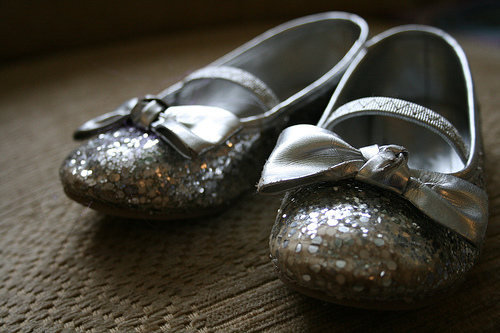
You ever have that perfect pair of jeans you simply adore--or that's a perfect fit? For my two oldest daughters, it's shoes. You know those ones with the tiny heels that click-clack across the floor or leave thousands of sparkles in their wake. They wear them until they're no longer wearable, or sometimes even grow out of them, and have to say goodbye. They don't want to, sometimes there are even tears, but when the sole falls off or the shoes don't fit anymore, Mommy knows best. And what she knows is that it's time to say goodbye to those shoes.

Just like with those shoes or our favorite pair of jeans, we have to know when to say goodbye to our stories. Sometimes temporarily, sometimes permanently.

We all do it. We get attached to a story we've created and have high hopes for it. It's sparkly, like those shoes, a perfect fit, like those jeans. We want to see it through to publication, through all the edits and all the way to the end, where we see it in reader's hands, getting rave reviews. But there are times when it's better to set that story aside, even if we feel it's very special.

From a lot of years of experience and hanging onto novels too long, I've come up with some good indicators that it's time to move on from your novel.

When Feedback Isn't Where It Needs to Be

Whether your feedback is from beta readers, critique partners, or even contest judges, if you're getting consistent feedback that a lot of your story needs work, take a step back. If knowledge of the craft is lacking, step back. Put your manuscript aside, do some study of the craft and some research about topics you need to improve on. Then you can either return to your story or start a new one if the old one isn't salvageable.

When It's Your First Manuscript

Before I get in trouble, let me just say this is a general suggestion. Sometimes someone will write that first manuscript and it's awesome! Agents love it, editors want it, and there's no problem. But for most writers, that first manuscript is a starting point. A tool to learn and see where your skills are, or even to see if writing is for you at all.

When You Can't Read Through the First Few Chapters Without Skimming

Once you've received feedback or are working tirelessly to edit, sometimes it's hard to see your story with a clear eye. If you find you're skimming paragraphs or chapters, you're not going to be able to edit your story how it needs to be reworked. Take a break and return to your editing later.

When the Thought of Editing Another Few Times Makes You Cringe

If you're seriously tired of editing, you've hit that point like, as I said above, it's going to be hard to edit your story how it needs to be edited. Again, take a break. A few weeks, sometimes even a few months, gets the story out of your head enough that you can return to it with fresh eyes. And in the meantime, work on something else that will help you. Study craft books, learn from agents or author blogs, even start plotting a new story so you have something else to work on once those edits are finally done.

When You're Too Close to the Manuscript

I have to put this one in here because I've done it before. I've gotten so close to the manuscript, it's hard to see that anything might be wrong with it. It's hard to realize that extensive editing, or at least some editing, might be necessary before trying to submit it. You need perspective here. And sometimes when you return to that manuscript, you realize it's not ready, and maybe it's time to step away from that story for good.

When the Market, Agents, Editors, or Your Heart is Calling For Something Else

I'm not saying you should be swayed by trends or stop a manuscript dead in the middle of writing it. But I am saying that once you finish a manuscript, find that perspective. See if it will fit in the market. See if you have passion to work and rework it. Pray about it. Also, don't be afraid to acknowledge that your book might just be a stepping stone to get you to something bigger and better, whether it be a new genre, or even a new outlook on the way to craft a book.

Have you had a hard time stepping away from your novel or novels in the past? What helped you do so, and was the separation permanent?

***photo by andygeers

*************************************************************************************
Cindy is a Colorado native, living near the mountains with her husband and three beautiful daughters. She writes contemporary Christian romance, seeking to enrich lives with her stories of faith, love, and a touch of humor.


To learn more about Cindy, visit her at her personal blog, www.cindyrwilson.blogspot.com

Tuesday, September 6, 2011

Steering out of a ditch...call in the troops...


I've mentioned some of the benefits of joining a face-to-face critique group here.

One benefit I recently enjoyed is getting help with a "stuck middle."

What do you do when you reach a fork in the road for your character?

I'm a meticulous plotter, yet when I begin writing the characters take over and move the story in their own direction. The imaginary tyrant takes the wheel! She likes to take the back roads. Sometimes she even likes to drive through a local farmers field after a rainstorm. Then "Miss Tyrant" wants ME to pull her out!  Suddenly I can be of service to her.

Or the car sits idly by the side of the road after one of the infamous abominable snowstorms in the homestate of "she who must be obeyed." This time I had to call in the forces.

My critique group.

Shamelessly grovel.  Call on their amazing word power and plot prowess to help you tow out "Miss Tyrant."

Here are some questions that helped get me through one of my stuck points:

1) What are my characters' options at this point? My critique group shared some options which led me to think of even more options.

2) Where will each option take her?

3) How will each option affect the resolution of my story?

4) Which option does my character have the most motivation to take, given what I know of her as a character?

5) What new obstacle can I put in her way to increase the tension?

After a session of brainstorming I found myself filled with new ideas and seeing my story in a whole new light.

Fortunately, my friends carved ruts in the ditch on their way in and through the grooves I can get back to the main road...or maybe I'll carve my own ruts and head in a new direction, but I'd better hurry up before Miss Tyrant takes the wheel again.

Tuesday, April 19, 2011

"If it ain't broke, don't fix it, right?"

In honor of Holy Week, picture of Via Dolorosa.


These past few months I have been teaching a Creative Writing course to a small group of nine and ten year olds. 

I spent hours grading the students' portfolios and I felt the Lord leading me to write a note to each student upon the conclusion of the class, sharing their strengths.

I don't think I will approach my writing life in the same way after working with a group of preteens.


What can we learn about writing from critiquing (or in this case correcting) other's work? 


Persistence.  One ten-year-old girl wrote three versions of her fairy tale.  She was encouraged when I shared that award-winning writer Hannah Tinti wrote 15 drafts of her story.  She wasn't pleased with her results, so she started from the top to change the story around.  Then she decided to try writing the story from the antagonist's perspective. I was surprised by her efforts since the students only had to hand in a rough draft and final copy.

Can you look at your story from a different perspective?  Would it benefit you to literally write a scene in first person or from a different character's perspective? Is there something you sense you need to change in your draft to improve?

Galatians 6:9 Let us not grow weary of well doing for in due season, we shall reap if we faint not.


Hard work often takes us much further than talent.  I was surprised to see which student had turned out the most outstanding project.  At the beginning of the class, I was given a heads-up that he might struggle because he has a learning disability.  I had a great big grin on my face when I completed his paper. He had consistently worked hard all semester and it paid off for him.

How often have we heard the story about an author who was persistent through many rejections? If God is taking us on the scenic route to publication (or maybe not that route at all)...let's remember He can use our writing for His glory in whatever way He chooses.  Are we so focused on wanting to be published that we may be ignoring the word of correction he may be giving us along the way to teach us about walking closer with Him?

Proverbs 12:24 He also that is slothful in his work is brother to him that is a great waster.


Ask questions to help others with their writing (and to help yourself).  The girl who wrote several drafts was spurred on by circle time where we asked "what if" questions to help her find a new vision for her story.

Likewise, the best critiques I have received ask questions in order to show me areas I can improve. Do we take the time to help others by asking the key questions about their work? When I ask questions about my own work, I have seen the quality of my work improve.

Philippians 2:3 Do nothing from rivalry or conceit, but in humility count others more significant than yourself.


"If it ain't broke, don't fix it, right?" As one student proclaimed with a proud grin as I handed the papers back, do we need the reminder?

We need to build humility, but we can still praise God for our victories and save up those great comments for the days when we have the writing blues.

Job 1:21 And he said, "Naked I came from my mother's womb, and naked shall I return there.  The Lord gave and the Lord has taken away; blessed be the name of the Lord.


What have you learned from critiquing others' work? Or what have you learned about craft from reading other writers?