Wednesday, March 18, 2015

How to Write the Perfect Ending


Photo Courtesy - Photo modified
One of my all around favorite series to read as a kid was the Choose Your Own Adventure. Stories came in all sorts of genres. I loved the concept so much I wrote one for my third grade students using them as the characters! 

I split the class into halves then quarters then eighths and so on until only groups of two took adventures to each location we'd studied: deserts, oceans, mountains, etc. 

We read the story on the last day of school breaking into the groups for each student's character. They loved moving around the room with their own copy of the book, splitting into smaller groups as their story progressed. They had a blast. And in the last hour of the party, instead of playing games, the kids sat in corners reading each other's adventures. How awesome is that?


Readers enjoy participating in a story.

While reading the Choose Your Own Adventure stories, I thought I'd picked the best route at every turn. I flipped pages back and forth through the maze of the most adventurous, thrilling, believe-it-or-not choices. What I didn't realize, is that the intelligent author knew which ending kids would most likely choose. How do I know, now? It had the longer ending. The easy solutions had short endings. I was hooked by the most satisfying story conclusion and loved reading the longer version.

As an adult writer, and now a smart person, I understand the HUGE importance of a perfect ending.

Here is what I've learned:

There are are three basic endings that can be morphed, tailored to your story:


Photo Courtesy-
Frozen with Hans of the Southern Isles and Anna
1. The neat and tidy...happily ever after story. These stories are sweet reads. All the issues are resolved. The characters are content in the end--at least the main character is. The reader is content. He/she closes the back cover and sighs. "What a nice story."

Think of Disney stories. She chooses the nerd over the rich guy, he is intrigued with the fun-loving gal behind the counter of the general store instead of the home coming queen. And they all live happily ever after....the end.

There have been some books written to answer the question: What happened next? Like: What was life like for Cinderella in the palace. What did the dwarves do after Snow White left with the prince? Was Beast accepted in the community after Belle saved him? What happened to Prince Hans of the Southern Isles after he was sent home? But none of these stories have stood the test of time. Why? Because we the readers were satisfied with the first story and its ending.

2. The expected ending. Terrible events have happened during the story. Some favorite characters have been injured, killed, or put in other dire straights. The story has basically let the reader know this would be. The reader's tissue is soaking wet at the beginning of the last chapter. And although it saddens her, she read the last pages, consoling herself through the expected ending. She closes the back cover and sniffs. Satisfied.

Think of Titanic, Cast Away, Poseidon Adventure, etc. There is no happily ever after ending, but we are satisfied. We've been prepared throughout the story, and although we held a glimmer of hope--the ending still came. In a way, we hope for a sequel that undoes the unfortunate events, after all, soap operas can get away with it. But deep down we know to add or undo would take away the satisfying ending.

On the flip side, romance and other stories can have expected endings. In The Fault in Our Stars Augustus, the wonderful, sweet, heroic Augustus, still dies.  We knew he would, but we cried when Hazel got the phone call that her love had, in fact, died before she did.  Romeo and Juliet both die. We knew this would happen. A well crafted story will lead the reader to expect the ending even if she hopes it doesn't. This produces a satisfied ending.

3.  What readers know in their heart to be the right ending but assume the author does not have the guts to really end the book that way. This is the type of ending I love to read. I'm a radical. I love to push the envelope. 

Remember when Rhett from Gone With the Wind said his famous line then walked away from Scarlett? Oh, yeah. I snickered and closed the book--SO satisfied. 

In the True Confessions of Charlotte Doyle, on the very last page, Charlotte tells her wealthy parents she is leaving, giving up her proper Victorian upbringing to become a deck scrubbing, ratline climbing, and if necessary, mutiny siding seaman. Oh yes. Another unsuspecting-immensely satisfying ending. 

And one last example, from the Batman movie series: Dark Knight Rises. My daughter warned me to wait for the end. She promised I would be satisfied, and she was right. Bruce Wayne lives.

This type of ending works only for some books. I don't think I would have liked Tom Hank's character in Cast Away to have found a way to win back his girl, Kelly Frears. The expected ending had to be. Or, can you imagine, how the ending of Titanic would have been diminished if Leonard DiCaprio's character, Jack Dawson hadn't died? Again, the expected ending had to be. 

I also would not have liked to see Beast from Beauty and the Beast kill Gaston when he had a chance. The neat ending was necessary.

Each story needs the perfect ending. Only you, as the author, can know for sure which ending is appropriate.  But you must satisfy your readers. Insure that the ending of your story is the one and only one that best fits. 

Take a moment and consider your WIP. You probably have an ending in mind. What would happen if--you changed it? 

Would the ending be better with everything neat and tidy? 
Should the ending be the expected one? 
Or do you need to pull the rug out from under the readers feet and go for the gutsy ending?

What would happen if you changed your ending? 

This whole topic came up at our recent Writer's Alley Retreat. I shared my WIP with the group. Julia came to me later and said, "I've been thinking about the ending. What if you did something different?" She had an amazing gutsy ending idea that I totally loved. It took a little time to adjust a few things in the manuscript to allow for the new ending, but it was worth the time.

 *****************************************************************************************

If you found any typos in today's post...sorry about that. 

Mary has moved to Michigan with her husband, closer to her three college kids. She misses the mountains of Montana, but loves seeing family more often. She writes young adult mystery/adventure Christian fiction, is honing marketing and writing skills, and loves to pen missionary and Bible adventure stories on her ministry blog, God Loves Kids.

Visit Mary at her website and her ministry blog to families: God Loves Kids. Or chat on Facebook or Twitter

Tuesday, March 17, 2015

Avoiding Melodrama in Your Story

Background image: BettyCrocker.com

There’s a reason chocolate chip is the king of cookies. Buttery batter with a touch of salt, dotted with rich chocolate in every bite. Amen.


Just like with writing, the secret is in the right balance. For me, the perfect chocolate chip cookie is made with Kerrygold Irish butter, a pinch of sea salt, and mini semisweet chocolate chips: A perfect amalgamation of richness and sweetness. And the best novel has just the right recipe of tension, characterization, romance, conflict, etc.


Today we’re going to talk about that fine line between drama and melodrama. Don't get me wrong -- there's a time and a place for a sprinkle of melodrama (CW primetime television, I'm looking at you). But in most genres of fiction, it’s a delicate tightrope to tiptoe.

If you’ve been following my posts here, you know I’m a big fan of a craft book called Make a Scene by Jordan E. Rosenfeld. She identifies melodrama as excessive, over-the-top emotional intensity that can make a reader feel bullied. While most can take tragedy and emotional turmoil in stride, there’s a certain unspoken trust in the limits of drama within a given story.


And when that line is crossed, trust is broken and the reader can feel violated.


For example, Nicholas Sparks is perhaps the king of drama in today’s romance market, and I was the girl who devoured A Walk to Remember and The Notebook. But his latest releases have felt incredibly unrealistic with long strings of events that seem to exist for shock value more than anything else. And I get what Jordan Rosenfeld is saying exactly because I've felt a little violated when I leave his movies (or throw his books across the room). 

See what I did there with the whole throwing books across the room? Melodrama. I recognize it. But how can you tell if your own work is melodramatic? Rosenfeld says the typical markers include:


  • cliche or cheesy “greeting card” sentimentality
  • character hysterics that last a few beats too long
  • larger-than-life romantic gestures or uncharacteristic overreactions
  • unrealistic dialogue
  • overdone descriptions


Critique partner and beta reader reactions can be a good indicator if any of this is going on in your work. Sometimes it’s hard to recognize in your own words. But here’s how you can check yourself:


Make sure pacing is executed correctly. Is drama portioned strategically so it has the most impact? Do your plot and scene intros build to the drama instead of dropping it into a reader’s lap like scalding coffee? This is where Nicholas Sparks has gone a little wayward, in my opinion. Too much and too strong to take it all at once.


Does the amount of emotion last an appropriate amount of time? Readers might be less sympathetic to a character who seems immature or unwilling to move past heightened emotions toward healing/resolution.


Would a “less-is-more” approach work better in your scene? Sometimes stunned silence, numbness, and a softer approach can communicate much more powerfully than bold emotions. You'll know when it's right, and you might not even have to do that much work because characters tend to show you for themselves in these situations. You don't even have to be tempted to tell what's going on.  


Do your dialogue and emotional reactions fit the characters you’ve built thus far? You’ve spent your story laying the groundwork for this moment, but if readers don’t have a hint of the impending eruption, it might end up leaving their tastebuds burned so they can't enjoy the smooth, velvety hot chocolate you intended to create for them.


Is your writing grounded in reality? On the same note, character dialogue and behavior should be realistic (assuming you’re not writing fantasy) to human nature to avoid being over-the-top. Reactions should be the result of a plausible cause-and-effect scenario, warranted by the actions and decisions that set them off. So resist the urge to skimp on reality or create unrealistic coincidences just because it's convenient.


Hopefully asking yourself these questions will give your story a good balance. Because just like something sweeter or spicier than expected can send people scrambling for relief in a cold glass of milk, melodrama that crosses the line can quickly get a story abandoned.


Do you have the tendency to lay it on thick sometimes? You can admit it here! No judgment :) Have you ever put down a book because the melodrama was off-putting?

---

Laurie Tomlinson is a wife and mom from Tulsa, Oklahoma, who is passionate about intentional living, all things color-coded, and stories of grace in the beautiful mess. Previously a full-time book publicist, she owns a freelance copywriting, editing, and PR consulting business. 

She's a member of the American Christian Fiction Writers and two-time Genesis Award winner in 2013 (Contemporary) and 2014 (Romance). 

Her work is represented by Rachel Kent of Books & Such Literary.

You can connect with Laurie here:

Twitter - @LaurieTomlinson

Web - www.LaurieTomlinson.com
Facebook - AuthorLaurieTomlinson

Monday, March 16, 2015

Heroes - To Flaw or Not To Flaw

Pepper here and today I'm talking about one of my favorite topics.

Heroes.
Of course you know, not all heroes are created equal, though there is a brand of hero-stereotype out there.

You know the ones-

The Superman hero: Kind, generous, honest, gentle, strong, handsome, smart, noble…. The list goes on.

Who can argue with the dashing, determined, and darling hero whose kind heart propels him forward into good works to save the damsel, kill the dragon, defeat the bad-guy. It’s the noble guy. The Captain America or Luke Skywalker. Yes…that’s ONE type of hero – but I want to start a discussion today about the OTHER kind of hero. The one who USUALLY takes the lead role in a movie and sets our Mr. Good-Guy to a complimentary supporting character place.

In a massive cast like Lord of the Rings, there are bound to be a whole group of heroes.

Wholesome, good, and FANTASTIC archer, Legolas, stands out in this group – or Gandalf the white.

Let’s look at a few of the BEST movie heroes of all time and see how they rank with the above definition.

Here’s what I found:


  • James Bond
  • Indiana Jones 
  • Captain Jack Sparrow 
  • Rhett Butler
  • Han Solo
Hmmm….as Jack would say, “Interesting”

Can this motley crew be a group of heroes too? Of course they can. Some of the BEST heroes are the most flawed ones – and I think that’s what makes them the most interesting. I guess that's why Wolverine has his own movie and Cyclops doesn't.

It’s why James Bond is an icon and Han Solo gets a higher ranking than Luke Skywalker.

Superman vs Batman? The difference is visibly obvious. But they’re BOTH heroes. Flaws. Flaws (and I daresay, humor too :) We want to see a flawed guy reach beyond his flaws and become something greater for the woman he loves.

 Let’s pit Mr. Bingley against Mr. Darcy (no offense Jane Austen) What makes us fall in love with Darcy? (besides wet shirts and ‘almost kisses’….uh hem) Complexity of character. A flawed hero. An opportunity for love to change a man to be better.

 And I’m a BIG Captain American Fan- especially played by Chris Evans – but I like Chris playing the Human Torch in The Fantastic Four better because he was so daggone flawed, it was relatable. He needed rescuing. He needed to push beyond his flaws to become something greater. It’s how Jack Sparrow became the icon of Pirates of the Caribbean. A good-hearted pirate? (mind you, I’ve never gotten past the eyeliner)

And let’s not even mention Edward Rochester. Flawed? Let me count the ways.

My oldest son added the teen criminal mastermind, Artemis Fowl – who becomes the HERO! Some more? Flynn Rider? Sherlock Holmes (the newest BBC edition is FAB)

So – what say you? Flaws or no flaws? What do you write? If you could claim any hero as your creation, who would you have picked and why? Inquiring minds want to know!

Thursday, March 12, 2015

How Research Can Strengthen Any Story


One of the reasons I love writing contemporary romance so much is that I don't have to worry so much about period-specific clothes, customs, sayings, etc. because I'm already living in the time of the story. I really enjoy reading historicals, but the idea of all that research in my own writing makes me a nervous wreck! What if I get one detail wrong and mess up the credibility of the whole thing?

But does that mean contemporary writers are off the hook when it comes to research? Not even a litte. We just do a different kind of research. We still need to know all about our settings, how the characters would really speak to one another in their home environments, and cultural normals, which can vary from one city of a city to the other, let alone from one side of the country to the next!

Doing strong research can benefit any story, and though I know it's easy to shrug off the research stage (especially as a contemporary writer or as a historical writer already familiar with a particular time in history), doing so can be detrimental. Just think of all the editing you'll have in store for you when you realize, for instance, only half of Florida uses the phrase "y'all" and drinks sweet tea! :)

A couple weeks ago, I had the chance to go on a short trip to Charleston with my husband for our babymoon. We chose Charleston because it was the perfect pace for my seven-month-pregnant-self and because we both adore the city. But, an added plus is that Charleston is also the location of my new work-in-progress. It is amazing how doing a little story-related research can energize you and get your creative wheels turning!

So, what are some ways you can dive in?


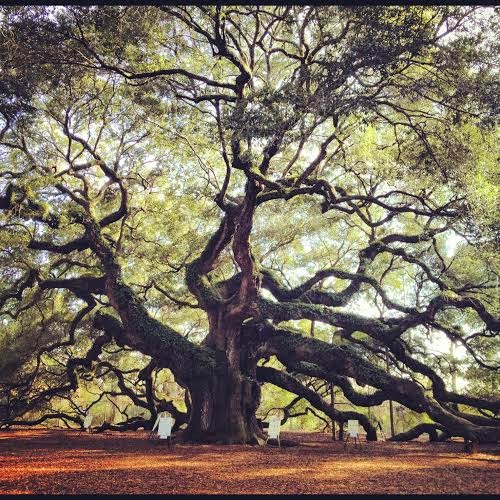
  • Plan a visit to the town/location your story is set in. Maybe your story is set in England, and this is unrealistic. Well, be creative! You may not be able to afford airfare to Europe, but I bet you can find an English teashop somewhere in driving distance! Or maybe a particular kind of house, tree, barn, etc. plays a key role in your story. Even if you can't visit the real city your story is set in, find a similar object and spend an afternoon near it. Let it really sink into your senses, and take notes. What are the sounds, sights, smells? How do people react to it? If you can visit the location of your story, even better! I guarantee the trip will be worth your while!
  • Talk to/interview someone who relates to your story. While in Charleston, I had the privilege to interview a woman who does walking tours and knows some extensive history that directly relates to my characters' genealogy. Your interviews could be with someone who knows a lot about your setting, or could be with someone who has the same career as your hero/heroine. Rene Gutteridge was the first one to give me this advice, and it really does make a difference. Something comes alive when you speak with people firsthand.
  • Take time to imagine yourself in that situation. I know for me, at least, it's easy to get a few location details at place in a setting description, then rush forward with the story. Instead, push yourself into the living, breathing story. Imagine life for your characters. Imagine how you would feel to walk the cobblestone streets or pick cotton or hide under a desk for an air raid drill. These are the types of details and emotion that set a great story apart from a good one.
  • Don't underestimate the power of reading, Pinterest, and Google searches. Yes, I know it's old fashioned and sometimes boring to pick up a biography or non-fiction book about your setting or someone who lived during that time period. But history is chalk-full of wonderful stories just waiting to be a springboard for fictional ones. Try going to your local library or bookstore, and you may be surprised how inspiration hits!

What about you? What steps do you take when researching a story? Do you enjoy the research process?


###


Ashley Clark writes romance with southern grace. She's dreamed of being a writer ever since the thumbprint-cookie-days of library story hour. Ashley has an M.A. in English and enjoys teaching literature courses at her local university. She's an active member of ACFW and runs their newcomer's loop. When she's not writing, Ashley's usually busy rescuing stray animals and finding charming new towns. You can find Ashley on her personal blog, Facebook, Pinterest, and Twitter. She is represented by Karen Solem.


Wednesday, March 11, 2015

William Peak, Debut Author Guest Interview, Part II


Thrilled to have a part II of my interview with William Peak up today. If you missed the first installment with nuggets on his writing rituals, research, and favorite writing advice, here it is. Today, thoughts on organization, a writer's journey, and an excerpt from William's novel, The Oblate's Confession based on the Dark Ages of the church. 


Q: Do you have any particular methods of organization for all your historical research?

A: I'm afraid I really don't. A novel is a big, unwieldy organism, and the subtext and background that undergirds its world, the hidden scaffolding the reader never sees, must be even larger still. To put all that in motion and make it take form and life you have to really love your subject; you have to be obsessed with learning everything you can get your hands on about it

And then, learning all that, living it yourself day in and day out, month in and month out, you begin to dream and wonder another world into existence. It's all a bit of a mystery how that works, but when it does, oh that is a rush like no other!


Q: Do you have a favorite character in The Oblate's Confession? Who and why?

A: Hard question. In a way, if you want them to succeed as characters, to appear on the page as living breathing people, you have to love all your characters, even the really wicked ones. You want your readers to believe in them, to feel that they know them, understand them to a degree, and to achieve that, to give them motive and a credible personality, you have to get into your characters' heads a little, become them, walk for a while, in their shoes. 

Still if for the sake of discussion, you told me I had to choose one character from The Oblate's Confession to spend an evening with by the fire, there is little doubt in my mind that I would choose the old Celtic Catholic hermit, Father Gwynedd. I know he would have a lot to teach me, and probably some funny stories to tell as well.

Q: Do you have a favorite book on writing craft?

A: You know I really don't. There have been writers who have written about the writing life that I have admired--Wallace Stegner, Virginia Woolf, Henry Miller, Annie Dillard, James Joyce...But when it comes to the craft itself, I think we learn from every book we read, every sentence we read...and then, of course, there is the struggle each writer must undergo on his or her own to remove the dross, refine the silver. I think that struggle must be different and unique for each writer. And so I've always been a little distrustful of books that claim to understand (and to teach) the mystery by which the art of writing occurs.


Q: Who inspired you the most in your journey as a writer? 

A: Probably my father. Of all the arts, he thought the writer's the most beautiful and the most affecting. I looked up to Dad as one might look up to a minor god, and so it was only natural that I should want to become what he most admired.


Q: Who are your favorite historical authors?

A: I would be hard-pressed to name all my favorite historical authors and works, but just off the top of my head and in no particular order: 
-Graham Swift's Waterland
-Kazuo Ishiguro's The Remains of the Day
-Alice McDermott's After This
-Wendell Berry's A Place on Earth
-Iain Pears' The Dream of Scipio
-Andrew Doerr's All the Light We Cannot See
-Willa Cather's Death Comes for the Archbishop
-Wallace Stegner's Angle of Repose
-Twang Eng Tan's The Garden of Evening Mists
-C. S. Lewis's Till We Have Faces (an often overlooked beauty when this author's name comes up)


The snow makes a sound as it falls. It is a slight sound, as if the air the snow is falling through were muttering to itself, but it is a sound. And there is something else too, another sound, muffled, distant. Practice? Are they practicing? But it is gone now. Whatever it was, the sound is gone now, the cloister silent. Except for the snow. The snow falls and falls. Like sleep it settles around the figure of a man and holds him there, as in a dream, silent, still. It is Father Dagan. Father Dagan. Father Dagan is standing in the middle of the cloister, hood up, arms at his sides, a gray and silent figure surrounded by falling snow.

There was a door. I remember that. A large door—big, dark, and, as I recall it now, new I think, the smell of fresh-cut oak creating a sort of refuge, a place into which I just fit. I was crying. The men were gone. The dark men in their dark clothes had marched off somewhere else, but I was still afraid. My father had left. It was almost nighttime and my father had left, and the dark men in their dark clothes said he wasn't coming back.

But this man came back. He looked behind the door and there I was. He smiled at me. As if this were part of the game, as if his finding me behind the door had been part of some grand elaborate game, he smiled at me. He held a finger up before his lips which made me like him and make me want to laugh, but I did not laugh. I wondered what he was going to do. He didn't tell me a secret. He took me by the hand, and, gently, he led me outside.

It was snowing. The air was soft with snow. It whispered in my ears and was cold and then wet on my face. I laughed. Again the man brought a finger to his lips. The smile made me shy. Why did he like me? He knelt down. Like a mother checking her little boy's shoes, the man knelt down. Only he wasn't a mother, he was a man, and he should have checked my shoes earlier, before, while we were still inside. 

I held my foot up for the man but, instead of checking the shoe as he should have he began to scrape at the snow on the ground before him. With big red hands the man scraped at the snow, raking it into a pile. A part of me wanted to kneel down beside the man, play in the snow with him, but I didn't. I was shy. I didn't know the rules. When the pile of snow was big, the man gathered it up into his hands and working quickly crushed it into a ball. The man placed the ball on the ground between us.

A second time the man raked snow into a pile and a second time he crushed the snow together into a ball, set it on the ground between us. Then he stopped. Instead of making a third ball, the man stopped; he looked at me. I smiled. The two balls resting side by side were pretty. You could see where the man's fingers had pressed into them. But he wanted something, I could tell. He pointed at the balls and then he looked at me, eyebrows raised. Why didn't he just say what he wanted? Why was everyone so afraid to speak here? Had something happened? Had something really bad happened?

The man's eyes grew large. He smiled at me, shook his head. Like a mother he shook his head, forbade me to cry. Then he reached out as if to comfort me; but instead of patting me or pulling me toward him, he pulled my hand out as if checking to see if it were clean. With his other hand the man now picked up some snow and placed it in the hand he held. He looked at me, looked back at the snow in my hand. I looked at the snow. It was pretty, one or two loose flakes just catching the light. The man looked at me again. He brought his now empty hands together and pretended to make another ball. I knew what he wanted!

I brought my hands together as the man had and crushed the little pile of snow into a ball like his. I was surprised by how cold it was. Something about packing the snow tight seemed to squeeze the cold from it. 

The man took the ball I had made and laid it on the ground between us. My ball looked small next to the ones he had made. Then the man did something that surprised me. He pulled two sticks from his sleeve. Like an uncle pulling eggs from his ear, the man pulled two sticks from his sleeve. Sticks and not sticks: long and pointed like sticks but also shiny, polished, like overlarge needles. The man placed the two needle-stick things on the ground beside the balls. Again he looked at me. His eyelashes and beard were now white with snow but beneath the flakes I could see that he was smiling. I smiled too. He looked funny.

The man's eyes grew large. He smiled at me, shook his head. Like a mother he shook his head, forbade me to cry. Then he reached out as if to comfort me: but instead of patting me or pulling me toward him, he pulled my hand out as if checking to see if it were clean. With his other hand the man now picked up some snow and placed it in the hand he held. He looked at me, looked back at the snow in my hand. I looked at the snow. It was pretty, one or two loose flakes just catching the light. The man looked at me again. He brought his now empty hands together and pretended to make another ball. I knew what he wanted!

I brought my hands together as the man had and crushed the little pile of snow into a ball like his. I was surprised by how cold it was. Something about packing the snow tight seemed to squeeze the cold from it.

The man took the ball I had made and laid it on the ground between us. My ball looked small next to the ones he had made. Then the man did something that surprised me. He pulled two sticks from his sleeve. Like an uncle pulling eggs from his ear, the man pulled two sticks from his sleeves. Sticks and not sticks: long and pointed like sticks but also shiny, polished, like overlarge needles. The man placed the two needle-stick things on the ground beside the balls. Again he looked at me. His eyelashes and beard were now white with snow but beneath the flakes I could see that he was smiling. I smiled too. He looked funny.

It was a man, a little man. We had made a snowman.

_____________________

I have no more memories of that night. Did we go into church afterwards? Was that where the other monks had gone? Did Father leave the little snowman standing as he had created it, out in the middle of the garth? Or did he knock it down? I don't know. I don't remember. All I remember is Father Dagan standing in the middle of the cloister, tall and silent, a gray figure with his hood up, snow falling all around him. At his side stands a tiny form, equally still and mute, white and simple--my first snowman.


To purchase William Peak's novel The Oblate's Confession on Amazon click here.


Tuesday, March 10, 2015

Guest Interview: William Peak, Author of The Oblate's Confession, Part I


I love spotlighting new releases for Library Journal and hearing the latest trends. Sometimes I'll admit I think...oh another_____ book. That's why I'm thrilled when I see new topics, issues, and time periods on the upcoming list. When I saw a book on the Dark Ages of church history, I was intrigued. William Peak is a librarian and newspaper columnist who released his debut novel this winter. The Oblate's Confession is based on over a decade of research of a lesser known but important figure in church history the Venerable Bede. William has some thoughts to share on writing and publication. Tomorrow we will run part II of Peak's guest interview, so be sure to return for more answers and a short excerpt from his release.


Q: How would you describe your journey to publication?

A: Arduous? Interminable? Truth be told, I'd pretty much given up all hope of anyone ever purchasing my novel when, out of the blue, a publisher approached me after reading one of my poems in a literary review. I sent him my manuscript, he read it, sent me a healthy cash advance, and the rest, one hopes, will be history. 

But that unexpected and extremely welcome approach took place seven long years after I had completed writing The Oblate's Confession. It's a hard world out there for anyone hoping to get a piece of serious fiction published today and be paid for it. Certainly I know of no tried and true path to successful publication (unless, of course, you've already been published and your work sold millions). 

I was fortunate. I have little doubt that untold numbers of excellent writers toil away unpublished and miserable today...and I fear that many of them will forever remain so. My heart goes out to them.


Q: What are the advantages you've found to publishing with a smaller house (Secant)?

A: Well, as this is my first novel and my first publisher, I can hardly claim to be an expert on small publishers, but certainly my experience with Secant has been a happy one. Though I have to tell you, when Secant's principal, Ron Sauder, first approached me about publishing my work, I was so gun-shy from all the rejections I'd experienced over the years that I feared it might be some sort of scam. I told myself the minute this guy asks for money, I'm out the door. 

Even after the check for the advance cleared and I could see the new balance in my account, a part of me worried that anything published by such a small company must inevitably look cheap and amateurish. But I was in for a surprise.  

Ron hired an entire stable of artists and designers to create maps and illustrations for the book, design its cover, pick its type and font size, and lay it out. I firmly believe the result to be a thing of beauty. And I love the paper the text is printed on. The stuff is so thick and creamy I can use a fountain pen at book-signings and the ink never runs into the surrounding paper. 

Add to this Ron is a joy to work with, that he truly loves my book and is doing everything he can to promote it, and you can see why, at least as far as my own experience is concerned, I can heartily recommend the advantages of publishing with a smaller house.


Q: How were you inspired with the idea for The Oblate's Confession?

A: A number of different paths led me to the writing of my novel. First, I became interested in contemplative prayer and wanted to learn everything I could about its earliest forms of expression. My research led me to the desert fathers and early monasticism. Reading about early monasticism, I discovered the Venerable Bede and his magisterial work, A History of the English Church and People. Within the covers of that book, I found material enough for several novels. Which played into another interest of mine. Ever since I was a child I have dreamed of time-travel. In imagining the world of a 7th century monastery into existence, I realized I would finally have the opportunity--however vicariously--to travel to and inhabit a time and place entirely different from my own. It is my hope that The Oblate's Confession will similarly transport its readers.

Q: Do you have any writing rituals?

A: Most definitely. All of my life, whenever I've had to move into a new house, the first step in making that house my home has been to find the room that will serve as my study. It must have a window with a view, and it must have room for my books. With the walls lined with books and a good view of nature outside my window, I can set up my desk and begin to write. 

A cup of coffee is necessary. To avoid having to get up for a fresh cup in the midst of some writerly struggle, I always bring a thermos of hot coffee with me to the study. And morning too is part of my routine. As a writer, I identify with the Appolo-like Gawain, whose strength increases as the sun rises, and decreases as it descends.


Q: What was the best writing advice you were ever given?

A: You know I have been fortunate in the guides I have had to the writing life. James Boatwright at Washington & Lee. Richard Dillard and Cronan Minton at Hollins. My father, who was an excellent writer and storyteller. While at Hollins, I used to go camping up in the Jefferson National Forest with Annie Dillard and Steve Pett. Annie won the Pulitzer Prize that year for Pilgrim at Tinker Creek, and Steve is no mean writer himself. 

(Julia: OK, this pre-published writer is getting quite green-eyed at the mention of Ms. Dillard! Talk about mentorship!)

But oddly none of these--so far as I recall--ever gave me the one piece of advice I always tell would-be authors: read. Read everything you can get your hands on. A writer who doesn't read would be like a pianist who doesn't practice. When he wanted to write, he would find there was no ink in his pen. It is from reading--massive, unending amounts of reading--that we gain the fluency required to write. 


Stay tuned for tomorrow's part II as William will share more about his research methods, inspiration, and character creation...as well as an excerpt from The Oblate's Confession.

Also, don't forget to check out Secant publishing homepage.

To buy William Peak's novel, The Oblate's Confession on amazon


Monday, March 9, 2015

Sifting Through The Words To Find Your Story

On freedigitalphotos.net by Sura Nualpradid
It was a temporal treasure—the fine white sand in her plastic colander. The work she exerted to dig deep with the blunt edge of the tool and gather up millions, billions of grains of the powdery stuff only to sift it through tiny holes and release it back to the beach again.

What a waste.

But, when the last specks fell through, a treasure appeared. Tiny shells of coral, silver, and white. Perfectly sculpted by the sea. The sand fell away, and the beauty remained.

Is it not the same as when I write a story? I try so hard to keep hold of the millions of words I've so diligently dug up from deep within my soul. I go through and “edit”, plucking out the bits of debris—the obvious rubbish of clunky words and awkward sentences. But often I stop sifting—editing—and call it “done” way too early to showcase the gems of the story. Sometimes, I even leave those gems hidden because I rush to a self-imposed deadline and don't realize there is something deeper in the story that needs to be revealed.
on freedigitalphotos.net by Keerati

Right now, I am in the sifting process of my latest WIP. With the help of an amazing editor, I have discovered not only the obvious things that need changing, but this sifting has revealed treasures in the story I did not even know were there—character qualities, subplots, motives, twists—and instead of rushing through to get on with it and empty my “colander” for the next story, I continue to sift, brush off those treasures, and make my story shine like never before.
on freedigitalphotos.net by Mister GC

Have you ever had an a-ha moment as you edit, revealing a piece of the story you didn't realize was there?

********************************************************************************

Angie Dicken is a full-time mom and lives in the Midwest with her Texas Aggie sweetheart. An ACFW member since 2010, she has written five Historical Romance novels, has a Historical underway, and is represented by Tamela Hancock Murray of The Steve Laube Agency. Angie also spends her time designing one-sheets, selling Jamberry, and drinking good coffee with great friends. Check out her author page at www.facebook.com/dicken.angie and her personal blog at angiedicken.blogspot.com