Tuesday, July 12, 2011

Becoming a Word Artisan

"The Riverbank" by Henri Matisse
“My vision blurs. 
My lungs beg for oxygen.
His hands don’t relent.                                                       
And in this moment, I cradle a delicious thought.  Maybe this is it.  Maybe it’s finally over.  He can take my life from me.  He’s taken everything else.  Why not my heartbeat? I fight to remember Sissy and Jed.  In the struggle, I finger Elijah’s bracelet under my sleeve, touching the boy and girl charms, hoping they’ll forgive me for giving up so easily.  But as light halos my vision, and I sense the warmth of a love I’ve only tasted, I give myself to it, rest in it, feel its warmth.  I hear the Voice, beckoning, whispering the kind of words I’ve longed to understand my entire life.  Such beautiful, beautiful words.”
This is taken from page 192 of Life in Defiance by Mary DeMuth, the third book in a trilogy I highly enjoyed.    There are numerous places in this novel where I could feel my heart quickening and knew I couldn’t put it down until I felt a sense of “safety.” Through several scenes I noticed the quick intake of breath that lets you know a suspense reader has really hooked you.
I’ve been reading Rebecca McClanahan’s Word Painting: A Guide to Writing More Descriptively in my quest to develop my own language usage.  I would recommend this primer if this is an area you would like to improve in your own writing and I especially appreciate the exercises included at the end of each chapter.
Aristotle in The Rhetoric of Aristotle tells the reader that good description should include four primary elements:
1)      It should be “appropriate in sound and sense.”  It should be worded well and place precise images in our mind.
2)      The reader should be able to “see” things.  We should include concrete and very specific description.
3)      As writers we should be “using expressions that represent things in a state of activity.”  Did you create a moving picture?
4)      Metaphor or other figurative language is often used.
(Word Painting, 9-10)
Let’s look at a classic example from Anne of Green Gables by L.M. Montgomery (p.53):
Mrs. Rachel Lynde lived just where the Avonlea main road dipped down into a little hollow, fringed with alders and ladies’ eardrops and traversed by a brook that had its source away back in the woods of the old Cuthbert place; it was reputed to be an intricate, headlong brook in its earlier course through those woods, with dark secrets of pool and cascade; but by the time it reached Lynde’s hollow it was a quiet, well-conducted little stream, for not even a brook could run past Mrs. Rachel Lynde’s door without due regard for decency and decorum; it probably was conscious that Mrs. Rachel was sitting at her window, keeping a sharp eye on everything that passed, from brooks and children up, and that if she noticed anything odd or out of place she would never rest until she had ferreted out the whys and wherefores thereof.
OK, first we have to discount the fact that Montgomery has written one honking run-on sentence here breaking many of today’s literary mores.  She is too wordy by today’s standards, yet still I love this description and I believe it follows many of Aristotle’s standards here.
The reader can very precisely see the stream in their mind.  We also quickly have a clear picture of Mrs. Lynde, after which even the landscape is viewed through new eyes.
“Rahab felt her stomach drop.  What was her father scheming? Their voices grew too soft to overhear. Frustrated, she strode to the end of the garden. In a dilapidated pen, two skinny goats gnawed on the tips of a withered shrub, already stripped to bare wood.  With the men and Rahab working the fields every day, no one had cleaned the pen. A putrid stench assaulted her senses—an apt background for her roiling emotions, she thought…But the knot in her stomach tightened with each passing second.”
Wow, this descriptor catches me early on, bringing me into Rahab’s emotional world and Afshar uses smell, sight, sound and physical body movement aptly.  The reader feels the physical revulsion.
Who are some of your favorite "word artisans?"

Monday, July 11, 2011

Hands-On Plotting

So, I have always considered myself a pantster. When I get an idea, I do a very barebones rough outline of what's going to happen and how it will end, and then I begin to type and just go with the character flow. Perhaps it's because I am more right-brained and plotting seems too structured for me, or maybe I just don't have the patience to sit down and map it out when my story is brimming to the surface, ready to be written.

But after listening to Shelly Beach's presentation on her plotting technique, I have a whole new outlook on it, and I'm eager to try it out. It's very hands on and I always like a little craftiness...but two pluses for me:

One, it is very visual: You have a giant map of your whole idea right in front of you as you type.

Two, it is workable: You can move stuff around and change things up throughout the writing process.

In order to plot this way, all you need are post-its, assorted colored notecards, and a large blank wall .


Step 1: Mapping Out Your Story

Begin to map out back story, conflict, complications, obstacles, ultimate crisis (climax), resolutions, using post it notes for each piece of information. In my very conceptual graphic, you see that you are doing a chapter by chapter outline (I only show a few chapters here, but you would go all the way to the end of your story). Be sure your points are moving the story forward and maintaining a rise in tension toward a climactic point (ch. 20 on my example). Visually doing this with your post-its helps you to remember where the story is going, what loose ends need to be dealt with, and what the stakes are at different points of the book.

Examples of what would be written on the post-its from my wip:

Spanish explorers arrive on the river
Chief thinks Spanish commander is a god
Fake god shows powerful arquebus,
Andres and Yana meet at falls...

Step 2: “Braiding” Plot and Characters

So, you have a chapter by chapter outline of what is going to drive your story-- through character emotions and situations. Shelly reminds us that “plot and character go together. Character's flaws drive the plot.”

To learn more about this, check out Robin Perini on Braiding Character with Plot.

Now, assign a notecard color for your main character's point of view and other characters' point of view. (Shelly suggests that one character needs to be your primary point of view.)

On each notecard, write what you want to show through the character's pov at that post-it point in the story.

So from my story (the illustration does not necessarily go with my wip example):


Post it: Spanish Explorers arrive on river
Yana: Intrigued by Andres on vessel
Andres: Journal entry: hardships on river, fear of people they may encounter

Post it: Chief declares fake god
Yana: Doubts in the fake god
Andres: Journal entry: fears his commander's idolatry, notices Yana's doubt

You begin to see how the characters and plot braid together by showing the character's pov in specific ways along the plot line.


A word on plot, from Shelly's notes:

“Don't let your focus be the plot, which is the series of events and situations that occur along the route of your story. The Plot is a natural outcome of the seeds of your story—it emerges from your setup of the characters, their conflicts and the setting they occur in. You'll write a more powerful, believable story if you focus on seed planting long before you worry about the harvest.”

Saturday, July 9, 2011

What's Up The Street For Next Week?

Beach shoesVACATION!

Even if you don't care to travel, we all love to escape on a vacation and summer is the perfect time to do it!

Whether it's to the beach...

515. God's Own CountryInto the green of the country....

Europe, Germany, St Goar Or visiting a far off land...

A vacation holds so much promise and even if you're sticking close to home, we hope it will be restful and just the right amount of time to make you appreciate your jobs. ;-)

Coming next week...

Angie returns to her notes on plot from her attendance during the Shelley Beach Writing Workshop on Monday.

Julia is your blog hostess this coming Tuesday.
Bali / Indonesia / Travel

The Self-Editing Check List continues on Wednesday with your host, Sarah. Bring your red pen and be ready to mark for physical descriptions and senses.

Wendy brings a Vacation for your Characters to the Alley on Thursday.

It's Friday! Which means Cindy will be sharing with us.


Alley NewsStand...

Country Road
To help get your weekend off to a great start and add some spice to your vacation, leave a comment for a chance to win Cowgirl at Heart by Christine Lynxwiler

We'll see you Monday!

Friday, July 8, 2011

Throwing in the Towel

This publication thing is hard. The faint at heart need not apply.

So, you've decided you're in it for the long haul. You write a few books. You send out a few queries. You attend a few conferences.

Nuthin'.

So you get a critique group, you read a few writing books, you edit a few of those books you wrote, then start the process over again.

Nuthin'.

Nothing except rejection that is.

So when is enough enough? When do you throw in the towel, raise the white flag, slink back to your only-in-my-dreams world?

Some say never. And this might totally be valid. I've heard MANY an author encouraged to "keep going, keep persevering" because publication might be one step around the corner. The stories about pursuing publication for twenty years before it actually happened come to mind.

And that might totally happen to any one of us!!! (well, let's all hope it doesn't REALLY take 20 years!)

But... it also might not.

I don't have the answers to this for you. But I do have a few suggestions.
  • Don't give up. If you're going to do anything, give in. Giving up says "I can't do it." Giving in says, "I can do it, I just want to do something else for a while first." One is quitting... the other is changing your mind. Quitting is for those who are weak, changing your mind or changing direction is for those who are wise.
  • Don't listen to everyone else. "Keep going" might totally be right on track, but if God is whispering for you to move another direction for a while, keep going is being disobedient.
  • Pray. Ask for clear guidance. Be in prayer, talk to your family, and make sure you are on the path God wants for you.
  • Don't be overly sensitive. A rejection letter isn't necessarily a "no" from God about publication in general. Neither is a harsh critique of your work. Many times it just means, "Not yet" or "Not this agent" or "Not this editor" or "You have some more work to do."  It might be backbone building. But don't see every bad writing news as a lightning bolt from Heaven that you're doing wrong. You'll be shocked most every time:-) 
  • Take a break. I can't remember where I heard this first, but I've heard it many times. When all else fails, walk away for a little while. Take a week, a month, a year sabbatical. Then reassess. If that pit desire in your stomach is still there, then go back. If it has fizzled, then you have your answer as well.
Most of all.... HAVE FUN WHILE YOU WRITE!!! This reminds me of playing basketball in the 5th grade. I was HORRIBLE at it. But I had so much fun doing it! And I tried my VERY best. Never got on the "A" team... but I sure had fun trying. If you're going to be writing for 20 years... it would stink to be miserable the whole time!!!

Having fun makes the journey, no matter the end, much more enjoyable!

Because there are sometimes... when you are scratching your head and about to take the throwing towel plunge, something amazing happens. Last week, that happened to me when I finally landed my dream agent, Rachelle Gardner. I'd had a year of struggling with my writing while I went through a personal tragedy with my daughter, and when I was really trying to reassess just how much effort I needed to be spending on my writing, confirmation came that the towel needed to stay firmly within my grasp.

Discussion: Have you thought about taking the throwing towel plunge? Since you are reading this... odds are you haven't yet, or decided to keep going. What kept you going? Have you ever taken a "break"?

Thursday, July 7, 2011

Get in Late, Leave Early!

Rachel Hauck once said…”Get in late and leave early.”

So much subtext in that one little phrase that I immediately stopped and wrote it down. What GOLD was in that phrase and it has changed forevermore how I write.

When you are told to get in LATE and leave EARLY you suddenly realize how much isn’t needed in your fiction. Why have your hero standing at the door of his home thinking if he should propose to the heroine—have the scene start at her door.

Benefits of getting in late?

INSTANT TENSION.

If you start the scene, it’s like coming into the middle of a conversation and if intriguing enough, your reader is going to want to find out what is happening. There is DRAMA in arriving late to the party.

Think of it this way: you are running late and burst into the plaza just as the bride and groom are pronounced man and wife. You are the maid of honor.

Oops.

That scene would not have had the power or the potential for a great deal more conflict if we had started back with the maid of honor in her car, buried in traffic five miles long. We don’t need the backstory to APPRECIATE the tension.

What about leaving early? No one wants to leave a fun party early. No one wants to walk off the dance floor in the middle of their favorite song as they stand in the arms of their hero. And if you did leave at that moment, it would be cutting the moment short. The same is true for your reader, lost within the pages of your book

Again, there would be tension, but ALSO there would a hook.

We all want to keep our readers reading. Whether at the end of paragraph break or at the end of a chapter, we want to keep the readers flipping pages. It is so important to keep them going through the story as Sherrinda pointed out earlier this week.

When you leave the moment early, you are giving your reader an incentive to keep going to find out when that thread is going to be picked up again.

Another place where get in late, leave early has benefited me is tightness and word count. When your story is viewed through the blinders of this one little phrase you will start to realize that much of your beginning scenes are merely SETUP. Driving, primping, internal exposition, rehashing past scenes, all the little “filler” scenes we put in because we think are needed are not necessary.

So the next time you pull up your document and look at each of your scenes, think of this: can I get in later? Can I move the entrance of my character farther into the moment so it is more dramatic, grabs more attention, adds deeper tension?

And can you leave early? End an argument by walking out, end a scene, chapter, whatever at the moment least expected. Have your character say a zinger of a line and then CUT. Stop. Leave the scene and you’ve got a hooked reader.

Keys to performing these methods would include: cut a lot of the internal exposition that rehashes what happened before, include more action, more dialogue, let your character speak through their actions—and save those moments of introspection for a later, more appropriate time.

Just thinking in “getting in late, leaving early” will completely change how you write and how you edit. You can always go tighter.

Always.

Are your brain cells not just churning now? Thank you Rachel Hauck! J

Wednesday, July 6, 2011

On Being Mentored-First Sentences

Today we'll focus on first sentence components/learning from master writers.

Sometimes I get trapped in the I don't know what I don't know syndrome.

I've attended editing classes, read books on editing, and even had critique groups tell me what's wrong with my work. 

I've opened my WIP document, stared at the computer screen/paper and thought...what's wrong?  I couldn't see.

And then I realized my problem wasn't determining what was wrong with my work; rather, I needed to know what was right with master author/writer's works. What makes their product good?

I decided to look at many components of their writing in future posts. Today I will address: First Sentences.


Let's take a look at a few first sentences from well-know works:

1. "It is a truth universally acknowledged, that a single man in possession of a good fortune must be in want of a good wife."  Pride and Prejudice by Jane Austen

You may look at this sentence in a different light depending on whether you've read Pride and Prejudice or not. Either way, please dialogue with me through the comment section. I'm learning with you.


A good first sentence should lead you to ask questions. What question does this first sentence lead you to ask? 


Here are some ideas: What does the wealthy man look like?  Who are the candidates for his wife?  Why did the author use the word "want" instead of "need"?  What other questions could you ask or hope to answer while reading the book based on this first sentence?


A good first sentences introduces the main character:
Quite clearly, the main character is not the single man in possession of a great fortune, because a main character would never say such a sentence. Rather the main character must be the one who hopefully ends up as his wife.


A good first sentence provides a tantalizing taste of the story.
What can you surmise about the book?  Duh, it must be a romance novel. The single, rich guy realizes he needs to lavish his great wealth on the woman who will be his wife. Secondly, the story must be from the point of view of the perfect woman who supposedly will fill the great need of this single, rich guy.  The initial conclusions can be wrong, but that's OK. A story is more exciting when we have to switch gears.


A good first sentence provides hints to setting.
Without a specific word about the setting spoken, I surmise the story is historical.  People simply don't talk that way today.  I'd guess Victorian period simply by the word choice and importance placed on the mentioned cultural expectations.


A good first sentence entices.
I can't set this book down after reading this first sentence.  Does he find a wife? Is she a Cinderella in need of his wealth? How do they meet?  (I did end up reading this book:) )


Let's try another....

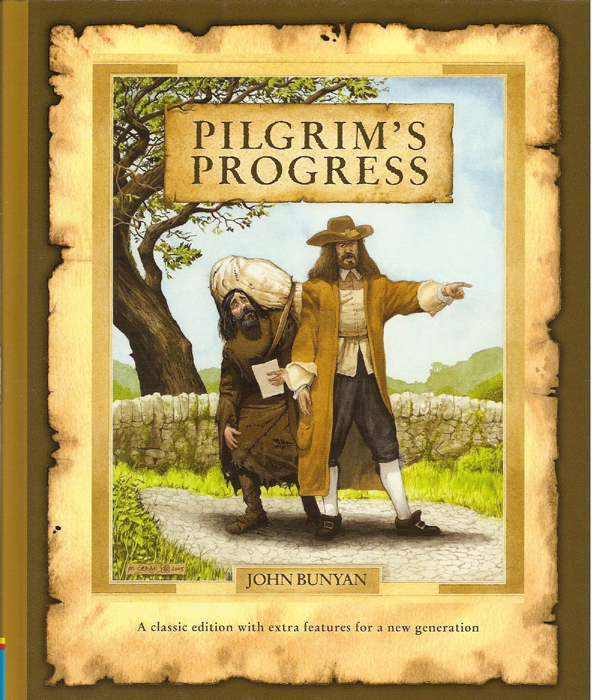
2.  "As I walk'd through the wilderness of this world, I lighted on a certain place, where was a Den; and I laid me down in that place to sleep: and as I slept I dreamed a dream." Pilgrim's Progress by John Bunyan


A good first sentence should lead you to ask questions.
Why did a den catch the narrator's attention? Most dens would produce anxiety. Is there a wild bear, a ferocious raccoon, a stinky skunk hidden in the den? Why did the narrator feel comfortable enough to sleep near the den? What did the narrator dream about? 

A good first sentences introduces the main character:
The main character narrates this story. I don't know at this point if he/she is male or female but I do know they like to walk in nature and feel comfortable sleeping in natural settings.

A good first sentence provides a tantalizing taste of the story.
The story probably centers around the narrator's dream, this should include unusual characters and unusual settings. 

A good first sentence provides hints to setting.
The wording leads me to think the setting originates in the period of Enlightenment (hence the dream). Probably will be philosophical in nature, yet inviting due to the dream setting.


A good first sentence entices.
I'd like to know why the narrator could sleep by a den. Was the narrator tired, burdened, overworked, sad? Why was the narrator sleepy? What did the narrator dream? Did he dream give an answer, direction, hope?  I must read this book.  (Actually, I have, several times!)


Here is the last sentence we'll look at:


3.  "Once there was a boy named Eustace Clarence Scrubb, and he almost deserved it." The Voyage of the Dawn Treader by C.S. Lewis


A good first sentence should lead you to ask questions.
What did Eustace do to almost deserve his name? What trouble did he do after the first page? Did he stay a trouble maker? What effect will his trouble making have on the story? Is this an adventure story?


A good first sentences introduces the main character:
Eustace is a boy. He causes mischief. Others don't like him. He might be an only child.


A good first sentence provides a tantalizing taste of the story.
I'd really like to know what Eustace did and what he will do next. I think h'ill make me laugh and yet cause me to feel sorry for him... at points. There'll probably be great adventures.


A good first sentence provides hints to setting
The character's name leads me to think this is an English story. It takes place somewhere where children live. Perhaps he is from a large family, or in a place where other children are somehow involved and who think he's deserving of such a name.


A good first sentence entices.
I'd like to know what Eustace did. What will come of the antics he creates? This sounds like a fun, adventuresome story. I'd like to read this book to find out, (and I did!)


Here is one for you to try.  This is from a well known nonfiction book:


4.  "In the beginning, God created the Heavens and the Earth."  Genesis 1:1 by God


A good first sentence should lead you to ask questions.
A good first sentences introduces the main character (person):
A good first sentence provides a tantalizing taste of the story.
A good first sentence provides hints to setting
A good first sentence entices.


Answer as many as you can, or answer the same questions about the first sentence of your WIP.


Let's dialogue...

Tuesday, July 5, 2011

How To Be A Good Hooker

Are you good at seducing? Can you entice? Can you captivate an audience? Can you leave someone wanting more? Well I'm here to tell you that you need to be a good hooker....writer-style. (*wink*)

Becoming a good hooker might be a bit of a challenge, but with a little know-how, you will be well on your way to some good hooking. Who know's? Maybe you can even make some money with your new expertise! Hooking an agent, and then a publisher, can become profitable.

There are three areas where a writer needs to be a good hooker. Each one is important, and each one requires a special skill. Well, not really, but every writer should consider each aspect with a keen eye and a determination to hook like a pro.

The Title  Now, once you are published, this may be out of your control, but when you are shopping your book around, you need a great title - one that will grab the attention of potential agents and editors. Check out these titles:
A Passion Most Pure by Julie Lessman
The Husband Tree by Mary Connealy
Pride & Prejudice by Jane Austen
Left Behind by Jerry Jenkins/Tim LaHaye
All of these are short, succinct, and tell a story in themselves. Look at A Passion Most Pure. When you think of passion, you don't normally think of purity, do you? But this book is about love's passion...in a pure way. The Husband Tree is about a woman who has buried three husbands under a big tree on her property. Fascinating, isn't it? Makes you wonder about the woman...what happened to her husbands? How does it affect her? It hooks, doesn't it?

Make your title have something to do with your story. Make it short, using words that pack a punch. If you are stumped, try using song lyrics. What about these songs? Could they make a great title for a book? Unforgettable by Nat King Cole. The Girl Next Door by Frank Sinatra. Good Luck Charm by Elvis Presley. They all spark some sort of story in your head, don't they?

The First Line  Admit it. You've gone into a bookstore, were grabbed by a great title, opened the book up, read the first line or two,and then put the book back on the shelf. First lines matter. They really, really matter. This is your opportunity to hook the reader and make them want to keep reading down the page. Check out these first lines...
"Belle Tanner pitched dirt right on Anthony's handsome, worthless face." The Husband Tree by Mary Connealy
"He stood hard and unyielding, one arm stretched across the entry as if to block Kayla's approach." Winter's End by Ruth Logan Herne
"It is a truth universally acknowledged, that a single man in possession of a good fortune, must be in want of a wife." Pride & Prejudice by Jane Austen
"All children, except one, grow up." Peter Pan by J.M. Barrie
I love the first line of The Husband Tree. It hooked me right away, and made me wonder about this woman  burying a man, who we find out is her husband. Doesn't it make you want to keep reading? How about the line from Winter's End? Nothing like an alpha hero to get me interested!

Make a statement with that first line. Bring in conflict right away. Make the reader wonder. Make them question. Capture their attention, then reel them in, using a vivid, active scene to hook them good!

Chapter's Ending Sentence  So you have hooked your reader with a great title and a great opening line. Most people will read through a chapter, but what will make them read another? And another? You have give the reader a reason to start that next chapter. You must hook them at the end of each and every chapter. Check out these ending sentences...
He leaned down to kiss her.
"Not so fast."
The voice, accompanied by the crack of a jacked shotgun jerked Wade's head around.
The Husband Tree by Mary Connealy
Aww, how sad. A kiss interrupted. Any lover of romance hates to have a kiss interrupted, but it is a great way to hook the reader. The reader knows good and well that the hero and heroine are going to kiss at some point, and they will want to read all about it.
He was a dreamer. He wanted the impossible from her. Dawn would come for him, too, and he would awaken.
Angel didn't want to be anywhere around when he did.
Redeeming Love, by Francine Rivers
Uh oh, sounds like someone is about to run away, and the reader will keep reading to see if they do. They will need to find out if they ever come back. Keep the reader wondering what is going to happen next.
He'd already seen wariness in Mary Grave's flashing green eyes. He suspected she could make trouble for him. How much trouble remained to be seen.
Courting the Doctor's Daughter by Janet Dean
Looks like someone either has a hidden agenda or has a plan for good that will find some obstacles. Every reader wants to see someone overcome. Throw obstacles in the way and see how they grow in character and leap over the hurdles put in their way.
The guards moved toward the king, but he drew his sword and backed them away. Then he stepped up and stood atop the ridge of stone teeth and, with sword in hand, jumped into the blackness of the pit.
The Devil's Mouth, by Thomas Williams
Looming adventure and danger are great ways to hook your reader. There's nothing like jumping into a dark pit with sword in hard to create creepy scenes in the reader's head. Suspense is a great hooking tool.
Oh, I know this is going to come back to bite me. I just know it.
A Girl's Best Friend, by Kristin Billerbeck
And the reader knows it too! And the reader will keep reading to see what kinds of things come back to bite this heroine and make life difficult. You feel the inner struggle and you want to urge the heroine to either be smart and don't do it, or gear herself up for what's to come. What will the character do? It's the "not knowing" that will keep the reader reading.

So there you have it. Three ways to help your skills in hooking. Do some research and crack open some books, taking note of opening lines and ending sentences. Do they hook you? Could you do better?

What are some of your opening lines? Or how about sharing some great hooking sentences? Or better yet, who are your favorite "hookers"? (One of my favorites, if you can't tell, is Mary Connealy. She is a master!)

Happy Hooking!

***********
Picture courtesy of http://www.great-lakes.org/reviews/review-09-12-05.html