Showing posts with label networking. Show all posts

Wednesday, November 19, 2014

How to Grow your Blog Platform: Guerrilla Facebook marketing


I kicked off this series by sharing the story of how I started my personal blog from scratch one year ago and have since grown it to 150,000 page views a month. In my previous post, I shared some key fundamentals that you will need to put in place FIRST, before you do anything else:
  • Identify your readership
  • Invest time to study blogging
  • Create shareable content
Those things are huge and can't be overstated. Why? Because:
  • Until you know who you are writing for, your efforts will lack focus and clarity. 
  • Until you're willing to invest time into studying a new area, you can't expect the same results as people who've put in the hard yards. It takes four years of study to get a university degree, and years of practice to master an instrument, but most people seem to think they can succeed at blogging without any applied learning whatsoever. The truth is, you can't expect a return in any area of life without an investment. And believe me - there is a LOT to learn. 
  • Until you are consistently creating WOW content with a clear takeaway for the reader, your marketing efforts will fall flat. I've heard it said that good marketing only makes a bad product fail faster. Quality content is the cornerstone of everything else you do.
Need to get caught up on those points? You can read the first post here.

For the rest of this blogging series, I'll be focussing on the fourth point: 

Become your own best marketer.

You'll need to start by setting up social media accounts and linking them to your blog. If you're not promoting your blog for free on social media, you need to be. You should have a Facebook page, a Twitter account, a Pinterest account, and a Google+ account. There are others, but these are the ones I consider essential to your success.

Each of these areas is a whole study in itself, so I'm going to break it down for you step by step.

Keep this in mind: in the early days, you're going to have to hustle. You'll spend a lot of time working strategically to grow your following and promote your posts to that following. This is what I think of as Phase One of blogging: the guerrilla tactics that anyone can use, if you have the patience and determination to apply them. It's a hard slog, and there are no quick pay-offs here. You have to do your time to see the results. 

Let's start by talking about Facebook.

So you have a brand new page to promote your blog. How do you get people to "like" it so they see what you post?

1. Put out the welcome mat.
Create an inviting cover banner that echoes the theme of your blog, and a bio that clearly states what the page is about. Get a couple of quality posts up there so people know what to expect from your page.

2. Invite your friends. Sounds obvious, but some people skip this step because they're too shy to ask. People get a LOT of requests to "like" a new page now, so also consider sending a personal message to all your friends explaining what you're doing and asking for their support.

3. Have a Facebook posting schedule, and stick to it. You need to consistently share quality content to grow your following - the sort of content that people "like", comment on, and share.

4. Join groups. 
To find groups in your interest area, type a descriptor into the search bar at the top of your personal Facebook profile. In the example below, I typed "Writers". A list will pop up. Click down the bottom where it says "See more results for 'Writers'".


When the next page pops up, select "Groups". From here, you can scroll through to find any groups marked as "Public", and if they seem relevant, you can join them. Ensure you read the guidelines carefully and adhere to them. If it's okay to share your blog posts, make sure you also take the time to "Like" and comment on others' posts as well. 

Some groups are also okay with you pasting your page URL into a status update, which will cause a "Like box" to pop up in the stream. If the group is relevant to what you're posting about, this is a great way to get some more likes for your page. 


5. Link prominently to your Facebook page from your blog. Display your social media icons at the top of your sidebar and at the bottom of every post. Install a Facebook "like" box widget in your sidebar so a casual visitor can easily like your page without leaving your site. Consider installing a Facebook like box pop-up to maximise conversions.

Increase your reach

Facebook has a complex algorithm that it uses to filter the content in your news feed. With all the friends you have and all the hundreds of pages you've liked, statistics indicate there are about 1500 status updates vying for a place in your news feed at any one time. No one has time to read that far, so in the interests of supplying the content users are most interested in, Facebook gives greater reach to pages that you have previously liked or commented on, and restricts the reach of those you don't interact with - because they are considered less relevant to you.

What does this mean for you? You could get frustrated that Facebook is cramping your reach so significantly. (Believe me, I have been there!) Or, you can work smarter to conquer that algorithm.

Some steps:

1.  Encourage interaction. 
Likes and comments on your post will significantly increase your reach. Ask questions and make sure you respond to anyone who comments. Let your friends know how helpful it is when they comment on your post - many times, they just don't know. Often the most basic rule of marketing is to simply ask for the result you want.

2. Tag your friends in your post. This massively increases your post's visibility, as it will then show up in your friends' feed as well. Of course, don't be obnoxious about it - only tag people if they've previously indicated an interest in a particular subject, or it's something you're genuinely excited to share with certain friends, or if you've asked their permission in advance. Many of the biggest Facebook pages such as Ann Voskamp (author of "One thousand gifts"; 215,000+ page likes) have a circle of friends who she tags by turn in almost all her posts. She most likely asked those friends if they'd be willing to help her out in this manner.


It's not as simple tagging people from a Facebook page as it is on your personal profile, so if you're not sure how to do it, here's the steps:

Go to Settings -> Post attribution. Here, select "Post as yourself" instead of your page name. You're now in your personal profile mode and so have access to your friends' list. Go to the post -> Click on the image you shared to enlarge it -> Select "Tag Photo" -> Click on the image and type a friend's name to tag them.

3. Pay for Facebook ads
I won't go into this in detail, because it's not something I've personally used yet. My preference so far has been to grow my page organically, but I do plan to experiment with paid ads at some point. The biggest benefit of ads is that you can hone your target audience very accurately, in order to reach your ideal demographic. For instance, you can choose to target your ads toward people who've already liked a page similar to yours.

If you want in-depth training on this method, I'd recommend Amy Porterfield. I've done a couple of her webinars and found them detailed and helpful.

4. Network in blogging communities
As you get to know other bloggers and really work to develop relationships with them, chances are more opportunities to network will present themselves. You'll find all sorts of helpful blogging groups on Facebook - re-pinning groups, post sharing groups, round-up groups and more, all designed for bloggers to help each other grow. Many are private and you will only be able to find out about them if someone invites you. The more you put yourself out there and focus on developing relationships, the more opportunities will come your way.

If an opportunity doesn't present itself, why not start your own Facebook group? Gather a bunch of like-minded bloggers and start a daily thread where you all share a recent post. Then you can each comment on each others' posts and share them on social media.

That's it for today for your Guerrilla Facebook marketing tactics. 

I hope you've learned something new and helpful. Stay tuned - I have heaps more actionable tips to come in the weeks ahead.

Find the rest of the series here:
How to Grow your Blog Platform
Essentials for your Success
Supercharge your Stats


Karen Schravemade lives in Australia, where she mothers by day and transforms into a fearless blogger by night. Her popular creative home-making blog, A house full of sunshine, reaches over 150,000 readers a month. She's a Genesis finalist for women's fiction and is represented by Rachel Kent of Books & Such. Find her on TwitterGoogle+Facebook and Pinterest.


Tuesday, August 5, 2014

How to Be a Good Guest


So excited for my first post as an official AlleyCat! What my introductory “interview” didn’t mention was my background in book publicity. In over seven years, I’ve scheduled media appearances, coordinated bookstore events, and organized blog tours for authors. I could write an entire post filled with ways these bright and brilliant personalities have, to put it frankly, behaved badly.

But instead, I’m going to share three ways you can be a good guest in your promotional efforts so hopefully you’ll get invited back :)

1. Above all, be gracious.  Whether you’re J.K. Rowling or a pre-published author with two Twitter followers, don’t get delusions of grandeur. If someone is hosting you, he or she is doing you a favor by giving you the chance to connect with a new audience.

Don’t act like you’re above an appearance or unhappy to be there. Because any hint of this in your tone can translate poorly for future opportunities, even with other outlets. Don’t be demanding. Ever. (See what I just did there?) Low maintenance guests who make a contact person’s job as easy as possible are much more likely to get invited again.

And do your best to make sure all of the stipulations you previously discussed with the contact person are met in a timely manner with excellence. Turn in your article or arrive at the designated place on time if not early. Don’t stray from the agreed subject matter or pull any fast ones. Even if you discover the people you're working with are difficult, only you are responsible for your behavior and the way you choose to react. 

If you know your heart isn't into an opportunity enough to give it your very best, don’t commit to it in the first place. But if you do, see it through and be gracious. Always write a thank you note.

2. Give back to your audience. Hopefully you or your marketing team have created room in the budget for strategic giveaways that will capitalize an appearance’s exposure. If you haven't reached that point in your career, do keep that in mind! While published authors typically give away books, promotional materials, and packages of keepsakes that fit with their stories’ themes, if you’re not published, you can give away a book in your genre (Hint: Make sure to tag that author when promoting your appearance!), a service you provide such as design or editing, or even practical non-book-related items that fit with the brand you’re trying to create.

Food is also good if you’re appearing in person. Food is always good.

While tangible giveaway items can be beneficial, I’d argue that some kind of takeaway knowledge is just as valuable to your audience. Is the overall focus of your “spiel” self-serving, or will your audience be better for it? What can they learn from your education? Your experience? Your mistakes

It’s important to have a good grasp on how your appearance is not only accomplishing your personal goals, but how it’s making your audience better, too.

3. Interact with your audience. Granted, this doesn’t apply for radio or TV spots unless the Q&A format is supported, but for appearances online or in print, make sure you check for comments and respond to the legitimate ones (graciously—see #1). End with a question or call to action that will encourage dialogue and make you more memorable. 

People love talking about themselves. It's just the way most of us are wired. Your audience will remember someone who seemed invested in what they had to say. You don't have to make a bunch of new best friends or anything, but do make sure your appearance is two-sided if possible.  

GIF by disneylatino.com
And in everything, be professional but beeeeee yourself. Unless you’re just a terrible human being, in which case, do what the sweetest person you know would do :) But seriously, there’s a huge difference between a strong hook and tacky shock value. Always choose genuine and classy over shock value. It’s just the right thing to do.

These rules are important to keep in mind whether you’re an author, business, or anyone with a message or product to promote. Hopefully if you’ve been given the platform to reach a new audience, you’ll capitalize on it in a way that's beneficial for you and them, also keeping the opportunity open in the future.

What have your successful guest appearances been like? Have you ever worked with a difficult personality before?

*****************************************************************************
Laurie Tomlinson is a wife and mom who writes stories of grace in the beautiful mess. When she's not writing, she enjoys car singing, baking, and going on adventures with her husband and little girl. 

Her first book won the 2013 ACFW Genesis Award (Contemporary), and her second is a current finalist in the 2014 Genesis Contest (Romance). She is represented by Rachel Kent of Books & Such Literary.

You can connect with Laurie at www.laurietomlinson.com or Facebook.com/AuthorLaurieTomlinson.

Monday, September 9, 2013

ACFW Confrence Prep: Organizing Your Networking


Have you gotten all those one sheets printed? How about your writing samples? And don't forget to pack those business cards!

Equipped with all these things will give you confidence as you meet people at conference.... And You will meet people! Lots of people! So here's some quick tips on getting organized for all your networking.

Editors, Agents, Mentors: Since you wont know your actual appointments until you get there, print out all the write ups of those you requested to see. Make sure you are familiar with them in some other way than that. I even had an editor look at me like I was crazy when I mentioned something that was in her write up...she didn't know what I was talking about! So, go to their blogs, publishing houses, websites, and get to know them a bit. Take notes about points you'd like to make too.

Favorite Authors: It's so fun to get to see your favorite authors in person and get their autograph on your fave book. Make a list so you don't miss anyone!

Old Friends: You probably have dates scheduled through out the week. Be sure to make an itinerary of what you've scheduled. You could print off the conference itinerary and start penciling in your own personal dates too, so nothing is missed.
Also, make sure you get their cell #'s in your phone. Texting will come in handy at conference!

New Friends: Last year, I made a list of people I wanted to meet, whether it be online friends or crit friends from the ACFW loop. This might be the one time this year that you get to have a face to face conversation, so get organized and be sure to make that effort!

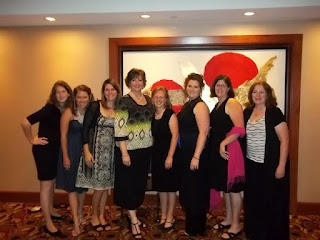
Seatmates: It's never too early to start gathering your friends to sit with at the gala. So many wonderful memories run through my mind as I think about last year, and sitting with all the Alley Cats.

Do you have any tips on how to get organized for conference? How about scheduling dates? SOOOOO excited to see some of you in a few days!!
***************************************************************************
Angie Dicken first began writing fiction as a creative outlet during the monotonous, mothering days of diapers and temper tantrums. She is passionate to impress God's love on women regardless of their background or belief. This desire serves as a catalyst for Angie's fiction, which weaves salvation and grace themes across historical cultures and social boundaries. Angie is an ACFW member and is represented by Tamela Hancock Murray of the Steve Laube Agency.


Tuesday, October 16, 2012

Why I Need a Beta Reader...and So Do You...

Do you have any non-writers that read your work?

I was asked this question at ACFW conference by a fabulous author who critiqued my first twenty pages and offered loads of good advice.

I had to answer her question with "no."

I have wonderful critique partners. I'm fortunate to have both an online critique partner and a face-to-face group full of astute critiquers. These people had all offered help that was invaluable.

Then there were the people who read parts of my story. Family. My husband. Friends. A member of my church. These people offered mostly their support. I am so blessed to have such encouragement.

Simple details. An opening of a door that didn't close. A cat that appeared out of nowhere.

Such details are in the writer's head and in my case I thought my on the page explanation was all present.

Deborah Raney explained that oftentimes other writers will miss these details as they write and as they critique. That's one reason why its so important to have beta readers, not to replace our critique partners but in addition to them.

If you are involved in the computer world at all, you are probably very familiar with the term "beta testing." My husband is an avid gamer and has been excited to be involved in beta tests for several computer games. In exchange for free play, he goes to the forums and writes about all the "bugs" he detects. Most of the people testing these games are just your average game player and have no inside knowledge of the software.

Hence the beta reader. He or she is willing to provide the service of testing your manuscript to let you know where the bugs are.


  • Are your characters realistic? Are their motives believable? 
  • Does your plot move logically from one event to the next? 
  • Are there unexplained holes? For instance, in my case a character closed the door but hadn't opened it. 
  • Have we left out details that are necessary to the plot?
Beta readers can be good at finding the big picture.

Sometimes the words beta reader are used interchangeably with critique partner. 

However, I think there is a lot of value in having a beta reader who is neither a writer, nor a close friend or family member.

I decided to enlist a friend from high school that I haven't seen in years. I thought she was a good candidate because we are not currently in close contact so I didn't think her honesty would be hindered. She is also a frequent reader so I thought she would be likely to notice issues of details. 

Here is some valuable feedback from my first beta reader:

So as a reader I felt the beginning of the book was smooth and a quick read.

For instance, Mother Anna, she needs a line or two about who she is.

For me anyways, I need the background stories to fully involve myself in the novel. or I lose interest. 

Although, I found that I had to go back to points to figure who some of the characters were and how they related to the story.

It's a great idea for a fictional novel and you have a great piece of Americana. I would love to know when you have completed this and have it published. 

(Here's to hoping on that last point).

So what did I gain from having a beta reader? 

First of all, I have decided I would love more of these and I'm willing to bribe them because the feedback is invaluable. 

Secondly, my beta reader was able to see the big picture of my story in a different way as a reader. She spent less time focusing on the grammar/mechanics and so was able to give me an idea of how the "average" reader might read my story (does such a thing as an average reader exist?)

Thirdly, she was able to give me objective feedback (although I think my critique partners are also wonderful at doing this). 

So how do I find these people?

  • Network, network, network. If you blog, its possible a blog reader might be a good fit. I am just exploring the world of LinkedIn, but it offers networking groups that might be excellent for finding beta readers.
  • Sites like Critique Circle can be a great way to find those willing to read your work. 
  • Join a book club. What better way to find those who love to read than joining a book club. (Since my book club consists largely of my family this would not be a good fit for me).
  • Think of college friends, MOPS members, moms of those in your children's activities, those you chat with at the gym. There are so many possibilities.
  • Pray.
  • Think target readership. This is a biggie. Who is the audience of your book? Where might you find these people? Hanging out at the local gaming shop? Going to bowling league after all the kids are in bed? These might be the perfect places to find a future beta reader.
Very important...make sure you give back. Beta reading is a lot of work, though the person might be willing to read your work for free make sure you give back to them in some way. Critiquing is often a partnership with give and take, beta reading can be more one-sided. Be appreciative of the advice they are giving. Offer cookies and flowers and lots of words of affirmation.


Do you have a beta reader? If so, how did you find them? 


Julia enjoys writing women's fiction whenever she can find a chair free of smushed peanut butter sandwiches and lego blocks. She is a wife and homeschooling mama of two littles. She also is a reviewer for Library Journal, Title Trakk and Christian Library Journal.


Wednesday, March 7, 2012

How Do I Network Without Being Obnoxious?


We hear about networking all the time as writers. It’s become the holy grail, the answer to everything. Want a job? Network. Want to promote your book? Network. Want friends? Network. We have social network accounts on everything from Goodreads to Pinterest.

But how do we know how far is too far? And do you ever feel like you’re being manipulative, starting new friendships with the hope of later selling those people a book?
I think it’s important to remember that networking really boils down to relationship. And all of our relationships should be God-honoring, even if they are purposeful. Is it okay to reach out to someone with the hope they will become a future reader? Sure! Think of book signings, for example. You wouldn’t invite a random person from a book signing to your house for dinner afterwards. There’s an appropriate boundary there. The key is that you don’t use (or abuse) that relationship out of its appropriate boundary.
When I think I networking, I can’t help but think of Colleen Coble because she’s such a superstar at it. In fact, most of you have probably been touched by Colleen in some way yourselves. I know I have. In addition to being so involved in helping others through ACFW, Colleen absolutely loves the folks at her publishing house. She sends them birthday cards and goes to visit them, creating a partnership. Is she being sneaky by being an easy person to work with? Of course not. She’s simply building a relationship with them, and she’s very good at that.
So how do you build relationships without coming across as pushy?
1) Show respect. We’ve all seen that person chasing agents around a conference, waving around a stack of one sheets and yelling, "You'll call me, right?" Don’t be that person. But this also applies to other relationships as well. Treat others as you would want them to treat you. Show genuine concern and investment in their lives, even if your paths only intersect for a moment.
2) Be yourself. This is very scary to do, but you can’t successfully network if you don’t put yourself out there. Some people aren’t going to like the vibe you give off. That's okay. But keep being yourself because when you do connect with people who are a good fit for you, it’ll be a more dynamic relationship.
3) Be honest. Think about the people on Facebook and Twitter who you enjoy following. What kinds of things do they post? With me, I enjoy reading updates from people like Jenny B. Jones because she always makes me laugh. What Idon't like is when people use social networking as a constant opportunity to promote their book. We want to get to know you. Otherwise we'd just read a book jacket. It's okay to say you haven't dusted the ceiling fans in eight months or that you just accidentally ate an entire bag of Peppermint Patties. These things are endearing, really.
4) Go the extra mile, whether it’s literally—to a conference; or figuratively—by putting forth effort to appreciate the other person. Again, you don't want to do this for ill reasons, but you do want to take time to appreciate those you are in relationship with, whether it be readers, mentors, editors, or friends. A relationship that is strictly "take" isn't really a relationship at all, because true relationship necessitates give and take.
5) Be available. If you're at a conference, walk around the hallways where the people are. If you're in your living room, reach out to others on Twitter and Facebook, and comment on blogs. Never burn bridges, so to speak. You can't network if you don't make yourself available and friendly to begin with.
6) Realize you don't have to connect with everyone. So often, people avoid networking because it overwhelms them. They think, "You want to me to connect with how many people? Do you have any idea how shy I am?" But the thing is, that's the beauty of networking as relationship. You just have to be yourself. Yes, you might have to step out of your comfort zone a little if you're shy, but you can adapt your methods of networking according to your personality, so that maybe you focus more on internet relationships rather than face-to-face or phone-based relationships. Customize your approach to what works best for you.
What do you think? Have you ever cringed at the idea of networking? Can you think of anyone who networks well? What have they done to make you feel that way about them?
*Image from http://mrazz.deviantart.com/art/Social-Cup-anyone-153448985?q=1&qo=1
********************************************************************************
Ashley Clark writes romantic comedy with southern grace. She's dreamed of being a writer ever since the thumbprint-cookie-days of library story time. Ashley has an M.A. in English and enjoys teaching literature courses at her local university. She's an active member of ACFW and runs their newcomer's loop. When she's not writing, Ashley's usually busy rescuing stray animals and finding charming new towns. You can find Ashley on her personal blog and herTumblr. She's also on Facebook and Twitter. She is represented by Karen Solem.

Monday, September 5, 2011

Meet Me In St. Louis: ACFW Networking


I have a sticky note app on my laptop, and one of my highlighted sticky notes has been on there since May. It is a prestigious list...the names pop out at me every time I log on, and I get a little nervous. And then I have a string of emails, and I look at those names, and I get super excited! ACFW is a little over two weeks away and I wanted to give some last minute tips (some of which I need to take for myself!) on how to prepare for this social extravaganza.

My sticky note: Agents and Editors to meet...what to do now for those pre-destined meetings:

  • Research, research, research: Make sure you know who the agents and editors are and what they represent. Although everyone focuses on their pitches and synopsis, you need to know what the agents and editors represent, who they are, what they are looking for. You can go to the conference page at ACFW and click on Editor Appointments and Agent Appointments to get their write ups. Then, go to their agency's or publishing house's website. Know the authors and the books they represent. Are they a good fit? Can you use those to compare your own book too? 

  • Prepare for the lunches: Not only do I have a list of possible appointments, I have a couple of names for who I would like to sit at lunch with. The lunches are c-r-a-z-y! Everyone is rushing to the table they want, to the agent or editor who may ask to hear their pitch...First of all...RELAX! God's got you covered here. If you don't get the person you want, you are still networking...you are meeting more writers, more professionals in the industry, you are learning the ins and outs which is just as important as pitching your novel. However, do prepare for this, know who you want to sit with—and be ready to sparkle if you get that opportunity to give your pitch. Oh, and take your one sheets with you!! The editor I sat with last year, gathered all our one sheets. Who knows if she looked through the pile, but at least I got mine out there. Look at Katie Ganshert's vlog and listen to her tips on the lunches!
My email strings: Authors and Friends to admire and encourage:

  • Be sure to find out when your favorite authors are out signing books, and be sure you bring your books with you to get signed! 

  • Look up the Carol and Genesis nominees ahead of time. You will see who the finalists are around the conference (they will have it on their name tag...but if you know what they wrote, that's even better!) Congratulate them and cheer for them at the banquet. It's so much more fun if you have a name with a face and you know what they write. You can be the conversation starter when you bump into them in the hall, and also a great encourager! 

  • Start contacting all your friends that you want to meet at conference. Find time for coffee breaks, dinners, late night chocolate indulgence (ready my fellow Alley Cats?)... You can get so caught up in your own agenda that you will walk away from conference missing great times with all these people in the blog world and the ACFW crit groups. And, you will be miserable if you don't prepare ahead and show up without any chocolate to share! 

In the end, remember conference is a chance to deepen your knowledge for the craft, and fellowship with other Christians who have the same passion for writing as you. Be confident, be prepared, and HAVE FUN!


Thursday, October 28, 2010

Building Your "Tribe"- Before Publication??? It's Who You Know

Two weeks ago I talked about building your "tribe" even before hitting publication. If holding that new novel with your name on the cover is your dream, there are steps you can take to help out the process before it crashes down on your newbieness with the force of a hurricane wind.

There is so much to learn and absorb, so much to understand in this big writing world. And with the more I learn, the more eager I am to dip my toe into the water and wade deeper. But before I am completely in over my head, there is so much more I can learn. And at this stage in the game, there is no reason to feel overwhelmed. We have the opportunity to learn so much before being thrown into the deep end of the pool. Why try to take a shortcut to publication? It will only cheapen the journey.

I didn't even begin to cover the full extent of the aspects of building a community of supporters and followers around you, so I thought a part 2 would be a good idea here. If you haven't read part 1, I urge you to do so, it explains "tribe" to a greater extent.

We have heard the phrase, "It's who you know." And I am not sure who coined the idea, but they were right. When it comes to publication, publishers won't take a chance on just anyone, and they are increasingly careful on the new writer just started out. So how do you get an agent or an editor to take a chance?


Jill Williamson and me
 Remember two weeks ago about blogging and developing a web presence? That is more than just interesting the public in your writing and your voice, you are giving a reference for an agent or editor that is seriously interested in your work, for them to go to and look into just what you write a daily basis. How do you come across on the page...er screen?

In today's high tech age, no one can really get away from not being on the Internet. And blogging and being on the web has led me into some fabulous connections with some wonderful people. ACFW is just one such organization. And has put me into contact with authors, freelance editors, critique partners, friends, conference and workshops opportunities in my area. I have an endless supply at my fingertips and you just have to dip into it.

Susan May Warren and me
I have been blessed to be surrounded and know so many authors. Not only have I learned from them (and am learning), but have developed so many friendships. I find honor in getting to know them. And even if nothing ever came of knowing them, but the privilege, I would be perfectly content. (feeding off their successes is inspiration enough!) But in developing these contacts, there might be the opportunity to meet and be introduced to editors, agents or even someone who can take you farther down the journey toward publication.

Now, I'm not saying to meet and befriend authors just to climb the ladder higher. I am not saying that all. I am saying you can learn so much from them. Read their blogs on writing, or their acknowledgments in the back of their books. Because in doing this, you become more acclimated with the industry, understand the ins and outs. Know what you are getting into before you cannonball in head first.

By standing in the background and watching the busyness and excitement swirling around you, you will be better prepared to enter the fray if you know what to expect. And if you have someone to lead you into that circle and hold you steady in the frantic atmosphere, you won't be so easily overwhelmed and run over.

It is all about the relationhips you build with other writers in your genre, the genres surrounding you and the authors you love to read. These authors have a wealth of experience and knowledge that many are just dying to share. You simply have to ask. They have walked in your shoes, understand your struggles. Turn to them for help when the confusion hits an all new high. Or the swings of publication take you on a roller coaster ride you weren't expecting.
We don't need to look at the world as something to conquer and run over just to get to publication, but we do have to look at as an opportunity. Life is a job interview and the world of publication more so. It is well and good to make contacts and meet new people, shake their hand, chat a few minutes, glean from their knowledge and put a name to a face. But in the end, pushing publication faster down the track will not prepare you for the ride. Let God move in those circles. The greatest agent or editor to meet might not be for you if that isn't the house your book needs to be in. It is in those moments that you have to trust that God has your best interest at heart and will move in the right direction and circles that you need to be in.

But until then, be yourself, willing to work, have an eagerness to learn and a spirit of friendliness. Pray for God to put those people in your path that you need to meet and be ready to jump in when the time comes that you can help that person out. Don't do it expecting something back in the end, do it because it is the right thing to do. And do it because when the times comes and you need the help, you will have built up friendships and references that you can turn to for advice and help.

That in my own humble opinion is that greatest way of building assets, and your community of supports and followers and the truly wonderful relationships.

Any thoughts? I would love to hear them.

Thursday, October 7, 2010

Building Your "Tribe"- Before Publication???

Tribe. A community of people dedicated to a cause or purpose, supporting and following the "leader".

I recently finished listening to the 2009 ACFW conference recording, continuing education lecture given during the conference. It was given by Karen Ball and Allan Arnold and if I had been attending the conference, I would not have taken the class, because it would have been too advanced. But, since I am just listening, I didn't pass up any of the classes.

And the one thing that I truly took away from the class was the importance of building my "tribe". Or a community of followers. So how do you build something so important and why would you even attempt it before publication? What is the importance of building an image in the writing world before that new blockbuster even hits the shelves?

Customers
You want people to buy your books right? If you are a complete unknown, people still might take a chance on your book and pick it up off the book store shelves, but if you aren't doing anything to make your "voice" known in a sea of choices for the consumer, you are going to be lost. So how do you make yourself known? You take the first step in building your tribe: build a web presence.

I love to blog, it is more than a fun hobby for me, (even though it is a fun hobby), but I am also looking at it as a chance to make my presence known. How have I done this? A website for me at this stage in my career is not going to help me. No one knows my name to Google it and visit my webpage. So instead, I moved into the next best thing: a blog.

A blog is more than just an online diary (though it certainly can do that as well), but it is a place for the  everyday person (most often a book consumer, at least the people I draw to my blogs), who are always looking for something good to read. So cater to these people I offer many giveaways in quality Christian fiction, book reviews, but I also post lessons I am learning or lessons from the heart

Readers are going to connect with the heart of the issue. What are you passionate about? How do you present it in a way that makes the reader sit up straighter and take notice? You have to be passionate.

I have discovered recently that I am passionate about relationships. Relationships in marriage, with God, and I am particularly passionate about relationships with women and their faith in serious situations.

So, because I am passionate about these issues, why not write about them? Show the reading public just what I value. Readers are going to be attracted to passion and the kind of passion for Christ, along with good writing.

Blogging is fickle though. Blog hoppers are going to want to visit blogs that are eye catching, update often and do something more than just pontificate about nothing. At this stage in my writing, I blog nearly everyday. I have the time and even if I didn't, I need to make the time. I have no deadlines from publishers and I am busy perfecting my craft, but if my main goal is to be published someday, I need to start building my community of supporters.

I talk about my writing journey, my faith, and the struggles I encounter. Readers are going to connect with struggles. I have gotten so much support from my followers who encourage and support me, but more than that, they see just what I am all about.

Building a tribe of people to support and follow you is more than just for emotional support. When your new book is hot off the presses and ready to be sold, who are the first people you are going to market to? If you have built around you a group of people who like what you write and are excited for what you write, they are going to pumped and excited to see your new product. These people have seen your struggles, walked the journey with you and are now ready to celebrate.

So again why is this so important before publication to form a tribe? It isn't something you can form overnight. It isn't something that will magically appear once you start blogging, you have to be willing to let it take it's time and form as you connect with people around you.

I am seriously considering opening up a Twitter account. To connect with even more people, understand the program before I hit publication and really need to utilize it.

I received one of the nicest compliments the other day. I was talking to a lady inhouse for a small publisher about a writing conference. I had emailed her earlier and she checked out my blogs. When I called her later, she told me it appeared I was doing a great job of building a community and making myself known.

That is what building a "tribe" is all about. Making yourself known and ready to tackle the market.

One of the best tribes that I am personally apart of, is Julie Lessman's. Julie has so many loyal and eager fans. Fans that throw parties when her books come out, write raving reviews, hold contests, talk about her books. Give them away. That is what her tribe is all about.

I want to see her do good. I want to see her put out more books and I want to let the whole world know that her books are marvelous.

That is the kind of tribe you want to surround yourself with.

So to recap:
*Build a web presence- blogging, Twitter, Facebook, groups passionate about your passions
*Find your passion- and write about it
*Cater to your tribe's interests. Giveaways, reviews, thoughts, but stay true to who you are. People will find you

People who are passionate about your passions are going to be the people that are going to find you. Why wait to build a community of support? When that book hits the shelves you are going to be busy marketing and promoting, book signings and blog tours, the last thing you need to be doing or worrying about is the building of a community of followers. These people will be your greatest asset, don't let this chance slip you by.

Do you have the start of a tribe yet? Have started building that presence that people are not soon to forget?

In two weeks time, I will be talking about the other aspect of building your tribe: connecting with authors and readers on a relationship level.

Thursday, May 20, 2010

Everyday NetWorking- It's Who You Know

I don't know about you, but the thought of networking used to make me want to cry myself to sleep at night. What would I do when I was published? How would I know how to go about it? When that golden contract landed in my lap and I had to go hustle endorsements, WHAT WAS I GOING TO DO?????

Now, first I want to make it plain, that I am not published. I don't have a contract and I don't have an agent, but what I do have are friends and my own personality. So take it with a grain of salt and hopefully the realizations I have learned lately will be an encouragement for you. : )

First of all what is networking? It is surrounding yourself with a group of contacts in your area of expertise that can help and support you and give you a boost up that ever growing ladder of publication we all long to climb. They are the ones that help get your foot in the door, the ones that endorse, the ones that do battle with editors and agents to get you rolling.

But how do you get them? Or you might even be asking yourself, "Oh, publication is so far away, I don't need to do that!"

But I don't think there is never a better time than the present. And that frankly is what used to scare me so much. No longer.

I am very much a people person and love to make friends. I love to surround myself with godly people and get to know each and every one.

Whenever I win a book I always try to get a thank you back to the author. Out of those contacts based purely on my love for their fiction, have grown some wonderful friendships. We have grown familiar of each other through our blogs and emails. Familiar enough that I would be comfortable emailing these wonderful ladies and maybe someday asking them to endorse my book.

Now, before you get me wrong, I DO NOT email authors with motives of someday getting something in return. I do it because I want to see the authors supported and let them know just how much I value them. And in the process I have been blessed with some pretty incredible correspondence.

So networking tip #1: spend some time getting to know your favorite authors. Even if NOTHING comes of it than a chance to support them, you are building a relationship that you may someday look back on as a starting point for your own writing. Generally speaking if you read an author's work, you would like to write like them, to a certain extent.

Another tip: while you have the time and energy, blog. Blog often and continuously. Blogging has become so popular today and it is one of my favorite pastimes. When I blog, I am not only developing relationships with my faithful readers, I am also developing a readership. Of the 138 followers on Writing for Christ If God willing I get a book published someday, they will be the first people I will present my book to. And many of my review friends will get a book to review.

So networking tip #2: develop a readership with blogging. You can do that by blogging a lot and on subjects dear to your heart and readers. Readers will see your passion on the screen and will most likely return for more.

Final tip #3: attend writer's workshops. I recently attended a class with author Susan May Warren and leading literary agent, Chip MacGregor. Wow, what an experience. I really loved every minute I got to spend with Susie and Chip and the rest of the attendees. And while nothing came of that class, like signing with MacGregor Literary agency, : ), I got to meet both a big name author face to face AND a big name agent and spend time with them. I even ate breakfast with Chip and his wife. And no, I didn't pitch my book, I was too petrified of being cut to ribbons in the execution (not that Chip would have you understand).

But Chip and Susie now both associate my name and my face and my writing abilities (oh scary thought). I have met Chip, spoken with him and in doing that I have gotten my foot wedged a tiny bit in the door. Because one of their requirements at MacGregor Literay Agency is before they even think about representing you, they want to have met you personally or have been recommended.

So, networking tip #3: meet agents and editors just for the sake of meeting them. Shake their hand, talk, visit, eat breakfast with them : ), but generally be friendly and yourself. It's not hard and it doesn't hardly take any energy.

When this blog was started, Pepper was the one to email me. She was so much braver than I to just email a complete stranger out of the blue (well, okay I knew she would email after chatting on her blog) but she was networking, getting to know other writers and gaining friends on this journey of learning. I have been blessed by her stepping out in faith and blessed abundantly with four lovely ladies who also write here that are willing to put up with me. : )

All of these things you can do right now without even thinking about it. I didn't set out in writing authors to gain friends, but I have (love you guys!!) and maybe someday they will be willing to help me out. If not, that's okay, because I have been blessed by their friendship. Their determination to write has fueled my own. Their stories of struggling and perseverance have pushed me to continue trying my hardest.

When I started blogging, I had no idea that in less than a year, God would bless me with 138 followers! But they are getting to know me, I them, and in the end that could prove so very useful. If not, the journey has been fantastic anyway!

That class in April was so very helpful, and maybe someday will prove profitable too. When I finally have a completed novel, I might be able to walk up to Chip and go, "will you read this?" or "can I tell you about this story?" and he might be more willing to sit down and visit than if I were a complete stranger. If not, you know what, it was pretty neat to meet one of the top guns in the industry. : )

So, go forth and network! Don't be petrified, it's really a lot easier than it sounds!

Have any other ideas for me? I would love to chat more with you in the comment section. : )