Showing posts with label genre. Show all posts

Friday, November 21, 2014

A Writer's "Brand" (or lack thereof) with Guest AMY MATAYO


In the past six years I’ve written eight books, and I’m currently working on the ninth. That number
doesn’t include the four books I’ve stopped and abandoned for one reason or another, the main reason
being my extremely short attention span. For the finished books, their titles and genres are as follows, in the order they were written:


Walking in Circles (YA)
The History of Me (YA)
Don’t Ask Why (YA)
The Wedding Game (Contemp Romance)
Love Gone Wild (Contemp Romance)
Sway (NA)
In Tune with Love (Contemp Romance)
The End of the World (NA)
Title not yet public (NA)

So far only three books have been published. Next year, four more will follow—two of which are
complete and two others in varying stages of nowhere near complete. But this is what I do.

So why am I telling you this?

Because I love to write. And because I hate to write. Because I need to write. And because I often wish I didn’t need to write. And this is how the cycle goes for me. Every single time. Each time I open up a blank document to start a new manuscript. Every time I begin a new chapter or sit in wide-eyed panic as I face the dreaded kissing scene/fight scene/turning point/end of the book.

I love it.

I hate it.

And as you can tell by my very inconsistent genres, my moods often flip back and forth.
Just like my real-life moods. Sometimes I’m happy and feeling a bit on the snarky side (The Wedding Game, Love Gone Wild, In Tune with Love, Title not yet public).

Sometimes I’m feeling a bit reflective (Walking in Circles, The History of Me). Sometimes I read a local newspaper headline and write a story about it (Don’t Ask Why). Sometimes I’m wondering what the world would be like if we could all just get along a little better (Sway). Sometimes I’m feeling a bit sad and trying to find the hope in life (The End of the World). And sometimes (always) I’m feeling a little scatterbrained (all the books I haven’t completed).

Again, why am I telling you this? Because in the writing world, there’s a little term often thrown around calling “branding.” Authors are often encouraged to find their brand (funny, serious, reflective, etc.) and stick to it. And that’s a good thing. A great thing actually, because it makes you very dependable to a reader who wants to know that if they spend hard-earned money on your book, they’ll enjoy it. I’m just not very good at branding.

Kind of like a songwriter who has a plethora of subject matters on a single album, my books sort of
follow the same format. I’m never sure what I’m going to write about next—whether it will be happy or sad or somewhere in between—but my hope is that whatever I write, I do it well. At least marginally so. My next book, The End of the Word, (out Feb. 10) is a bit different than my other books. But I hope that’s okay, because sometimes I need different. A different place, a different mood, a different kind of story that will pull me in and show me something new. And that’s my hope for The End of the World. That you will be pulled in, and that no matter what mood you’re in when you read it, it will be a halfway pleasant way to escape for a few hours.

But in the meantime, I hope you’ll read Sway. Because that would make me really, really happy.

Amy Matayo

***
Amy here (the other one!): I for one, LOVED Sway. Anyone else read it? Having read Amy's other books I suppose I went into this with some expectations, but Sway threw me, and that is precisely why it was so spectacular. The story was layered just right, the dialogue witty and perfectly tuned, the story poignant and complex and again, just so unexpected I was riveted. I loved how the precisely frayed edges in this story were woven back together with a message of grace. This story will challenge you like only the best stories do. You will not walk away unmoved. Thank you, Amy (Matayo---sheesh! That's confusing, right?) for this refreshing change of pace. Can't wait to see what you come up with next!

So tell me, Alley Pals... Do you have a brand? Do you write one specific genre or do you change with your mood? Leave a comment... tell us a little bit about what you are writing now and I'll giveaway a kindle copy of Sway! Happy Friday! Now go write something fabulous!


Amy Matayo has a degree in Journalism from John Brown University. She worked for seven years as Senior Writer and Editor at DaySpring Cards until the birth of her first child. Amy was a freelance writer for David C. Cook before pursuing novel writing full time and focuses on edgy, contemporary books for women of all ages. She is the author of The Wedding Game, Love Gone Wild, and Sway. She lives with her husband and four children in Arkansas. Please visit her online at www.amymatayo.com. or @amymatayo amzn.to/1qDiw0C

Click here to check out Sway

Thursday, April 24, 2014

What's Your Genre?


As I write this, I'm sitting on the couch, preparing to record a huge stack of essays I just graded. I've been grading these essays for my poetry and literature courses for the past few days, and I think it's safe to say I passed the realm of normalcy quite a while ago. I even bought myself this to make the job a little more fun:


Can you say, "hashtag nerdy teacher?" I know. I know. But felt-tipped pens are so glorious!

So, here's the thing. Ten years ago, I thought I wanted to be an elementary school teacher. I had NO concept of what it would look like to teach college courses, and no idea that I even could. I mean, I knew I wanted to teach, and that was about it. I was planning to major in elementary education until, at a college orientation, a very quirky old man with a penchant for Canterbury Tales factoids handed out some pamphlets about all the things you could do with an English major. He would later become one of my favorite professors and my current boss.

See, you can say to someone, "I'm a teacher," and they may think they know what you do. But what they don't see is the difference between a poetry instructor and a kindergarden teacher, a remedial reading instructor and a chemistry adjunct. Those differences may seem subtle, but they're not. They make all the difference in the world.

The same is true with writing.

You may wonder why genre matters. Well, think about the previous example. If you say to someone, "I'm a writer," what comes to their mind? A romance novelist? A literary critic? A poet? A cozy mystery writer? Sure, all of these people share a passion for the written word. But writing means something SO different to each of them.

The reality is, editors, agents, and readers expect certain things from certain genres. In a love story, readers want the characters to end up together. Unless you're Nicholas Sparks, killing one of your main characters right before the grand finale is going to result in a very unhappy reaction from your readers. Same is true with women's fiction or literary fiction and the expectation of carefully-crafted prose and true-to-life characters.

Trying different genres can be very fun. But like changing majors in college, eventually, you really need to pick one (unless your name is Pepper Basham, and you can amazingly write exceedingly well in every single genre known to mankind). 

When you're first starting out and you're beginning to submit to agents and/or editors, it's important that you really know who you are as a writer. Again, don't just think of yourself as a "teacher," or "writer," but as having a particular kind of voice that's invaluable to a publishing house. No one wants to publish just another "writer." What they want is your unique voice as a writer.

So how can you find your genre? 

Try dabbling in different styles and see what feels most natural. When I first started writing, I tried to write literary fiction. While I enjoy the depth and complexity of it, let's just say, I doubt anyone is going to be reading any of my literary fiction anytime soon! I then found the southern romance genre, and writing has been immensely easier and more fun ever since. 

Also, consider what you like to read. Are you drawn to historical fiction? Contemporary romance? Romantic comedy? Take into account your interests as a reader, and you may find out something about yourself as a writer in the process.

What about you?! What genre do you write? Are you still trying to find your genre? What are you favorite genres to read?

************************************************************


Ashley Clark writes romance with southern grace. She's dreamed of being a writer ever since the thumbprint-cookie-days of library story hour. Ashley has an M.A. in English and enjoys teaching literature courses at her local university. She's an active member of ACFW and runs their newcomer's loop. When she's not writing, Ashley's usually busy rescuing stray animals and finding charming new towns. You can find Ashley on her personal blogFacebook, Pinterest, and Twitter. She is represented by Karen Solem.

Thursday, November 14, 2013

New Adult--- What in the world is it and can Christians write it?

Have you heard of the "New Adult" genre?

It's a newish genre that is being bantered around lately and stirring a wide range of opinions on the matter.

I did lots of searches this past week on the New Adult genre and came up with quite a few different definitions.

A common perception is:

"New Adult is just YA with sex scenes added in."

If that is the case, it leaves those of us who write fiction from a Christian world view in a bit of a conundrum. Can we adequately write "New Adult" fiction if the key difference is graphic sex scenes that are usually missing from our novels?

My answer: YES YES YES!!!!

OF COURSE we can.

The thing is, I don't agree with the definition of New Adult being "YA + SEX." And many authors who write "new adult" fiction agree that it is an unfair over-generalization.

New Adult is more about creating fiction that addresses the lives/issues/struggles of those who have left teenagerdom behind and entered the world of adulthood--ages 18-26ish. College, first real jobs, first true loves, and yes, even figuring out how sex plays a roll in their adult life.

I have this secret for you...shhhhh... don't tell anyone...

CHRISTIANS HAVE SEX.
(I know... you're shocked... You TOTALLY thought the whole stork thing, didn't you...)

And Christian "new" adults, especially in our current hypersexualized society, have a struggle in front of them went it comes with dealing with this issue. Ignoring sex and the desire/temptation thereof does no one any good.

Writing "New adult" fiction from a Christian worldview has the ability to SHOW not TELL... show the struggles--the failures--the consequences. There are a lot of great non-fiction books out there for Christian adults on the topic of sex, both for singles and married couples. But in story form? Not-so-much.

And as mentioned, the new adult genre is really NOT all about sex. There are a lot of things new adults have to tackle. Drugs/alcohol/integrity at a job/bullying--while these aren't narrowed only to new adults, they are big topics for that age group, and we should not be afraid to throw the realistic life issues at our characters and see how they handle them. We have fascinating concepts we can weave in there too. Things like God's GRACE and MERCY and REDEMPTION. Even forgiveness-- both of others, and learning to forgive ourselves.

Discussion: What are your thoughts on this new "genre"? Have you ready any books from a Christian perspective that would fit? Do you think it is possible to tackle tough issues that new adults are facing in fiction without crossing "CBA" lines?

*************************************************
Krista is a follower of Jesus, a wife, a mother, and author of Sandwich, With a Side of Romance (which just so happens to feature a 20-year-old heroine, GO FIGURE!) She blogs about finding JOY in the journey of LIFE at http://www.kristaphillips.com. She is represented by the fab agent, Rachelle Gardner.

Tuesday, July 23, 2013

A New Genre Emerging: New Adult

Photo by imagerymajestic
freedigitalphotos.net
You may have heard this news, but I was shocked - and intrigued -  by the news of a new genre emerging:

New Adult

What is the difference between New Adult (NA) and Young Adult (YA)? I wondered that too. So I did a little research and discovered some interesting things.

NA books features protagonists age 18-25, the age in-between adolescence and adulthood. It is the time time when a person leaves the security of home and deals with making decisions and "growing up". The themes and issues of NA books are more mature, such as identity, abuse, bullying, sexuality, etc. These kinds of themes, when coupled with new life experiences such as starting college, first jobs, new friendships after college, engagement, wedding planning, etc, make life an difficult path to traverse.

YA books features adolescents...teenagers. It is the crazy teens years, with all it's drama and angst and adventure. It is a time of firsts...first boyfriend, first kiss, driving, getting on the cheerleading squad, first job, etc. It is the coming of age.

Where YA appeals to younger readers, NA is marketed to the 18-30 crowd. It is more PG-13 than PG...and depending on the sub-genre, it could lean toward an R rating.

Did I say sub-genre? Yes, indeed! NA books can be found in romance, fantasy, paranormal, dystopia, science fiction, even horror.

In my research, I didn't really find this particular genre in the Christian market. I am sure there are books out there that fit into this genre, but it is just not labeled as such. It's still pretty new and not all publishers even consider NA a valid genre.

It really came into play when some independent writers made it big selling their NA books as ebooks. Big name publishers then picked them up and offered them HUGE contracts. These books struck chord with readers and publishers are beginnining to take notice.

Now whether the Christian Booksellers Association (CBA) will follow suit, I don't know.  Maybe they already have and I just cannot find the information. But it seems that there would be a place for the NA genre within the smaller confines for the CBA world. The landscape of publishing is ever changing, ever growing. It's an exciting time, for sure!

What do you think? Have you heard of this genre? Does it sound appealing to you?

Tweetables:

Heard about the emerging new genre? New Adult is here at The Writer's Alley! Click to Tweet

New Adult or Young Adult books? What's the difference? The Writer's Alley Click to Tweet


****************************************************************************
This post is brought to you by
 Sherrinda Ketchersid

Sherrinda is a minister's wife and mother to three giant sons and one gorgeou

Wednesday, November 14, 2012

Applying the Moral Premise to your story


In my last blog post, I shared with you the one ingredient common to every commercially successful story.

If you’re not up to speed with the rest of us, take a minute and go read the post here. I promise we’ll wait. J

Back again? Great. So now you know that for your story to experience commercial success – for it to resonate with a broad audience – it must be built upon the foundation of a Moral Premise. You also have an understanding of what the Moral Premise is, how it differs from the concept of a theme, and how the Moment of Grace becomes a pivot point between the protagonist’s pursuit of vice and his pursuit of virtue.

This week, we’ll be looking at how to apply the principle of the Moral Premise to our stories. Dr Stan Williams, the brilliant author of The Moral Premise: Harnessing Virtue and Vice for Box Office Success, breaks down the process into 8 straightforward steps.

1. Determine the controlling virtue.

What do you want your story to really be about? And how do you go about narrowing down all the possibilities to one key idea? Do you just close your eyes, poke your finger at a list of virtues and see where it lands, then run with it?

No. Because if you choose a value which means little to you, your story will flounder in the shallows. Your audience will sense your lack of passion.  Dr Williams explains this so eloquently I’ll quote him directly:

“A controlling virtue… is a value that you, the writer, must hold in the highest esteem. It is something you are passionate about getting more of; something that gets you out of bed in the morning to write about. It has to be a value that connects with your view of humanity on every level. It is something that is eternally true, and hopefully of importance to most, if not every member of society… your audience.”

2. Determine the controlling vice

The controlling vice must be directly oppositional to the controlling virtue. For example – greed vs. generosity, or love vs. hatred.

Williams then shakes things up by advising writers to allocate vices to the protagonist, and virtues to the villain.

Yep, that’s right. Kinda the opposite of what you might expect, huh? But he has a point. In order to avoid cardboard cut-out characters, our villains need to have a sympathetic side, while our heroes need flaws to overcome so we can relate to them and see them grow throughout the story.

3. Determine the Moral Premise.

Let’s brush up on the structure again.

(Vice) leads to (defeat); but
(virtue) leads to (success).

Here, Dr Williams lets us in on another pointer. He suggests thinking of the defeat and success elements as the physical/ external goals of the protagonist, while the vice and virtue components sum up the characters’ psychological or internal goals.

Are you beginning to see the power of this tool? Nail this step, and you’ll have a structure that embodies the internal and external story arcs, conflict, and resolution of your novel.

4. Determine the (story’s) genre

Williams rightly points out that the writer’s choice of genre creates certain inherent expectations, which will predetermine much of your story’s structure.

You’re writing romance? It’s a given that the guy and gal will end up together. If you fail to deliver on this for your readers, you’ll lose their trust. If you’re writing women’s fiction, on the other hand, you have a bit more wiggle room. Women’s fiction authors like to do unexpected things such as killing off the male lead halfway through the book. (Insert evil laugh here.)

Whatever your genre, knowing its accepted parameters will help you define the structure of your book.

5. Determine the protagonist’s physical goal

You already know what your story is really about. (See Step 1.) Now you need to relate this to the physical goal of the story so that the external action becomes a metaphor for the internal truth of the tale.

Often, the physical goal (the hook) is what you begin with – the original spark of an idea for a book – and the internal truth follows as you learn more about your characters. Whichever order you develop these in, it’s essential that the two are related in order to convey the Moral Premise in a powerful and consistent way.

6. Determine the protagonist’s physical obstacles

That is, the things that prevent him or her from achieving the physical goal. Often, this will be an antagonist whose goals oppose those of the MC.

7. Determine the major dramatic beats

This step involves creating character arcs for each character in your story, each of which must embody the same Moral Premise in differing ways. The essential rule here? KEEP IT ABOUT ONE THING.

Williams iterates, “If the physical goals of the various characters do not refer implicitly to the Moral Premise, then you are writing two different (stories). Stop. Fix it. A successful (story) is about only one thing, like a well-constructed sentence or paragraph. Each sentence in a paragraph supports the topic sentence. If it doesn’t, get rid of it, use it in a different paragraph, or a different (story).”

8. Sequence the dramatic beats

Here’s where you take the information you’ve worked out about your characters – their goals, virtues and vices – and structure them into a plot: a sequence of events that will propel your protagonist to the climax.

Williams delves into great detail at this step, with extremely helpful structural advice. Such detail is beyond the scope of this article. Want to know more? You’ll need to buy his book! I highly recommend it.


Did you find this breakdown helpful? My lightbulb moment was when Dr Williams says that if our characters’ goals don’t refer implicitly to the Moral Premise, we’re writing two different stories. Uh – GUILTY! To be totally honest, I’ve probably been writing four different stories! I’m so happy to finally be able to pinpoint the main structural flaw of my novel! Anyone else have a lightbulb moment…? J

Image by chaiwat, courtesy of freedigitalphotos.net


Karen Schravemade lives in Australia. When she's not chasing after two small boys or gazing at her brand-new baby girl, she spends her spare minutes daydreaming about the intricate lives of characters who don't actually exist. Find her on her website, on Twitter or getting creative over at her mummy blog.


Thursday, August 16, 2012

Finding your sweet spot

The only poetry book I ever liked....
I am so very much not a poet
but every once in a while
I attempt to get my rhyme on
And hope it gets not a frown, but a smile.

You see here is the thing
About what we try to write
Sometimes it works well for us
but not if you choose the wrong type

For some, they write quite lyrical
and others, they wax poetic
Still another group might make you laugh
And others make you cry with their pose so dramatic

You have your western writers
Who lasso cows with ease
or your suspense authors
Who cause their characters lives to cease

If you choose the wrong one
let's say you attempt to write humor
but your funny bone is somewhere in Alaska
Your funny book might as well be a tumor.

This poem is a super good example,
for I am an author who deplores trying to rhyme
So I think I'll stick to my funny romance,
Otherwise, I won't earn even a dime.

***********

In non-poetic words... we each have a voice. Be true to it.

The first ever book I started was a serious dramatic novel where one guy dies, the heroine attempts suicide, and later in the book has her child kidnapped and is beaten almost to death by her boyfriend.

*ahem*

I never got past chapter three.

While I like to weave a bit of drama and suspense into my books for pizazz, I'm not a suspense writer. I NEED to make people smile. I'd rather not make readers cry, unless it's tears of joy. 

My drama was bad. Like, melodramatic, horse-manure bad.

My funny is... well, it's getting published next month. So hopefully it doesn't stink like it belongs in a barn anyway:-)

And my poetry... well, you can tell how that turned out above.

DISCUSSION: Have you ever switched genres? Do you think your voice lends you more toward one type of prose than another? Is there one type of writing that you could NEVER do professionally because it just isn't who you are?

Extra brownie points today if you can make your comment a POEM!

IN FACT! How about this: I'll do my OWN first book giveaway of Sandwich, with a Side of Romance today for all those who attempt! It'll be signed by me and everything! (Won't be shipped until I actually GET my copies... but it'll be yours!)

Tuesday, July 17, 2012

What's Up with YA?

The last manuscript I began writing started out as a contemporary romance, but after writing about 30,000 words, I decided it would fare better as a YA. You see, my story contains magical elements and let's face it, YA is way more open to the magical and fantastical than adult books.

The funny thing about switching from contemporary to YA is the very fact that I do not read YA. Well, I have read the Harry Potter (gasp...please don't write me emails) and Twilight (gasp...please don't write me emails) and The Hunger Games (gasp...please don't write me emails). But they are secular books, not in the Christian arena.

So, what's a girl to do? She downloads some free YA ebooks.

And promptly realizes that most YA books are written in first person.

Sigh, have I ever mentioned that I don't care for first person? One of the things I love about Christian romance is getting into the hero's head, watching him fall head over heels in love with the heroine. You don't get that in first person.

I'm told I need to write in the tense that makes sense for me and the kind of story I want to write. Well, that would be THIRD person, thank you very much! Surely young adults out there want to read from the hero's point of view like I do. It's a matter of making the story come alive in any tense you choose.

The interesting thing about YA is the wild variety of books out there for the age group. Check out the following:
Think Sisterhood of the Traveling Pants

I'm thinking along the lines of Gossip Girl or Devil Wears Prada

Your romance

Fantastical

Another fantastical/spiritual

A medieval timetravel!!!! (I HAVE to get this one!)

Um, the title says it all, huh?

Your Christian vampire book.
I think one of the cool things about YA is the "anything goes" atmosphere. Such a variety. Such a wild array to choose from. The sky is the limit when thinking up story ideas for the YA crowd. Romance, ogres, magic, spiritual gifts, vampires, chick cliques...you name it! What fun you can have while writing for the Young Adult group.

Have you ever thought about writing a YA book? If so, what ideas do you have? If not, what are you writing and why? 

**************************************************

This post is brought to you by
 Sherrinda Ketchersid

Sherrinda is wife to "Pastor John" and mother to three giant sons and one gorgeous daughter. A born and bred Texan, she loves books, gummy bears, thunderstorms, and writing anything that has to do with fun, faith, and forever love.

Monday, April 23, 2012

Setting the Mood with your First Lines

Your eyes meet across a crowded room of wedding guests, the culmination of a glorious affair decorated with elegance and extravagance. Candlelight and string quartet. And now, the interested gaze of Mr. Tall, Dark, and Dreamy sends your heart into a pitterpatter to put the first strums of Beethoven's 9th Symphony to shame. The mysterious stranger steps toward you, black suit jacket bringing out the depths of his eyes. Could he be British? Italian? Rich? A James Bond wanna-be?

From the trim line of his jaw to the determination in his step, he boasts of confidence and sophistication. His grin sends shivers of anticipation tickling up your spine.
And then, he opens his mouth with the thickest country accent you've ever heard.
"Hey there little darlin'"
The symphony in your head switches to a minor key.
"You're 'bout as purdy as a Thanksgivin' turkey."
The orchestra screeches to a halt.
"You wanna go git some viddles with me and smooch a while?"

What happened? Everything was going so well? The look, the feel, the obvious attraction and then...The mood and expectations did not match reality. AHHHH!

We all know first lines are important for hooking the reader. You can read about those in some previous Alley posts. But first lines also set the mood for things to come.

I've asked the other Alley Cats to share some of their first lines so we can look at how the beginning 'puts you in the mood' for the rest of the story. They help setup your expectations.

Let's start with WOMEN'S FICTION.
Known as the genre which focuses on deep issues related to women, WF is known for its more descriptive and serious tones. Some popular examples are Gina Holmes and Patti Lacy. Here are a few AlleyCat examples:

Casey Herringshaw:
A girl can only take so much truth.
Which is probably why Jenna Hutch crouched in a two-bit cow-town restroom, 200 miles from home—waiting for the pregnancy test to confirm what she already knew.
Her fingertips bleached white and the stick branded her palm in a jagged zig-zag. She held her breath for one beat, then two, lungs clenching like fists. This was taking way longer than it should.
(whew, GREAT hook)

Karen Schravemade:
Maya walked hand in hand with her dead father beneath a sky so blue she surely could not have dreamed it. With every step her sandals scuffed up red dirt. The dust settled between her toes and beneath the cracked vinyl straps of her shoes. She couldn’t remember what had come before this moment, just that she was here, with her Papa once again, her mind empty of questions and heat shuddering from the ground in waves.

Julia Reffner:
"The prophet and the elders have decided it's time you get married." Click, my spine cracked as I pulled my shoulders back.

"Signed by the Prophet himself. Delivered by Elder Tom just this afternoon." Father moved in toward me until his shins brushed the edge of my bed and handed me a manila envelope with my name in black Sharpie letters. He smelled of Vaseline which held his hair in a tight pompadour. After weeding and backhoeing all day, the coiling wave attached itself to his forehead, hiding an angry row of whiteheads.

Mary Vee:
If time really healed all wounds, Liz could have endured the remaining chapters of her life. She longed for pages penned with stories about a large family chattering at an extended dining room table while passing baskets of freshly baked dinner rolls from one relative to the next.
Her stomach growled.

If you'll notice, these novels denote a more serious tone - which sets up the reader for a more serious book. You are more likely to find more descriptives and internal conflict, than in some other genres.

HISTORICAL ROMANCE is next. Within HR, we find the tenents of any romance novel, but set within a historical period of time. HRs can have 'voices' that hint in two general directions. 1. a more serious novel (Laura Frantz would be an example) or 2. a more comedic HR (Mary Connealy writes these). Regardless of the tone taken, the hallmark of historical romances is that they involve ROMANCE that takes place in HISTORY :-)  -so the stage must be set.
Angie Dickens:
My baby sister fit on my hip just above the waistband of my covering. Our skin blended together, a brown shade of the red earth which carpeted our land. When I stepped out into the new day, my feet began to dress themselves in the dust. The sun always surprised my eyes with her bright shine first thing in the morning. I squinted and all the dried mud huts clustered before me, glistening white as if chiseled from the great clouds above.

Though HRs are typically written in 3rd person, Angie has done a great job with 1rst person here. We can tell from her setup that her novel will have more of a serious tone, and descriptive.

Sherrinda Ketchersid:
The lock would not budge.
Jocelyn blew a strand of unruly hair from her eyes and paused to still her racing heart. Nothing prepared her for the trembling of her fingers and the time wasted looking over her shoulder, no matter how many times she practiced in the privacy of her room. Taking a deep breath, she slowly pried the tip of her knife into the lock, listening for the quiet catch of the spring.

Pepper Basham:
There is a distinct difference between marrying a man you do not love and knowing you cannot marry the one you do. As Ashleigh Dougall locked eyes with Sam Turner, the full sting of that truth stripped all doubt. Her dear friend, practically a brother, suddenly evoked a reaction far beyond mere friendliness. Heaven help her. She loved him.

Even through the space of noisy travelers and hurried porters, Sam’s grin tripped her heartbeat and snatched at her breath. She stood transfixed, disbelief vying with denial, but the pull of truth slit between them. How? When? She couldn’t love Sam like this. How long had she ignored the swell of admiration? The grip of heightened awareness of him? His manliness?

She was keenly aware now.

I love how books within the same genre can set such different tones. Angie's book sets a 'portrait' feel, words painting a picture of life. My HR and Sherrinda's begin in the clutches of a person's emotional reaction. Sherrinda's even holds an air of peril. But all take place in a historical era.
CONTEMPORARY ROMANCE is a romance novel set during the 'modern' world - which is usually any time past 1950. Like HRs, CRs can have a more serious tone or comedic tone. Like all romances, the meeting of guy/girl is of upmost importance in the heart of the story. Some popular authors are Rachel Hauck, Denise Hunter, and Susan May Warren.
So....
what kind of mood does Krista Phillips set for you?
God, is it against the rules to want to strangle ones boss?
Even though she was still very new to the whole Christian thing, six months yesterday to be exact, Maddie Buckner was fairly sure that thoughts of murder, even it jest, wouldnt be condoned by the Almighty.

or how about this one by Krista?
Jenny Garrett sank to her knees as someone pounded on her door for a second time.
She sucked in a shaky breath and blew it out. No need to panic. It was probably just a neighbor coming to introduce themselves to the new girl on the block. Or a vacuum salesman. Or a church group handing out tracks, trying to tell her about Jesus even though she’d known him since she was three.
The door knob jiggled.
Or a burglar planning to jump her when she opened the door, tie her up, ransack the place and take everything of worth, then shoot her to eliminate a witness.
Comedy, right?
How about another one.
Pepper Basham:
One step into the massive, glass-walled waiting area was all it took.
In a cataclysmic chain of events, someone bumped into Eisley Barrett from behind sending her purse and all its contents skittering across Heathrow International Airport’s glossy floor. Just as she regained her balance, her heel caught on her purse strap, forcing her off kilter. She liked comedy, but this was ridiculous.
In horrific slow motion, forward momentum merged with gravity, the crowd parted like the Red Sea, and she landed face-first on the floor.
Well, not exactly on the floor. Somebody broke her fall.

Sherrinda Ketchersid:
Emilie Burke hated blind dates, and happy-in-love, matchmaking friends.
She paused at the artsy mosaic door of the trendy downtown restaurant. The smell of heated spices and a smoky grill that filled the air almost made this possible fiasco worthwhile. Why had she said yes?
The same reason she always said yes. She was an impulsive people-pleaser.

Can't you just feel the difference between the WF and HR and the Romantic Comedy examples? In Contemporary Romance the sentences are usually a bit shorter, there are fewer descriptives, and dialogue plays a big part in the novel.
But not all CRs have to be humorous.

Here is an example from Cindy Wilson's novel:

I was twenty-seven when I met my fairy godmother.
He stood 6 feet tall, with an eagle tattoo eclipsing the upper half of his right arm, and bold red and blue decorating alternating spikes of his Mohawk.
Oh, and he was a librarian.

Doesn't that just get your attention and make you want to keep reading?
How about a few first lines from very different genres?
Speculative Fiction:
Sophia Quinn hated starting new assignments with insufficient information. Especially if lack of knowledge led to her death, or worse, someone else’s immortality.
We know it's contemporary because of the wording. We know it's speculative because of the phrase "or worse, someone else's immortality". The setup is there, and it's the author's job to stick with the 'mood'.

Young Adult:

“There’s not enough frappachinos in the world to make me go out on another triple date with you two.” Emilie Burke stuffed her art pencils into her tattooed backpack and slung it over her shoulder, resisting the urge to run out of the classroom, away from her well-meaning but deluded friends.
Fantasy (YA)
Magic breathed beneath the castle’s library stairs. Karth was sure of it – though he’d never admit it out loud. Eighteen year old princes did not believe in magic, no matter how otherworldly the situation, but as the black abyss under the stairs mesmerized his thoughts those childish haunts tickled at the edge of his logic.
Can you feel the difference? What do you write and how do set the mood?

**********************************************************************
Pepper Basham is a Blue Ridge Mountains’ native, mom of five, pastor’s wife, and university instructor. She writes in various fictional genres but spices them all with grace and humor. She is a 2011 Genesis double-finalist and can be found at The Writers Alley, her personal blog- www.pepperbasham.wordpress.com, or in her imaginary world. Company always welcome.

Friday, April 6, 2012

Know Your Reader, Know Your Genre

A few years ago I had the awesome opportunity to go to a one day conference where the amazing Erin Healy spoke about knowing who your reader is. I wish I could share with you everything she shared with us that day, but it's her lesson, not mine, so you'll just have to hear her speak if you have the chance.

I am, however, going to tell you more or less what I gleaned from what she (and others) have advised over the years and how that information has helped me tremendously to figure out what genre to write, what kind of characters and settings I should be writing, and so on.

Today we're going to be talking about genre and how knowing who your reader is will help you nail down not only your genre but every sub-genre or writing style you want to include with it.

First, you need to start by asking yourself these questions, and try to be as honest as possible.

When you imagine someone reading your book, who is it?

Male or female?
Approximate age?
Hobbies?
What kind of job? (Lots of hours, lots of stress, stay-at-home, etc.)
Do they read a lot or not?

And if you've filled in those blanks, try this:

When I write, this is what I intend to accomplish:

Do I want to entertain the reader?
Do I want them to laugh or cry?
Do I want them to feel moved with a deep message?
Do I want them to savor each page because of amazing prose or do I want them moving through to get to the next piece of action or snippet of dialogue?

And lastly, what specific genre do you gravitate toward when looking for a book? And if it's more than one, pick the one you most love to read. And be specific. Don't just say romance, but say Amish romance with comedy, or literary romantic science fiction (if there is such a thing).

These questions are so important because truly knowing your reader is going to help you in every aspect of your writing. The first and foremost biggest thing it helped me with was discovering which genre I wanted to write.

I thought I knew. Seriously. My stories usually had a deeper feel, with a strong theme, always a romance, and a few snippets of humor. So where did that fit? Literary romantic and comedic women's fiction? I needed to narrow it down, and I needed to discover who I was writing for. And once I did, I knew exactly what I should be writing.

I discovered my reader was female, late twenties to early forties. She probably has kids. She probably has a fairly routine or mundane job or she's a SAHM. She needs an escape, and loves to do it through reading. She loves to be crafty, likes to laugh, and likes to be entertained. Sure, a message or theme is fine, but she'd rather leave the story with a smile on her face and an HEA. She wants to flip through the pages and finish the book in two days because she can't put it down. (I could go on and on).

Anyway, my reader wants romantic comedy, without a doubt. And that's what I want to write.

Do you see how my picture of my reader didn't fit the women's/literary fiction style I was previously writing?

So see if you can answer the questions above, even make a list to keep to reference. You'll see as this series progresses, the more you know your reader, the more you'll know exactly what to write for them.

Do you know who your reader is? Is it a specific person or can you give specifics about who they are? I'd love to see you share in the comments.

***photo by cheylyne

*************************************************************************************
Cindy is a Colorado native, living near the mountains with her husband and three beautiful daughters. She writes contemporary Christian romance, seeking to enrich lives with her stories of faith, love, and a touch of humor.

To learn more about Cindy, visit her at her personal blog, www.cindyrwilson.blogspot.com

Thursday, April 28, 2011

Do You Know What Your Genre Is?

I’ve been thinking about parallels between story-telling and gardening. Both topics are fodder for a multitude of how-to books, workshops and classes. Both writing and gardening can be frustrating sink-holes that eat time and money, or they can reward us with beauty, exhilaration, and maybe even a little monetary gain.


God Himself has dabbled in both endeavors. He’s a God who planted a garden in Eden, and He’s a God who told stories about intriguing characters—the prodigal son, the good Samaritan, the widow who wouldn’t stop pounding on the judge’s door in the middle of the night.


If there’s one lesson I wish I’d known when I first started writing, it’s that it pays to do your homework before you dig in. Part of the homework is discovering your natural bent. Each plot of land has a particular type of soil, a certain exposure to sun and wind, and terrain that’s right for some plants and wrong for others. We wouldn’t plant alpine flowers in a cornfield any more than we would plant corn on a rocky alpine peak.


A writer with a lyrical voice should write in a genre that allows room for lyricism. A writer who enjoys crafting intricate plots should find a genre that supports intricate plots. It’s not that there are right or wrong genres; it’s a matter of finding a good fit. And once you know your genre, you’ll still need to find just the right story to write.


A few years ago, I was e-mailing back and forth with fellow author Sherrie Lord when I was trying to figure out what the Lord wanted me to write next. Sherrie said: “I think He wants you to write what you want to write.”


I love that idea, but there’s also the concept I shared with another friend who was contemplating starting a book. I told her about a fig tree that I grew in a pot in our house in Michigan. For several years, the thing hardly grew, but when we moved to Georgia and I planted it outside, it took off. It even developed an offshoot, so I divided it into two fig trees. (That happens with plots sometimes, too.) The trees were in the perfect location, and they flourished in the sun and the abundant rainfall.


I started getting excited. Finally, after five years in Georgia, I saw the first tiny green figs. My long-awaited harvest began to ripen, and I could hardly wait to taste sweet, delicious figs.


But even when they were fully ripe, they weren’t very sweet. They didn’t have much flavor. They were just . . . okay. No matter what we did to those trees, and no matter how strong and healthy they were, they could only produce bland, semi-sweet figs. All that time, I’d been nurturing the wrong variety of fig tree.


If only I had done my research.


It takes a long time to write a novel. I don’t want to nurture those pages for months or maybe years, and then realize the fruit can never be more than just okay.


Especially when a writer is contemplating a new project, it’s time to think, to pray, to be quiet before the Lord. I still think Sherrie’s right; we have freedom to write what we want to write. God doesn’t dictate our choices, but we need His wisdom to guide our freedom so our fruit will be sweet and full of flavor.


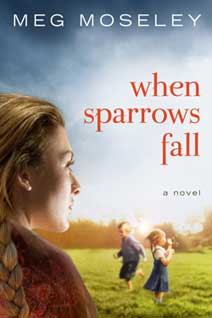
Meg Moseley is still a Californian at heart although she’s lived more than half her life in other states. She formerly wrote human-interest columns for a suburban section of the Atlanta Journal-Constitution, and home schooled for over twenty years. Meg enjoys books, travel, gardening, her three grown children, and motorcycle rides with her husband Jon. They make their home in northern Georgia