Showing posts with label blogging. Show all posts

Friday, November 4, 2016

Welcome Blogger Extraordinaire Carrie Booth Schmidt

Welcome to your friday edition of TWA. So excited you could be here with us today!!

This week has been filled with some fantastic posts like The Anti-Marketing Plan by Mary Vee and a beautiful guest post with the ever-lovely Beth Vogt.

And today! TODAY, we're welcoming a person who has become such a great friend over the past year. Besides being an avid reader and all-around great gal, she is also the mastermind behind the blog Reading is My Superpower and a reviewer for Romantic Times.

Without further ado, let's get to this fun interview with the amazing Carrie Booth Schmidt!!


1.   ME: You have quickly become a top blogger for Christian authors with having such guests as Julie Lessman, Laura Frantz, Becky Wade, Jen Turano, Jody Hedlund…and the list goes on.  What do you feel is something that’s brought about the wonderful explosion of interest in Reading is My Superpower and the magnificent Carrie Booth Schmidt


CARRIE: Well… first of all … LOL… I’m not all that magnificent. I just love to read and I love to push the books I read at other people J And I love the authors who write the books I love to read.  As far as what has brought about the crazy never-would-have-expected-this-in-a-million-years interest in my little blog – I have no idea LOL. Honestly, I’m so humbled that anyone cares at all what I have to say.

So… I asked my husband and this is what he said, “Well Pepper… I have to say that the real nexus of this interest is Carrie’s poignant and consistent … uh… respect and love of this particular niche. She has overwhelmed the niche by reading all the books.” So. There you have it. J

2.       ME: Eric cracks me up!!! Okay, so you are quite the reader (cough, cough – understatement of the DECADE). What are three top things you find that make a story go from good to GREAT?

CARRIE: First – it hits me in the feels. It doesn’t really matter which emotion, and in fact a range of emotion is even better. If a book can make me laugh AND cry – or swoon from suspense AND romance? It’s going to be a GREAT book in … well… in my book J

Second – the characters. A GREAT book has characters that just march right into my heart and set up camp for the duration of the read and beyond. I’m thinking right now of four books that I’ve read in the past year whose characters I actually do find my mind and heart drifting toward on more than one occasion. They become friends… and more importantly they leave an indelible impression on the reader that’s not easily replaced.

Third – redemption. I read and review mostly Christian fiction, but I love to read (it IS my superpower, after all) and I have a variety of “general market” authors that I consider among my go-to faves as well. What puts them in this category is that – somewhere in their story – they weave a thread of redemption. Something – someone – needs to be redeemed for the book to be GREAT in my eyes. It doesn’t need to be preachy (in fact, please let it not be) and it doesn’t have to be a come-to-Jesus moment. But I want to see a heart changed … or a situation reclaimed … or a rogue turned hero (SWOON).

3.       ME: Well, we all know I HATE swooning, right? (NOT) Your love for writing and reading have led you to some great ideas... in fact, you were one of the brilliant minds behind the Christian Fiction Reader Retreat. What was something that surprised you about this unique opportunity? What is one thing you would change for next time? What is something memorable that will linger with you forever about CFRR?

"stolen" from Annie JC's FB page ;-)
CARRIE: I was probably the least brilliant mind behind the CFRR – my partners in crime, Annie JC and Bonnie Roof, were the brains and the heart that made it such a success – but thank you J

Something that surprised me? How much friendship was in that room. These were people I’d (mostly) never met in person before that day, and yet we acted like we’d lived next door to each other for years. Such a genuine spirit of fellowship and unity, of LOVE. This is what the body of Christ needs to be – and can be. It was such a blessing and a joy to be part of.

Something we would change for next time? We might round up more help LOL. The three of us were pretty much in a stupor for a month or so after this year’s CFRR haha! Honestly, though, we’ll tweak some of the activities – add some, change some, etc. – and we’re praying now about future locations and dates.

Something that will linger with me forever? Well there are so many little things – like hugging you, PEPPER BASHAM, for the very first time in person! And giving KATE BRESLIN a ride in my car. I mean… I still can’t even. And when BECKY WADE walked up the author registration table where I was giving my spiel … and I lost all my words. But I think what will really linger with me forever is the story behind CFRR. How God took one woman’s years-long dream (Bonnie Roof) and within a couple of months, led her to two other women (me and Annie) who had the same vision. And even more so, how He wove this beautiful and precious friendship together between the three of us while we were planning CFRR.

4.       ME: I LOVED meeting you in person too, Carrie - though I feel like I've know you much longer. Okay, so since you got to meet so many people that have led to amazing interviews, are there any moments that really stand out to you in this first year of blogging?

CARRIE: Well… there was one of my very first interviews. With Melanie Dickerson. And I basically goobered all over myself – and her – in a serious case of fangirling. I mean – HELLO? I had devoured every single one of her books and now MELANIEDICKERSON (because you have to say her name like that, all together) is talking to ME! On my blog! It’s a wonder she still talks to me.

But really – EVERY interview I do with an author, I have to pinch myself a little because I’m totally living my dream right now! So grateful.

5.       ME: Yep, I totally understand. That happened to me when I met Julie Lessman, Laura Frantz, and Liz Curtis Higgs for the first time. You either yell it out or say it in a hushed whisper :-) I wasn't so in 'awe' when I met Ruth Logan Herne for the first time as I was like "Do I hug her or wrestle her?" I absolutely LOVE that woman!!

       And you do interviews so well, btw!.

      You are NOT just a reader and reviewer, but also an amazing blogger. As aspiring bloggers, what would you recommend to people who are starting a blog (or…um…seem to get lost in trying to keep one consistently?)?

CARRIE: Love what you do. And blog consistently. Even if “consistent” for you is just once or twice a week. Be consistent about that so people know what to expect.
As far as book blogging – go into it because you love to read and because you want everyone to love the books you love. If you’re only doing it to get free books, you’ll burn out quickly.

6.      ME: Gread advice! Now, last but not least (and probably PRETTY tough), can you give us ten of the top books you’ve read in 2016? (Note that I didn’t say THE top 10, just 10 from your top….you know, 50)? J
CARRIE: Can I choose to not answer this question? LOL
In no particular order (and each one of these represents at least 10 more on my list) –  these 10 are GREAT examples of those traits of GREAT books I was talking about in question #2.
The Lady & The Lionheart by Joanne Bischof, Song of Silence by Cynthia Ruchti, The Cautious Maiden by Dawn Crandall, The Thorn Healer by *cough cough* Pepper Basham, If I Run by Terri Blackstock, Land of Silence by Tessa Afshar, The Things We Knew by Catherine West, Told You Twice by Kristen Heitzmann, The Captive Heart by Michelle Griep, and Unblemished by Sara Ella.

And I already feel bloggers’ guilt for the ones I didn’t mention… lol.


So....do you guys have questions for Carrie? She's a fantastic brainstormer, by the way ;-)


Wednesday, March 23, 2016

Strategies for Fast Blogging

Some will debate the merits of blogging as part of a writer's platform, but many publishers and readers still want to see that an author has a permanent way to interact with readers. In an age where social media rules and uses constantly change, it's also a good idea to have a presence that you own. But what do you do on the days you forget to write? Or the days where nothing much comes to you that seems worth saying? Here are a few tips to help you over the hump.

1) Keep a running list of possible blog topics. Then on the days you have no motivation or the well of ideas is dry, dry, dry, you have a list that can jump start ideas.

2) Not every post should be 500 words. People much smarter than me have argued the merits of different lengths of posts. What most people do agree on is that consistency is key. Stick with a blogging schedule if you can.

3) Consider what you can bring to your readers. Really think and pray about why they come to you. There are zillions of blogs. What do you contribute that is unique and different? How do you say it in a way that keeps them coming back?

4) Join group blogs -- just like this one. Then the burden is spread out and you don't carry the load of creating content every, single day. But in a group blog it's very important to think about what you bring that is different from the other bloggers and what readers expect when they come to the blog. Those are important on personal blogs, too, but even more critical when you are part of a group.

5) Reuse old posts. Seriously. I've been blogging since 2006. I've written posts that nobody has seen or read in YEARS. Yet the content is still good and helpful. Dig through your archives (this is easier if you used tags well as you published your blogs) and update a post that is still relevant but needs to be brought back to the light.

Over the years, I've felt the pressure to blog every day, to contribute something meaningful, and stared at a blank screen with nary an idea what to write. These points have helped me draft posts quickly that still add value to the blogosphere. If you're a blogger, what tips do you have to share with the rest of us? And if you love to read blogs, what keeps you coming back for more?


-----------------------


An award-winning author of twenty books, Cara is a lecturer on business and employment law to graduate students at Purdue University’s Krannert School of Management. Putman also practices law and is a second-generation homeschooling mom. She lives with her husband and four children in Indiana.

Wednesday, November 5, 2014

How to Grow your Blog Platform


One year ago, I had no platform whatsoever. No blog, no social media following, nothing.

Tonight, I sat down to check the stats on my personal blog, A house full of sunshine, which is just shy of its one-year anniversary. The page-views are hitting 150,000 a month. I have 1500 subscribers, and 7000 followers on social media.

I'm not yet a published author (apart from a sparse handful of short stories.) I have no previous marketing experience.  I'm not a speaker or a columnist or a public personality.

I'm a stay-home Mum. I'm no more brilliant or talented than anyone else out there with an internet connection and a heartbeat.

So how the heck did this happen?

The answer is that very few things in life just happen. This is no exception.

I truly believe that success is something that can be taught, and it can be learned. I may not be the best out there in my field, but I do love to learn from people who are far better than I will ever be. And believe me, there are a lot of them. So please understand, when I share my success - it's not to brag. The grace of God has played a major role in getting me this far. And I'm no blogging or marketing genius, trust me... I'm just a good learner. 

The thing is, I'm pretty sure you are, too.


The writer's platform
"If you want to be a writer, you need a platform."

You've heard the line a thousand times.

We all know how important it is. We're told repeatedly how much harder it's becoming to land a book deal without a platform. Even if we do snag that contract, a lacklustre sales record could well ensure we don't get the same chance again. The author is in charge of her/ his own marketing like never before. The conventional advice? Get active on social media, and start a blog.

Up until a year ago, I resisted blogging. I'd seen too many authors jump onto the blog bandwagon, and pour hours into writing posts that would only be read by their mother and a handful of loyal friends. With three small kids at home, I didn't have time to blog. More specifically... I didn't have time to write a blog that would not be read. Time is our most valuable commodity, and if I was investing it, there had to be a ROI.

Also, I didn't have a clue what to blog about. I'm a novelist, for goodness' sake. I'm also a stay-home Mum, and the deepest thought in my head most days is how I'll manage to cook dinner, help with homework and distract a toddler from a tantrum simultaneously. What on earth could I talk about on a regular basis that strangers would actually want to read?

Fast-forward one year, and I have a thriving blog which continues to grow daily. The investment has been a massive amount of time, energy and late nights... but I'm seeing a return on that investment.

So, how did I get from Blog Zero to that sort of result in under a year?

Find the recipe on A house full of sunshine
1. Identify your readership, and write for them
How many writers do you know who blog about... writing? Writing blogs are wonderful (hello, Writer's Alley - how we love you!) but they reach a very defined niche: other writers.

What are you doing to reach your readers?

The turning point for me was when I took the time to identify my readership. I write inspirational women's fiction, so my readership is women... in particular, Christian women.

The question for me became, what do these women want? And what do I have to offer them?

See, your sweet spot as a blogger is the place where your interests and passions intersect with the felt needs of your reader. (Click to tweet this)

I'm an interior decorator, and before I had kids, I taught Creative Arts for elementary and high-school. You could say that creativity is my passion. I decided to blog about those interest areas. Decorating/ DIY/ kids is a thriving blogging sector. And it's an audience right in line with my target demographic.

Is that to say you need to start a DIY blog to see any sort of success? Absolutely not. If you blog about something you have no passion for, your lack of enthusiasm will show, and others won't get excited about it either. Besides, passion is the fuel that will keep you going through those lonely first months where you're seeing no progress and you feel like you're talking to yourself. (And believe me, I have been there.)

The good news is, whatever your passion, there is an audience out there who wants to read what you have to say. You just need to learn how to reach them.


See the tutorial on A house full of sunshine
2. Learn, learn, learn
Once I decided to start a blog, I committed myself to its success. I didn't want to waste my time on anything less. I became a sponge, absorbing as much information as I could from a range of sources. I read e-books on blogging, attended webinars, listened to podcasts, and subscribed to marketing blogs.

Here are some sources I've found helpful:

Platform by Michael Hyatt
How to Blog for Profit without Selling your Soul by Ruth Soukamp
Building a Framework by Abby Lawson


3. Create shareable content
The most widespread mistake I see people make with blogging is to treat it as an online journal of random thoughts and ramblings. If you're writing for yourself and your family, wonderful. But if you want to see growth, you have to broaden your perspective.

Ask yourself - why should someone share this post? What is the takeaway for the reader?

Until you learn how to create viral content - content that demands to be shared - you'll never break into the next level of blogging. And to do that, you have to meet a felt need of your reader, whether it be for entertainment, instruction, a new idea, inspiration, or something else altogether.

4. Become your own best marketer
Sid Kemp of Firepole Marketing suggests that at least 60% of your time in any creative industry should be spent marketing. I have certainly found this to be true of my blogging experience.

I know the whole idea of marketing rubs some people up the wrong way. It feels uncomfortable, even
See the project on A house full of sunshine
wrong. We're taught from childhood to be modest and not toot our own horn, so it's counterintuitive to us to self-promote.

I can honestly say now that I love marketing. I've developed a passion for it. And yet, it wasn't always that way. An example? I went for my first job at age 15. The store owner asked if I was good at maths. I was top of my class at the time, actually, but I'd been raised to never boast about my accomplishments, and I was sure it would sound like bragging if I mentioned it. So I ducked my head shyly and mumbled, "Ah, well. Not really..."

Needless to say, I didn't get the job, but I did learn a valuable lesson. The store owner needed to know that information, and I didn't give it to her. That was false modesty.

In the same way, there is an audience out there who wants and needs to connect with your words, and often, you are the biggest obstacle to that connection - because you are hiding behind a false idea of what modesty really is.

Hear this: your job is not to promote yourself. It's to find your audience. (Click to Tweet this)

Your job is to connect with the people who want to hear what you have to say. They're out there - you just need to put in the effort to find them. And unless you have a marketing department behind you, let's be absolutely clear - this job falls to you.

The thing that truly excites me? It's easier to make those connections than ever before in history. We live in a world where anyone with an internet connection and a bit of gumption can create a truly influential blog platform from absolutely nothing.

I'm living proof of that.

Want to learn more? I'm kicking off a series for the next few weeks on How to Grow your Blogging Platform. Follow along every second Wednesday for some concrete tips and strategies I've used to grow my blog from zero to 150K page-views a month.

Let's chat: Do you blog? Why or why not? How do you feel about marketing?

Find the rest of the series here:

Essentials for your Success
Guerilla Facebook Marketing
Supercharge your Stats


Karen Schravemade lives in Australia, where she mothers by day and transforms into a fearless blogger by night. Her popular creative home-making blog, A house full of sunshine, reaches over 150,000 readers a month. She's a Genesis finalist for women's fiction and is represented by Rachel Kent of Books & Such. Find her on TwitterGoogle+, Facebook and Pinterest.


Wednesday, April 23, 2014

What should a fiction writer blog about?

In my last post, I discussed how blogging can help your writing.

The topic sparked in interesting discussion in the comments thread. The question was posed - what should a novelist blog about?

Ah. Good question.

It's a question that stumped me for a good number of years. In fact, that's why I only started blogging at the end of last year - even though I've been writing fiction much longer. It took me a long time to figure out my blogging niche.

If you're struggling with the same question, I'd like to suggest some approaches you could take... and one that perhaps you shouldn't.

1. Blog about writing
Now, this is a fairly common strategy. After all, they say we should blog our passions, and for a writer - writing is a central passion. It's a subject we "know" and are constantly learning more about.

The problem with this approach is the target audience. Who is attracted to a blog about writing? Other writers. And while it's a brilliant way to connect in with the writing community, network with other writers, and form meaningful friendships with like-minded people, it may not be the best platform for marketing your books. The writing community is, by its very nature, over-saturated with book promotion. It's chock full of authors who all constantly have new releases and soon-to-be-releases and cover reveals and e-book promotions, not to mention the backlists they'd still like to sell. It's enough to make you giddy, trying to keep up with it.

Not convinced? Wendy Lawton of Books&Such literary management wrote an excellent post on this topic: The Trouble with Tribes. I highly recommend you check it out!

2. Blog your subject matter
If you write historical or genre fiction, you've hit the mother lode of blog material.

Historical writers love to research, but many of those details and anecdotes won't find their way into your books. Why not blog your fascinating discoveries? An example is WWII novelist Sarah Sundin's "Today in WWII history" feature, where she shares a brief anecdote for each day of the year.

If you're an author of murder mysteries, you could blog about relevant news headlines; police procedure; a layman's guide to forensics; biographical sketches of serial killers... the list goes on.

Do you write romance? Blog about romance. Tips for a first date. 10 ways to bring the sizzle back to your marriage. Best honeymoon getaways. 5 ways to date your husband for free. Conversation-starters with your spouse. Thoughts and anecdotes and inspiration regarding relationships, love, and commitment.

3. Blog your themes
Perhaps you're not a genre author. That doesn't mean you don't have something to blog about.

Take a look at the themes running through your work. You may have themes of forgiveness, redemption, trust, identity, belonging, surrender... and many others. Your blog is a chance to delve deeper into some of these ideas as you journal your ideas, thoughts and reflections on life.

Friend of the Alley, Jeanne Takenaka, does this beautifully on her blog. I love my friend Megan Sayer's tagline "Deep thoughts from an ordinary life." These women are gathering an audience of people who resonate not only with their writing style, but with the quality of their insights into everyday life - characteristics that will draw this same tribe of followers to their novels.

4. Blog your characters and settings
If you worry that you're not inspiring enough or don't have enough to say of a thematic nature, there's other blogging material to be found in your novel.

You could interview your characters; write journal entries from their POV; share photos of models or actors who look like your character as you imagine them; discuss the settings in which your novel takes place; share short excerpts or deleted scenes; and include recipes inspired by your novel. These can all be effective teasers.

One caution is that it could prove difficult to build an audience using these methods, if you're starting out with no platform and have no publishing contract yet in sight. Readers will probably not be interested in hearing endless details about characters they haven't yet "met" in a book, especially when there's no immediate chance of doing so. This approach would work best once you have an established audience and are building buzz for a newly-released book.

5. Blog short fiction
Why not give your readers a teaser of your writing style by blogging a weekly short story? If the writing you offer for free is consistently good, you'll slowly but surely build a fan base who'll be first in line to get their hands on your full-length work - simply because they like your stuff and want more of it.

Another creative approach: one of my favorite writing blogs, Novel Matters, are currently running a serial story - written collaboratively by their blog readers and posted in short instalments.

Alternately, you could write your own serial story. Bestselling action/ thriller writer Matthew Reilly did this with his story Hover Car Racer, and then released the whole as an e-book.

5. Blog about books
If you love reading and reviewing, this approach makes perfect sense for you as an author. What better way to reach a book-loving tribe than by blogging about books? Regular book reviews and meet-the-author chats are fantastic ways to connect with readers who enjoy the same type of books as you do.

Two great examples of this approach are the She Reads blog and our own Casey Herringshaw's blog, Writing for Christ.

6. Blog to your target demographic's interests
At this point, it's time for me to confess that I don't use any of the above 5 approaches. I've gone a different route altogether.

Why? Because first and foremost, you need to blog on a topic you're passionate about. If your heart's not in it, your blog will feel lacklustre, and you'll struggle to keep up your commitment for the long haul.

For various reasons, none of the above felt like quite the right fit for me. Hence why I wriggled around uncomfortably for years and put off blogging altogether.

Finally, it was Wendy Lawton's excellent post, The Trouble with Tribes (also referenced in Point One above) that gave me my lightbulb moment.

The point of a blog is to gather a tribe of readers. 

I write contemporary, inspirational women's fiction. Therefore, my ideal readership is women: particularly (but not exclusively) Christian women.

Women who enjoy picking up a novel for entertainment, but might not be drawn to a non-fiction style blog.

I started thinking - what does this readership want? What do we enjoy doing in our downtime? What inspires us? What do we watch on TV? In other words, outside of reading, what are the concerns and interests of this particular demographic?

Clearly, there's no one right answer to these questions. We're all unique, with different interests. But stand back far enough to survey the big picture, and you'll notice trends.

Women are - not always, but more often than not - the home-makers. We are the creative CEO's of our family, called upon to organize, feed, decorate, entertain and educate.

The explosion of Pinterest highlights the enormous popularity of lifestyle and DIY among women. Lifestyle TV is huge - cooking shows, decorating shows. It's a thriving niche market, and it falls smack dab in the middle of my target demographic.

As an ex-Creative Arts teacher, mum of small kids, and a part-time interior decorator, I knew I had something to offer in this field. To women, like myself, who want to mother creatively and make their house a home.

Most excitingly for me, it's something I'm actually passionate about. It's a topic thrilling enough to me that I have more blog fodder than I have hours to blog about it. So, I launched a home-making blog: a house full of sunshine.


It's an experiment, of course. Will I gather a tribe of readers who love my lifestyle and DIY posts, but have zero interest in my someday books?

My strategy is to use the posts themselves to constantly refine and focus my audience. I'm launching a monthly book-club. (Hate reading, and annoyed by those posts? You'll probably step off here.) I post openly about my faith in God. (Militant atheist? You'll no doubt unsubscribe at this point.)

I try to see those unsubscribes and un-follows as a positive thing. They're a sign that my audience is becoming more honed, more targeted, more clearly an embodiment of my ideal readership, day by day.

Most importantly, I'm building a tribe of readers who are connected with who I am as a person, and interested in what I have to say.

Do all of them start out as passionate fiction-lovers? Of course not. But it's my belief that every person can be a reader. And by looking outside the traditional avenues - writers who read writing blogs; readers intentional enough to look up book reviews - I'm tapping into a new market of people who are just women... like me.

Women who might just pick up a good book if it comes recommended by a blogger they've connected with.

How about you? What do you blog about? What is your target demographic - and how do you plan to reach them? How would you describe your ideal reader?

TWEETABLES

Help - I'm a fiction writer and I don't know what to blog about! Find inspiration here: Click to Tweet

Novelists - can you describe your ideal reader? If not, your blog may be missing the mark: Click to Tweet

Why writers shouldn't blog about writing - and a wealth of other ideas to try instead: Click To Tweet


Karen Schravemade lives in Australia, where she mothers by day and transforms into a fearless blogger by night. She's a Genesis finalist for women's fiction and is represented by Rachel Kent of Books & Such. Find her on TwitterGoogle+, Pinterest, and getting creative on her home-making blog, A house full of sunshine.


Wednesday, April 9, 2014

How blogging can help your novel-writing

In my last post, I talked about how short-story writing can improve your long fiction.

Today I'd like to discuss another form of writing that will help your career as a novelist: blogging.

Maybe you already do it. Maybe you've considered starting. Or perhaps it's not on your radar at all.

Here's why it should be.

1. Blogging will help you relax your voice
Us novelists tend to take ourselves a bit seriously at times. After all, writing a novel is a big undertaking. It's challenging and important and... and... kind of lofty. Right?

As a novelist shut away in our writing cave for months and years on end, it's easy to get wrapped up in the grandeur of the story we're spinning, and forget all about that little thing called the reader. And the problem is, if our storytelling voice becomes all lofty and self-important, we've lost most of those said readers from the get-go.

Blogging is different. There's a matter of hours between writing something and having it go live before a real-life audience: an audience who gives us immediate feedback on our work. Therefore, it's easier to write with said audience front and center in our writing brain. The result? A tone that is conversational, friendly, down-to-earth, and relatable.

Once you've been blogging long enough, you'll find that more natural, conversational voice finding its way into your longer fiction as well. And that's a good thing.

Blogging will help you strip affectation from your voice, simplify, relax, and keep things real.

Image by Ambro, freedigitalphotos.net
2. Blogging builds self-discipline
Blogging is like the stomach-crunches of the writing world.

Maybe it's not as exciting or glamorous as signing that big book deal, watching your novel climb the bestseller ranks, or any of the other delightful things we like to daydream about.

But it gives you a solid foundation as a writer. It requires you to be consistent and meet small, regular deadlines. That is great practice for one day down the track when you have deadlines set by a publisher.

3. Blogging will improve your productivity
Sometimes the best thing for a story block is to switch writing gears and hammer out a blog post. It's an easy and immediate style of writing, and it'll give you the satisfaction of completing something - which is a great antidote to frustration.

Besides, the more you write, across all genres and platforms, the quicker you get. Wanna be a prolific writer? Start blogging. Your output will increase overall, because it has to.

Before you know it, ideas start flowing faster from brain to fingertips, and you're all limbered up and ready to dive back into your story-world.

4. Blogging will help you find and connect with your audience
This flows on from the first point. Blogging puts you in touch with readers - right now, without having to wait for some "maybe day" in the distant future.

Publishers want to see that you have a platform. We all know how essential that is in today's marketing climate. There is no better time to start building a platform than before the book deal.

Wait till afterward, and you've probably left it too late.

When you blog consistently and strategically, you are building a tribe of people who are interested in what you have to say.

And after all, that's what every writer wants, isn't it?

To have a voice, and someone to listen.

Do you blog? If so, why do you do it, and how do you find it helps you as a writer? 

If not, what are your reasons for not blogging? Is it something you'd consider?

TWEETABLES
I'm a novelist, not a blogger! Why novelists should have a blog, & how it'll help your writing: Tweet this


Karen Schravemade lives in Australia, where she mothers by day and transforms into a fearless blogger by night. She's a Genesis finalist for women's fiction and is represented by Rachel Kent of Books & Such. Find her on Twitter, Google+and getting creative on her home-making blog, A house full of sunshine.


Thursday, March 20, 2014

I'M GOING TO HAVE A BABY!

You may be reading this blog because I (Krista) posted this jaw-dropping news somewhere on social media.

And let me tell you. If it were true, I wouldn't be hosting this blog today. No, I'd probably being still sitting in dumb-founded shock. Someone would also have to do CPR on my poor husband.

Or--- you may be reading this blog because someone else posted this jaw-dropping news somewhere on social media, and you're thinking.... WHAT??? Or-- YEAH!!!

Either way...

No one (that I'm aware of) is having a baby.

Unless you count manuscripts, which authors lovingly think of as "our babies."

Here is the REAL subject of this blog.

TITLES ARE IMPORTANT.

Titles draw in readers. Titles are the first thing we read, both on books in the bookstore or online book retailer or on blogs.

It's the title's job to capture the reader's attention (for books, in tandem with the cover.) A GOOD title makes readers think, "Wow, I wonder what that's about" or "Ohhhhh, I need to read THAT!"

Confession #1: I've been one of those people who has used the fact that publishers usually change book titles as an excuse to not get very creative with a title.

But we're trying to catch an agent/editor's eye too! An AMAZING title could very well help a submission rise to the top section of a slush pile. (Content will then have to be superior after that... a title can only do so much!)

Confession #2: I've also been one of those bloggers who have just slapped any ol' title on a blog post to describe what I'd written. How stupid is it, though, to spend all that time trying to craft the perfect blog post--- and then leave the title as just bleh? Especially in social media, where your dream would be that your post go viral.

Now, you might say, the title of this post is, well, inaccurate. No one is having a baby. And yes, titles should reflect to the subject matter. I think, though, in this case, it does, in a creative, slightly odd, way. The point of the post title is to underscore the importance of having a title that catches eyes and attracts attention.

Lest you think I've got this whole title thing figured out, please be aware that I DO NOT.

I HATE coming up with titles. It is not my strong suit.

This is why the title of my book proposal to Abingdon was, "A Sandwich Romance" because it was set in Sandwich, IL and was a romance. (see confession #1 above.) They renamed it "Sandwich, with a Side of Romance" which is a heap better. That said... my submission went through different channels than the slush pile, so I'm super lucky my poor title didn't hurt my chances. This, however, is not normal.

I have another full-length novel my agent has requested a GOOD title before we submit it. Right now, the title is "Mission: Jack" (a takeoff of Mission: Impossible). But eh... it's just... not the best. I debated for a while if it was super unique or super stupid. I'm leaning toward the stupid side now that time has passed. So it's on my list to retitle.

So--- I have TWO challenges for you today.

#1: Let's practice thinking of GREAT TITLES. Help me think of a title for (formerly known as) Mission: Jack! Below is a super brief (unofficial for the sake of this blog) synopsis.

While I don't promise to USE your title, (although reserve the right to if I love it and my agent gives her thumbs up!) we Alleycats will vote on which title we think is the most UNIQUE and HOOKING.... and the WINNER will get a signed copy of my first novel, Sandwich, with a Side of Romance. 
Mission Jack Synopsis:

Jenny is queen of safety and predictability. Her life is controlled by fear. But the guy she falls in love with over the Internet represents anything but.

Jack is in over his head trying to take care of his orphaned, preteen niece, and might be more than a little insane to be falling for a woman online, especially when a predictable "perfect" woman from his church is offering to be everything he could ever need.

Jenny and her best friend become convinced that Jack isn't the awesome guy he seems like, and that he's an Internet stalker. On a mission to prove they are right, they go on a road trip to Nashville, TN to call him out.

"Mission: Jack" goes exactly opposite of what they'd planned, especially when the real stalker shows up.

Jack must learn that perfection isn't always so perfect, and Jenny must learn that safety isn't measured by locks on the doors, but that trusting God is the only true way to peace.

#2: SHARE THIS BLOG post on Facebook or Twitter or both, complete with the title. Let's see just how much BUZZ a title with an eye-popping "hook" can get. Bonus points if you're past baby bearing age :-) :-) (and let me know in the comments if you shared it, I'll pick a winner out of those who share this post as well!)

Come on. I dare you.

(comments/shares must be done by end of day, Sunday, March 23rd. Winner to be announced on the following weekend edition!)

*************************************************
Krista is a follower of Jesus, a wife, a mother, and author of Sandwich, With a Side of Romance . She blogs about finding JOY in the journey of LIFE at http://www.kristaphillips.com. She is represented by fabulous agent, Rachelle Gardner.

Tuesday, December 17, 2013

Where Everybody Knows Your Name: Create a Blogging Tribe by Tina Radcliffe

Where Everybody Knows Your Name: Creating a Blogging Tribe
By Tina Russo Radcliffe
How many blogs are there? These statistics are from Snitchim.com
Tumblr.com shows it has over 101.7 Million blogs with 44.6 Billion blog posts
WordPress.com has over 63 Million blogs
Livejournal reports to have 62.6 million blogs with
Weebly states it has over 12 million blogs
Blogster has over 582,754 blogs
How do you rate a blog? By the number of followers? Subscribers? Commenters?
In my opinion, a blog should be evaluated by how well the blog is doing the job it was created to do.


Seekerville, a blog of 13 authors began in 2007. The blog was an offshoot of a Yahoo group we formed to actually pray and help each other into publication. The members were all inspirational romance contest entrants who knew of each other because of our virtual meets through contests. Most of us had never met in real time.


How did a group of strangers build a strong blogging community? Of course it’s a God thing. But good business principles played into our community as well. From our Yahoo group came the strong desire to give back.
"No Marine Left Behind – A mantra that speaks to teamwork, loyalty and brotherhood that exists between Marines.” Our philosophy is similar, in the context of writers. We add an additional facet of reaching readers in a very real way. This is our underlying philosophy.  
But how do you create a successful blog? Joe Friedlander provides the best post I know of on this topic. No need to reinvent great content. I agree with everything he says!
1. Produce evergreen content.
2. Write with a plan.
3. Build community.
4. Foster interaction.
5. Build a list.
6. Give readers a path to follow.
7. Build traffic with guest blogging.
8. Write what’s right.
9. Provide practical help.
To this I would add that baring deadlines, natural disasters, internet fail and out of office days, we expect everyone to show up (the 13 Seekers), and we expect all posts to go up at midnight. Consistency counts.
Behind closed doors Seekerville is like an orchestra. I am the unofficial conductor. To be clear, I help direct the many instruments of Seekerville. But there is no Seekerville without each and every instrument. Over the years we have divided up the responsibilities among us, and this makes the blog run smoothly.
We have also learned something about the dynamics of our blog and its role and responsibility. Some lessons were learned the hard way, through stumbles. Here are some of our unwritten rules and rules written in our guest blogging guidelines that steer our daily operations:
1. We aren’t about controversy.
2. We know our target audience and direct our posts to that audience.
3. We rarely do interviews and we don’t do book reviews.
4. Our posts do not proselytize but we aren’t afraid to share our beliefs.
5. Our post content covers these areas: inspirational and encouraging or educational.
6. We are not about blatant self-promotion.


Personally, I think of Seekerville as Seth Godin’s, Tribes meets Ree Drummond’s, The Pioneer Woman. We are building a tribe, yes, but it’s in our kitchen, with coffee, snacks and a welcome to our house attitude. Why does it work? Because we sincerely believe in it.
These are two of the many features of Tribes that we utilize. (This pdf of Tribes Q &A can help you understand Godin’s book.)
Transparency. Another factor that creates our sense of community. There is no distance between us and our community. There is no outside looking in aspect. We are not experts doling out opinions. There are no levels of hierarchy. Additionally, we are real, and we share our triumphs and failures.
Tribal Pulse Taking. We do watch our stats and comments to evaluate which posts and speakers are impacting our community. We also take a yearly survey to determine what our community wants and needs.
From The Pioneer Woman we have borrowed the down-home, come to dinner quality we have in Seekerville.
Our mental image is a visitor walking into our house. You become our family. What’s the natural response to family? We greet you by name, we chat with you one-on-one. We commiserate when you have problems. We cheer your successes and we create opportunities for you to succeed. Finally, we provide a safe place for you to share.
Every good hostess has the responsibility to not only feed her guests, with good blog content and a welcome smile, but to send them home with something. This is why we do our very successful giveaways. They aren’t required of us or our guests. We also provide giveaways as a way to say thank you.
Another unique feature of Seekerville is that we often have several conversations going on in the comments. Most are directed for our host blogger in the form of questions and answers. But, a day in Seekerville means we share news and greet new faces.
Have you ever been a blog guest and no one shows up? Lonely isn’t it? That’s not Seekerville. We believe that if you are a guest, the Seeker who hosted you is responsible to ensure your visit is successful. We do the PR for your visit, and we stay and support you and encourage interaction.
Our successful tribe building is based on word-of-mouth. While we have begun to advertise, 90% of our new traffic is from word-of-mouth. I believe consistency, useful content, along with staying true to our core philosophy is responsible for our success.  
I hope I’ve been able to share Seekerville in a way that encourages you to stop by. Go ahead and feel free to hum the Cheers song as you mosey on over, we’ll save you a seat and a cup of coffee.
Thanks to the Alleycats for having me today.
I look forward to your questions about forming your own tribe. And because I like to bring gifts for my hostess and her friends, today I am giving away a Tina Russo or Tina Radcliffe ebook of choice- one for my hostess, Julia Reffner and one for a commenter. International winners welcome.


Tina Radcliffe writes Inspirational romance for Harlequin Love Inspired and romantic comedy as Tina Russo.

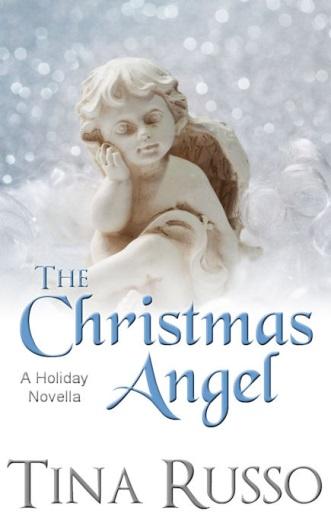
Her next release, a novella, The Christmas Angel is available now.