Showing posts with label Indie publishing. Show all posts

Thursday, March 29, 2018

Should You Indie Publish Your Novella?


Recently, I came up with an idea best suited for a novella-length story. I started researching my options and was surprised by what I discovered. So if you've ever considered indie publishing, especially a novella, read on!

Years ago, indie publishing carried a stigma--both to readers as well as to traditional publishing houses. Typically, indie books were lower quality. But times have changed. And industry professionals have come to see successful authors who are either hybrid, or who began their careers indie. The stigma has faded, and in its place has come a unique opportunity for writers struggling to break into the industry.

(Now, quick side note while I have my English teacher moment for the day-- bear with me! I am not suggesting you jump to indie publishing because the editors at traditional houses have told you that your first novel/novella is not ready yet for publication. If anything, in many ways, indie publishing is harder, not easier, than traditional publishing, and I have loads of respect for authors who do it well-- looking at you, Melissa Tagg! You need to know, that you know, that you know this material is top notch, because if you go indie, you won't have a gatekeeper as you would at a traditional publishing house. Aside from a freelance editor. But still.)

So here is what surprised me the most about my research. Provided that you 1) pay for a professional cover, and 2) pay for professional editing, traditional publishing houses are not going to look down on your indie sales numbers. They understand that you are giving this a go without the support of a professional marketing team. So in all likelihood, because you are doing this alone-ish (again, with the help of a freelance designer and editor) you shouldn't expect epic sales numbers. But the flip side of that is that editors no longer have these expectations either.

Shannon Marchese, Senior Editor at WaterBrook Multnomah, says this: "Traditional houses are getting accustomed to novelists having some indie career before selling traditionally now. The key is in how one presents the data when pitching, and how what you are writing for a traditional house is similar or different." Be ready, in particular, to explain how your indie audience can be expanded upon when you make a move to a traditional publishing house.

Shannon also has important advice about pricing. High sales numbers that are driven by very cheap pricing will not matter to a pub board. Instead, Shannon suggests pricing a novella between $1.99- $2.49, and making sure you advertise the story is a novella rather than a novel so that readers do not criticize the shorter format in their reviews.

Amanda Luedeke, Vice President at MacGregor Literary agency, puts the price even higher at $2.99 per novella copy. Amanda also suggests that would-be indie writers consider the persuasive role of pre-sales. Typically, a pre-sale reader who is willing to buy the novella at a fair price point is the type of reader who publishing houses like to see. In other words, a reader who will come back to read more of your stories because of you as an author rather than a price that is cheap.

Amanda says that 1,000 pre-sales, or 5,000 copies sold in a year make for strong numbers. But if your sales numbers are but a tiny fraction of those, don't despair!

Shannon suggests framing your novella experience when pitching to an editor so that you highlight the most persuasive information. Maybe you only sold several hundred copies. But five star reviews on Goodreads, or a blurb from a very well-known author, according to Shannon, can go a long way.

So, let me hear from you! Have you ever published an indie novella? What was your experience? If you're considering becoming an indie or hybrid authors, what concerns or questions do you have about the process?

##


Ashley Clark writes romance with southern grace. She's dreamed of being a writer ever since the thumbprint-cookie-days of library story hour. Ashley has an M.A. in English and enjoys teaching literature courses at her local university. She's an active member of ACFW and runs their newcomer's loop. When she's not writing, Ashley's usually busy rescuing stray animals and finding charming new towns. You can find Ashley on her personal blog, Facebook, Pinterest, and Twitter. She is represented by Karen Solem.


Thursday, July 6, 2017

Freedom for Writers

This week we celebrated the Fourth of July, and over on the Facebook group we talked about how it's a great time to be a writer because independence is achievable. I wanted to expand on those tips and see what you would add.

1) Know your goals. Why do you want to write indie? What is motivating that decision? The same questions should be asked if you're pursuing traditional publishing. For me, I'm pursing indie for my books where I have received the rights back from the publisher. It's been a huge learning curve, but I know these are good books and there are readers who haven't discovered them. Indie publishing is a way to get them back out there, update them and more. I love traditional publishing, because I love the partnership aspects. I know they have a platform I don't have on my own. They have the team to help me with all the elements that are overwhelming to consider on my own. That's why I love being with the big houses.

2) The most important relationship is between reader and author. Regardless of how you publish, you have to think about how you will build that relationship. Part of it will be writing more, great books. Then there will be websites, social media, booksignings, etc. you will have to think deliberately about how you will build this relationship. It also requires you to know and listen to your reader. Involve them in the process. Help them acquire ownership of your books. How can you help them become your biggest advocates?

3) Hire an editor. This step is so often overlooked. If you are traditionally published, then you should have three rounds of editing: macro/story edit, line edit, and proofing. If you are indie, you need the same. Even though the book I have put up were edited at least three times, I still hired someone to proof each one. It's amazing what is caught each time. The quickest way to lose a reader is to have a poorly edited book. Don't skip this step. It is worth the expense to make the book is done well. As James Scott Bell says you're best marketing is the book the reader is currently reading.

4) Don't rush. Let's face it. We all get important. But let's not rush into print before we're ready. I have friends churning out 4-6 books a year. I can't do that with everything else going on in my world. Three is about my max; four if I'm writing two with Tricia Goyer. I know that's my pace, and I know this after writing 27 books. What's your pace? How fast can you write and still do a good job? Seriously stop and think about. How much time do you need to make sure you're going through the rounds of edits and putting out a great book? Is your first book really ready for the world to read?

What would you add?


An award-winning author of more than twenty books, Cara is a lecturer on business and employment law to graduate students at Purdue University’s Krannert School of Management. Putman also practices law and is a second-generation homeschooling mom. She lives with her husband and four children in Indiana.

Thursday, April 28, 2016

The Indie Road: No Man is an Island

I know, I know, I know.

"No man is an island" is horribly cliche.

But it is true.

I think there can be a tendency to go into indie publishing with a mindset of "OHMYGOODNESS I have to do this all by myself!!!"

And yeah... you kinda do. Kinda sorta anyway.

You are now your own publisher.

You make the decisions.


But just like any small-business, it is important not to rely on your strengths alone.

No, you don't have a corporation behind you. No, you don't have already built-in infrastructure and a bank account balance to support you.

But that doesn't mean you can, or should, do this by yourself.

What does a HEALTHY and SUCCESSFUL small business owner (which you are now...) do to overcome the island challenges?

1.) Network. They join groups with other small business owners so they can learn from each other and support each other. Networking in the writing business is SO IMPORTANT. I literally could not have indie published without the amazing support and help of fellow Indie authors. When I thought I was going to lose my mind, I could post on a Facebook group and instantly have responses of people who have been there, who have already traveled that road, who will give HONEST feedback, not "pat you on the back" fake encouragement. People who will tell you when your cover stinks. People who will talk you off a ledge when your KDP rejects your formatting. People who won't roll their eyes when you sheepishly ask what the heck KDP is anyway. There are a TON of these groups out there, you just have to network with other indies to find them. If you are serious about indie publishing, joining one or more of these groups, in my personal opinion, is the first step.

2.) Outsource. Instead of hiring staff that is costly, they do some of it themselves, and the rest they outsource. A big publisher has an accounting department, an editing department, a marketing department, a sales department. You have---well---you. You can't do it all, I hate to tell you. You can do a LOT of it though. Some of outsourcing will depend on your bank account, but remember that time is money too, as is quality. You may think covers should be super easy to do, I mean, YOU know what a good cover is, right? And some authors do a GREAT job of this. But if it takes you a month of work to design and format a cover--- and it is so-so and doesn't entice readers to buy it--- it might be worth a few hundred dollars to hire it out. In fact, it probably is. So you have to decide where YOUR strengths are and what you need help with.

3.) Listen. To those people who are criticizing you. Our culture today shouts that we need to ignore the haters and embrace our individuality. And maybe in some cases that is true... and that's fine if you want to. But just don't be surprised if you don't sell anything. The truth is, we are too close to our work. We NEED the input of others. We are not perfect, and whether you use beta readers or editors for the actual book, or hire an cover designer or do it yourself, listening for feedback is so important. YOU are the publisher. YOU make the final decision. But don't let that power go to your head. Don't let it make you think that your opinions are the only ones that matter--or are right. Would a small business owner tear up customer comment cards as stupid and ignorant? Not if they want to stay in business, they wouldn't.

4.) Observe. One of the best things a small business and an indie publisher can do is to study others. Study traditional publishers. What are they doing right? Study the successful indies. What are THEY doing right? Study the not-so-successful indies. What are they doing WRONG? This isn't being judgmental, it's being a good study and learning from those around you. It's called being wise and informed. Take some time to observe.


Let's chat!

Indie authors, how have you benefited from the help of other people on this journey? Do you have any points to add?

Prospective indie authors, any question? Anything surprise you or frustrate you? Have you thought about how you would need others, or were you excited about the whole "go-it-alone" idea of indie publishing?

*************************************************
Krista is a follower of Jesus, a wife, a mother, and writes romantic comedy. Her latest book A Side of Love, released February 29, 2016.  She blogs about finding JOY in the journey of LIFE at http://www.kristaphillips.com. She is represented by Sarah Freese of Wordserve Literary.

Thursday, April 14, 2016

The Indie Road: The New Perspective


Okay, so you've decided to check this Indie thing out, or have firmly planted your foot on the road.

What now?

THE FIRST thing you need to do is grab this pretty pair of new glasses I have for you.

If you're a hybrid author, don't chuck your old glasses. You'll still need them.

But Indie glasses are important, because the view changes on this journey from what you're used to.

Write-a-book-edit-get-critiques-enter-contests-submittoagent-submittoeditor-pubboard-contract-editsomemore-PUBLISH --- that is basic traditional publishing sequence.

Indie looks similar, but oh-so different.

You still write a book.

You still edit it.

You can still get critiques, and you can still enter contests if you want, but this takes on a whole new look.

No longer are you polishing those first three chapters until they are spic-n-span shiny for an agent/editor.

You are editing every word of your novel for READERS. They are your 100% priority. (well, we are Christian authors, so I would argue that GOD is our 100% priority, but that doesn't mean you forget that your readers are your audience.)

But regardless, you are trying to attract readers, not an agent or editor. These edits and critiques are no longer going to "gatekeepers" (I'm careful with that word because it inspires lots of feelings on both sides of the fence!) So YOU are responsible for making sure they are "buy" worthy.

Yes, you can (and probably SHOULD) hire an editor. But you still have the final call. It's a big responsibility. Some are excited about this, because YOU have control over the content your readers get. Some are petrified that the responsibility now rests with them.

Regardless of your feelings on the matter, you need to understand this new perspective.

The other big perspective shift is publishing.

YOU are the publisher. Sure, you can outsource a lot of it. Find a cover designer, editor, formatter. Hire a marketing firm.

But whether you tackle it yourself or hire it out, it still is costly --either in time for learning/doing, money for hiring out, or money because you have no sales because you did it and stunk at it. Sorry, just being blunt here!

So understand this new job of yours as publisher. You are not just a writer.

The good news is -- you get perks for this new job. Like larger percentages of royalties (70% in most cases when you price your book $2.99 or more) You also can have control over your sales, have real-time data of how well sales are working, and no more fearing of a horrid cover that you hate. Nope, if you hate the cover, it's YOUR fault because YOU are the publisher now.

Another change is the timeline. Traditional publishing, you're used to a LOT of awaiting. Like in months/years.

You still wait in indie publishing. But mostly you're waiting on yourself. And the other waiting is like "days" verses months. You can set your own deadlines/timelines, which can be a pro or con.

Let's Chat.

What do you think? Does this new set of glasses make you grin or fill you with fear? Are you excited about the idea of being your own boss or no-so-much?

**UPDATE** I picked a winner for the drawing last month, and it is Kathy R! Kathy, please send me an email (krista at kristaphillips.com) to claim your prize!

*************************************************
Krista is a follower of Jesus, a wife, a mother, and writes romantic comedy. Her latest book A Side of Love, released February 29, 2016.  She blogs about finding JOY in the journey of LIFE at http://www.kristaphillips.com. She is represented by Sarah Freese of Wordserve Literary.

Thursday, March 31, 2016

The Indie Road: The Starting Line

Like a year or two ago, I did a mini-series on Indie publishing on The Writer's Alley.

I'm doing another one because:

a.) Things change FAST in the publishing world and probably 75% of the things I said are probably now obsolete.

b.) I've now published my 4th indie book and I think I was working on book #2 at the time. Needless to say, I learn a TON more with each book I publish. So when I get up to 10, I'll probably have to do a new series again, HA!

I've been having LOTS of chats with fellow authors about the "to-Indie-or-not-to-Indie" decision.

My posts won't help you make that decision. Because it is personal and the answer will be different for each author.

I know a LOT of traditional authors who still swear by trad. publishing and would never go indie.

I know a lot of trad. pubbed authors who do a little of both right now.

And I know a lot of indie authors who swear they wouldn't take a traditional publishing contract even if it came with a nice hefty advance with it. (most would rethink it when that number got into 6 or 7 digits, but I digress, I am pretty confident in saying that few if any of us are looking at that happening any time soon.)

So no, my posts will for the most part not focus on the decision.

But if you've said, "Okay, fine. Indie. Let's do this."

*crack knuckles*

This series is for you. This is also for you that are saying, "Okay, fine. Indie. I'm not completely opposed. Tell me more."

There is a TON of information out there. I'll attempt to point you to GREAT places to give it, and give some helpful tips I've learned along the way.

For now, let's chat about Indie.

Where are you at in the process? Are you still 100% traditional publishing bound? Are you interested in the whole indie process? Any questions you have? I'll be glad to answer or put on the list for future blog posts to address!

Thursday, October 29, 2015

An "Indie" Publishing Glossary


Last year when I first embarked on this indie journey, I was green as could be. I joined groups and heard all these terms and places bantered about, but I had NO clue what any of it meant.


I thought I'd do a bit of a "indie cheat sheet" today to give you a leg up if you ever want to stick your toe into the fast growing indie-publishing sector!

Although, as in all things publishing -- keep in mind that everything is constantly changing and morphing. This list could very well be out-of-date and obsolete in a year or two! But for now, I hope it's helpful!

Indie Author - What IS an indie anyway? It is short for independently published author, basically. It means an author who is their own publisher. They may outsource bits of the process (such as cover design, formatting, editing) but they are the publisher who handles the whole process.

Self-pub Author - Indie authors used to go by this term as well, but most are distinguishing themselves as Indie authors rather than self-pubbed. MOST (not all) people who say they self publish now mean that they went to a publishing company and hired them (and paid a tidy sum) to publish their books. For that fee, the publisher usually handles the cover, sometimes the editing, and coordinates getting the book into the various markets (Amazon, Barnes and Noble, etc) as well as prints the book. Some authors still use "self pub" and "indie pub" synonymously, though, so it can get confusing!

Hybrid Author - ME! This is what I am -- or aim to be anyway. This is an author who indie (or self) publishes, but also is or intends to publish in the traditional publishing world as well. 

KDP - Kindle Digital Publishing - Amazon's ebook publishing arm. What many indie-published authors use to list their books for sale on Amazon.

KDP Select - NOT to be confused with the above. Select is a extra service you can elect when you publish with KDP. It lists your book in the Kindle Unlimited program, which is to books what Netflix is to movies/shows. The BIG caveot is -- to enroll in KDP select, you must not have your book for sale anywhere besides Amazon, and you must commit to being in the program for 90 days. There are a ton of pluses and minuses to be discussed about the program, but that's for another blog post!

Smashwords - Similar to KDP, but it is a site that will publish your ebook to multiple venues such as Barnes and Noble, ibooks, etc.

D2D or Draft 2 Digital - Smashwords competitor

Nook Press - Barnes and Noble ebook publishing arm similar to KDP

Kobo - ebook/epub site that sells most in nonUS areas, especially Canada and I believe Europe.

POD - Print On Demand - a book printing publisher who prints book as they are ordered instead of large batches. (costs more per book but saves on warehousing/inventory concerns)

Createspace - Amazon's company you can utilize to print/sell paperbacks - a POD printer

Lightning Source - Ingram's POD printer (Createspace's competitor basically)

ENT - Ereader News Today - a fairly economical site (~$30-$50) to advertise your on-sale ebooks that (currently) seems to get fairly decent results.

BookBub - A fairly EXPENSIVE site to advertise your on-sale ebooks that (currently) gets very GOOD results -- but the price is very high ($300-$500+) and it's hard to get excepted. (EDIT: The $300-$500 was an approximate and NOT exact. Some genres are as little as $55 to list a free book -- but most genres are much higher. Christian fiction starts at $210 for a free listing)

Permafree - Listing your book for free on a long-term basis. Not as easy as it sounds! (Amazon doesn't allow you to list for free long-term, but they DO price match, so you basically have to list for free everywhere else and hound Amazon -- and get your friends to hound them -- to price match.) Authors use freebies to gain new readers to help sell their rest of their books. Lots of mixed opinions on this method.


This is by NO means an all inclusive list, but I thought it would be a good start!

Any other "terms" you've heard that you aren't exactly sure what they mean? Or any indie/hybrid questions I can answer? I don't know it all -- but I'm publishing my third indie book NEXT WEEK so I feel like I'm finally starting to get a hang of this publishing thing!

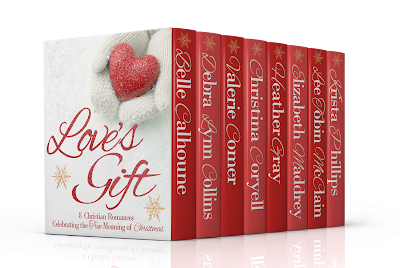
That said -- look for A (kinda) Country Christmas next week on Amazon, ebook or paperback! OR get it now in the Christmas collection, Love's Gift. (Had to add the plug!!)

*************************************************
Krista is a follower of Jesus, a wife, a mother, and author of Sandwich, With a Side of Romance, A Side of Faith and A Side of Hope. She blogs about finding JOY in the journey of LIFE at http://www.kristaphillips.com. She is represented by Sarah Freese of Wordserve Literary.

Thursday, October 1, 2015

A New Trend: INDIE BOX SETS

http://amzn.to/1RhQsd4
You all know me.

I'm Krista. Miss Trendy and hip, right?

(For those of you laughing hysterically -- I will get you back!)

I'm actually a little behind the times on this trend--like most other trends, but I digress.

In the Indie world, box sets of ebooks are a huge "thing" right now. Have you see them? They are these fun sets of oodles of books for one super low price of usually like 99 cents.

And my FIRST indie box set, a collection of NEW Christmas novellas titled Love's Gift, is available TODAY for preorder!! My book is the last one, A (kinda) Country Christmas!

I'd (sorta) LOVE for you to go check it out! It's only 99 cents and will also be available for FREE on Kindle Unlimited on its release date, October 19th, so if you're a subscriber of that, mark you calendar!

Since indie box sets are a newish thing, I thought I'd take a second to explain a little how it works.


TYPE OF SET

There are a ton of options when it comes to the set. You can do a LIMITED TIME set or a forever set. You can do a set with your own books, or one with fellow authors. You can box together new books or previously published books. You can do novels, novellas, or eshorts.

For the purpose of this post, we're talking about sets with fellow authors, because that's where the biggest benefit comes from (in my humble opinion.)

THE GOAL

The MAIN purpose of the box set is PROMOTION.

Yes, it'd be fabulous to make some money on the set. And many indie sets ARE making a decent chunk of change off them, even with splitting it many different ways. (In Love's Gift, there are 8 authors. For each 99 cent sale. The profit off that sale is about .35 cents. Split 8 ways.... that's a lot of books to sell!)

BUT!! We'll have EIGHT authors promoting with vengeance the same book. Eight authors with different platforms and reaches. That is 7 times the number of people, theoretically, that we could have reached on our own. (Obviously some have bigger platforms than other so that will vary.)

The exposure and platform building potential for this is quite big! A LOT of indie authors are reaping in the benefits of boxed sets, and many traditional authors are also joining the bandwagon as well!

THE MONEY STUFF

So how does it all work? Each set of authors will set it up a little differently. But basically, one author usually serves as the "publisher" of the book for the agreed upon timeframe. We use Amazon's KDP program to publish the book. I'm serving as the publisher for Love's Gift, so will be our accountant and will disburse funds as I receive them from Amazon. Expenses are split and/or paid out of profits. All authors are listed as authors in Amazon.

EDITING

Again, lots of leeway here. Our set decided to make each author in charge of having their own work edited, then before the set was finalized, each book was proofread by another member of the team to add another layer of quality assurance to our product!

We did the same with covers. Each author was responsible for their individual cover (because will also will be able to publish our works individually as well!) and then we worked on the overall cover design together! Many sets elect to hire an outside designer. Since there were quite a few cover-savvy people in our group, we did it ourselves to help keep costs down.

Want some other examples of some AMAZING indie author sets available?

Here are just a few!!!


*************************************************
Krista is a follower of Jesus, a wife, a mother, and author of  
A (kinda) Country Christmas -- Part of the Love's Gift Collection

She blogs about finding JOY in the journey of LIFE at http://www.kristaphillips.com. She is represented by Sarah Freese of Wordserve Literary.
 

Thursday, May 28, 2015

The VALUE in VARIETY

When I started writing "seriously" back in 2007, I had this tunnel vision of what I expected to write.

I wanted to write full-length contemporary romance for one of the top-ten Christian publishers.

Nothing less. Nothing more.

Not picky, right?

It's amazing at how much the publishing landscape has changed in the last 8 years since I took that original leap at following my dream of being a published author.

There are SO many more choices and options than there were then, and more and more authors are seeing value in embracing the changing landscape and being on the frontline vs dragging behind, resistant to change.

And I'm not talking just about indie-publishing, even though that is a definite change.

Authors TODAY are looking at a lot more than just writing what they've already written.

Publishers are encouraging novella prequels or sequels to help promote their books and build readership. Authors are seeing value in indie-publishing their backlist or publishing those books-in-the-closet that would never see the light of day otherwise as they aren't considered marketable by traditional publishers. Some authors are choosing to be hybrids (raising my hand!) and others are ditching traditional publishing and going indie with both feet and not looking back. (and quite a few of them are making bank off that decision!) From short-stories to non-fiction to children or YA fiction, there are SO many more options available today.

A few example:

Jody Hedlund's novella Out of the Storm was a prequel published before her newest Lighthouse series was released. It's currently FREE on Kindle and includes a preview to the first book in the series, Love Unexpected.

Katie Ganshert has dipped her toe into indie publishing with her first YA novel, The Gifting!

Susan May Warren recently published 3 of her previously published novellas from her early days in a novella collection called Somewhere, My Love.

And a new trend over the last year that is quickly picking up traction are group novella collections! A great example is a team of indie-authors who published Splash! a collection of contemporary Christian romance novellas by 9 different authors - releasing June 23rd and available for pre-order now! They usually sell the collections for a small price of 99 cents, but the volume of sales on top of the exposure for marketing make this an interesting new idea! I myself am going to be a part of a Christmas collection come this holiday season!

There are so many other examples, but this was just a small sampling.

The point is -- your publishing experience doesn't have to be limited to one thing anymore. In fact, it is looking more and more like it SHOULDN'T be anymore too.

What about you? Have you thought about outside-the-box publishing options? 


*************************************************
Krista is a follower of Jesus, a wife, a mother, and author of Sandwich, With a Side of Romance, A Side of Faith, and A Side of Hope. She blogs about finding JOY in the journey of LIFE at http://www.kristaphillips.com. She is represented by Sarah Freese of Wordserve Literary.

Thursday, August 7, 2014

Cool, Calm, and Covered

For the least few months, I've been stressing over what I personally feel is one of the MOST important parts of indie-publishing... or really ANY publishing for that matter.

THE COVER!

Well, apart from writing a great story, of course.

It's like when you are buying a house. CURB appeal is SO important. While it may not be the reason a buyer purchases the home, it's responsible for getting them in the door.

The same with a book.

When you're browsing, the first thing you'll notice is a cover.

Is it ugly as sin? Does it look like someone did it who took one class in graphic design 30 years ago?  Are there ten fonts, miss-matching colors, unpleasing graphics? Or is it just plain boring?

Most people's eyes will march on, although maybe get a second glance if it is THAT bad. Most of us don't want our cover to be noticed for its awfulness :-)

Is the cover appealing? Does it catch your eye and make you think, "Oh! I wonder what that's about!" Does it fit your favorite genre and just capture your fancy?

Then you might snag it up, turn it over, and scan the back cover. Maybe even read the first page or chapter, or look at reviews.

While any of those other things might cause you to put it back, getting that reader to pick up (or click on) your book in the first place is super important!

If you plan to Indie-publish... this is SUPER important for you to think about now, at least to gather thoughts on what kind of covers would appeal to your audience.

If you plan only to traditional publish, it still isn't a bad idea. Publishers do ask for input and thoughts (not always...) but to have a ready (and educated) answer will give you a chance to sound informed and a better shot at being a ready voice in the process.

Now, I don't claim to be an expert on how to make a great book cover.

But when I was going through the process with my newest novella I'm putting out myself, one of the things I did was browse covers to see what my personal likes and dislikes were. I then sent my cover designer a handful of covers I thought were GREAT, and a handful of "you-better-not-design-me-something-like-this" covers.

Since it'd be horribly mean to point out the latter (and we are all about encouragement here on the alley) I thought I'd share some of the covers I found that were GREAT... and why I thought they were great.

Keep in mind: I stayed within my genre. Comparing a sci-fi cover to a rom-com is just silly, because they are going to be so different in feel.

And these are only a few that I sent him, because... I found a lot!!!

Keep in mind also: The idea of researching covers isn't to copy someone else's idea. That'd would be super bad. Instead, it's to get an idea of concepts. Do you like covers with faces, or not-so-much? How did they use color to enhance? What kind of fonts appeal to your eye verses distract? That kind of stuff...

And without further adu... here are some of my favs!


Oh I LOVE all of Becky's covers! I love the smile and the "realness" of this, and it's just plain fun. 


I couldn't help it ... I was only going to do one per author, but the girl has PINK SHOES you guys!!!! I think I would have bought this book just for that reason only, but I already knew I was a Becky Wade fan by then....

I like this a.) because any cover with a wedding dress intrigues me and b.) she looks like she's running, and it makes me want to figure out why she's running and c.) the wedding ring hanging off the you was pretty cool!


I've noticed that having text over a picture like this, without a little box, is difficult to do (and still make it look good). Bot I LOVED that they were able to do that here, and I LOVE the feeling of fall... and the characters just make me want to find out their story! And I LOVE the colors of this!!!!


Um... yes, this was awesome. We've got a kiss, a fancy dress that I love, and some of my favorite flowers, AND it is pink. Even if I didn't know Janice was an amazing author, I'd pick this up just to see what it was about!

Now this one was a bit different, and that's why I picked it. It isn't girly, and Karen rights very much for women. But... I still like it. The bright lights.... it would make me want to read the back cover, even if I didn't know that Karen was a super star writer:-) I also liked how they made the font be bright like lights for the title... very cool!


And last but not least.... after perusing the cover choices that I liked, my cousin and I finished designing MY first indi-pubished novel, and this is what we came up with.


Given the covers I liked most, I knew I wanted to have PEOPLE on my cover, and preferably faces. I know not all authors/readers like it, but a lot do. My original idea was to show the "sides" of their faces as a nod toward the title.

I perused stock photo sites like mad. SHE was super easy to fine. Oh my goodness, is she not gorgeous?!? her pink lips and pink tank-top sealed the deal as to what color font I'd be using, and since I'm a fan of pink, it worked!

My hero? Eh, not so much. Cameron is a red-headed tall guy, a little on the lean side, who is very handsome. Can I tell you how HARD it is to find handsome redheaded stock male photos (that don't cost like $1,000....)? But when I ran across this brown-headed guy who had that amazing look in his eye as he checks her out... which is TOTALLY Cameron, I sent it to my cousin and he said he could make his hair red. I'll be honest, it's not exactly how I pictured him, but it's close.

I do like having my name in all-caps print... it was that way on my first novel and I wanted to continue with that look, with my name at the bottom. My cousin came up with the fun way to display the title of the name, and yeah, I'm pleased. I was a LITTLE nervous about the white background... but I'm a fan of simple covers and I thought a background would be distracting.

That might be more than you wanted to know about my crazy thought process....

But now it's YOUR turn!!

What covers in your genre have you seen lately that you love? What kind of covers appeal to you?

*************************************************
Krista is a follower of Jesus, a wife, a mother, and author of Sandwich, With a Side of Romance . She blogs about finding JOY in the journey of LIFE at http://www.kristaphillips.com. She is represented by Sarah Freese of Wordserve Literary.