Showing posts with label similes. Show all posts

Monday, April 21, 2014

Writing Imagery

Now-a-days, readers want excellent writing, but it needs to be straightforward. This makes it all the more important to place your metaphors and similes in appropriate places throughout your novel. If you have one metaphor after a simile after another metaphor...then you will slow down the reader and your story will sag with the weight of a word picture frenzy in the reader's overloaded mind.

Using well-placed metaphors and similes can 1) Anchor the reader to the setting and have them  connect to your character's situation, and 2) Emphasize high emotional intensity, as implied by James Scott Bell in his book, Revision & Self Editing.

Just as a poem begs to be memorized, a metaphor or simile create a memorable experience for the reader, and etches your story into their mind. I can think back on certain books and remember their well-placed metaphors and similes out of the entire 90,000 words. These tools grip a reader's thoughts and leave a “book”print in their mind long after the book is closed and put away.

Here are some examples from books that have printed on my mind:

Anchoring to the setting:


"If Broadway was Manhattan's artery, Five Points was its abscess: swollen with people, infected with pestilence, inflamed with vice and crime. Groggeries, brothels, and dance halls put private sin on public display. Although the neighborhood seemed fairly self-contained, more fortunate New Yorkers were terrified of Five Points erupting, spreading its contagion to the rest of them.” Wedded to War, Jocelyn Green.

Jocelyn uses the metaphor of the condition of the human body to not only emphasize the point of view of her heroine, an aspiring nurse, but she also gives such a vivid understanding of the setting that a reader could hardly dismiss this and move on without allowing the imagery to paint itself in their mind.


“Through the makeshift curtain that gave her some semblance of privacy, she could make out Captain Click's sturdy shadow like a locked gate barring harm's way.” Courting Morrow Little, Laura Frantz

This book is set in a time of unease and discord between the settlers and the Native Americans. This metaphor of Captain Click being a locked gate is appropriate to the point-of-view of the heroine who is a young woman traveling into hostile territory. This anchors the reader to the setting not only through the heroine's perspective, but gives the overall emotional climate of the setting—one of possible danger at every turn.

Emotional Intensity:

“The man who stared back was not a man he knew. The careful control bred into him since birth was gone. In its place he saw a fire-breathing dragon capable of murder.” The Duchess and The Dragon, Jamie Carie

The image of a fire-breathing dragon is placed at a time when the hero's emotions are high and his actions have culminated to a dreaded circumstance. Jamie Carie imbeds this metaphor in such a way that it maintains the momentum of the story but shows intensity of the hero's emotion.


“In the domestic cloud of dust and family, I too can forget the One who sees me, but in eucharisteo, I remember, I cup hands and all the world is water.
The well, it is still there.
There is always a well—All is well.
I choke out my son's name. His skin is transparent...glass. And he stares long, brims...quavers...falls. And I cradle him, the Boy-Man, flood over shoulders.” One Thousand Gifts, Ann Voskamp.

Ann's moment with her son is filled with word pictures that emphasize the build to an emotional outpour. This book takes the use of metaphor to such a deep level, my heart stirs at every turn of the page.


Metaphors and similes can also unveil a writer's voice. Ann Voskamp does this amazingly well, not only in the example above, but consistently throughout the book. Depending on a writer's voice, these descriptive tools can be well-placed mirrors to the under-lying tone of the story.


Do you have examples of well-placed metaphors and similes in some of your favorite books? How about in your own? Please share!


***************************************************************************
Angie Dicken first began writing fiction as a creative outlet during the monotonous days of diapers and temper tantrums. She is passionate to impress God's love on women regardless of their background or belief. This desire serves as a catalyst for Angie's fiction, which weaves salvation and grace themes across cultures. She is an ACFW member and is represented by Tamela Hancock Murray of the Steve Laube Agency.


Wednesday, August 22, 2012

Digging for Jewels: the power of original description


At the risk of sounding like a snob, I have a confession to make. I adore literary writing.

Literary books often get a bad rap, because let’s face it, they can be dense and slow-moving. But if you can get past that, you’ll find the writing often sings with fresh and unexpected imagery and beautiful turns of phrase.

Searching for the right adjective, the right word is like digging in the sand. Easy just to shovel up a spadeful and fling it in the bucket without thinking too hard about it. It takes an artist to dig for the treasure in every turn of phrase, every description, refusing to settle for the stale or mundane.


Nothing turns me off a book quicker than overused turns of phrase. To me it shows a lack of care for craftsmanship. And if you, the author, don’t care about the words you choose, why should I invest in those words as a reader?

Here are some ideas for keeping your descriptions fresh.

1. Eliminate clichés.
Clichés have become cliché for a reason. When first coined, these turns of phrase were considered so dazzlingly original, so apt, that they became wildly popular. Now they’re overused because successive generations of writers have been too lazy to reach for their own original and apt expressions.

Read through your manuscript. Have you used any clichés like these? Thin as a rail. Neat as a pin. Fresh as a daisy. Clear as crystal.

Or these? Her hands were cold as ice. His heart beat like a drum.

Yawn.

Get out your pruning shears. Lop those suckers out of your manuscript. Now it’s time to reinvigorate your descriptions.

2. Brainstorm alternatives.
Okay, so rails are thin. What else is thin? Don’t censor yourself. As fast as you can, write a list of a dozen alternative ideas.

Now have a look back over what you’ve written. Do any of these alternate descriptions have additional shades of meaning that may suggest something else about your character, other than mere physical thinness?

For example – Thin as a dandelion stem. A dandelion is a pretty weed. Could you imagine using this description for an emotionally fragile young girl who, although fresh and lovely, sees herself as worthless?

What about this? Thin as a kite string. A kite string snaps with brisk energy. This description would be fitting for a playful boy.

Or this. Thin as the leather-bound ledger she kept on her desk. I’m picturing a woman who is precise and particular, and somewhat lacking in humor.

See how this sort of imagery enriches your writing? Suddenly your description is doing double-duty. You’ve harnessed an obvious physical characteristic and used it to give subtle insights into character.

3. Make new connections.
When describing an object or setting, ask yourself what the image reminds you of. The obvious parallels are always the first to spring to mind. Shadows reached across the path like fingers. The wind moaned in the eaves. Now think again. What unexpected associations can you conjure?

Shadow and moon-fall braided themselves across the path.

A bossy wind scolded at his window, clucking and fussing amongst the leaves. Can you picture the wind as an outspoken housewife?

In Katy Popa’s beautiful book, The Feast of Saint Bertie, she describes the “marigold flames” consuming her protagonist’s house. Comparing something so ravaging to a flower is out-of-the-ordinary. But suddenly, through those words, we see the fire as a thing of unexpected beauty. Can’t you just picture the vivid orange-yellow of those flames?

One of my favorite examples is from The Book Thief by Markus Zusak. He describes a person sitting on the step in a pair of  “decomposing shoes.”

He could have described the shoes as worn-out, moldering, wet, smelly, or falling-apart. Instead he selected one unusual word that sums up all of these things in a powerful word-picture. What’s more, this one detail gives us instant insight into the character, revealing more about them than could have been achieved in a page of more mundane description.


4. Read poetry.
In a poem, every word counts. Therefore, the poet chooses each word with care, often creating word pictures of startling originality and simplicity as a result.

How about these beautiful lines by poet Brook Emery, taken from her poem “Night”?

Expectation stitches me to the dark, makes silence that can be touched.

During the day rain falls as light, at night it falls as sound

Like a fish twisting against the line
I’m drawn into the sharp transactions of the light.

As you read poetry, you’ll train yourself to see the world in new ways, forming new associations that may not previously have occurred to you.

5. Grow your vocabulary.
Be intentional about it. The best way to do this is by reading widely and recording new words in a notebook. If you come across a word you don’t know, look it up. Write it down. The more words you know, the more you shades of nuance you’ll have access to in your writing.

But do all of this with one important caveat. Namely:

6. Don’t fall prey to purple prose.
The true power of literary description lies in its simplicity and restraint. One truly apt word, one lean and carefully crafted sentence is more powerful than a dozen overused phrases.

Aussie writer Tim Winton is a master at this. Here are some of his lines from “Dirt Music” and “The Turning”:

The girl’s “lank blond hair fretted in the wind.”

The man’s “crow’s feet like knife cuts.”

The fire “sucked the air from the room and danced before him like a thought just out of reach.”

The blood “runs thin as copper wire in his veins.”

His breath “aglow like a coal in his chest.”

The night is “hot and salted with stars.”


Your turn. What beautiful turns of phrase have you uncovered recently?


Image courtesy of freedigitalphotos.net


Karen Schravemade lives in Australia. When she's not chasing after two small boys or gazing at her brand-new baby girl, she spends her spare minutes daydreaming about the intricate lives of characters who don't actually exist. Find her on her website, on Twitter or getting creative over at her mummy blog.

Monday, April 30, 2012

How Setting Can Unlock Deep POV

One of my favorite things about writing is creating word pictures. Actually, the only way I can really delve into a new story, is finding physical objects or environmental anchors to assist in developing my characters on the page. Sometimes it's easy to load too much fluff in description, and now-a-days, the fluff is less and less accepted.
HOWEVER, if you write with a purpose, then description can be key in not only anchoring your character to the setting, but also unlocking deep pov, or the character's internal struggles and thought.

Example from my wip. The setting of this novel is a coal town:
Leanna stared hard at the black dust caked in Jack's nails and shadowed upon his lips while he mumbled a prayer of gibberish. 
Tongue of a fool. Surely God can't hear his tongue.
She sighed and considered a prayer of forgiveness. Whatever effort she had promised herself to muster up and ignore the bitterness only failed by nightfall. 
How appropriate, blackness of night pried open her well of hate, springing forth its miserable leak. Blackness revealed the honest truth. The blackness of the dust in this God-forsaken place; darkness of the shadow that hid whatever love Leanna first felt for the man who hovered over his meager meal, ready to devour the work of her hands after a long day in the blackness of the earth.

When I began this story, the coal town setting brought to mind the black dust. After developing my character's arc, I knew what the setting meant to the heroine. She hated it, it's a place she did not want to be. So blackness in this instance, symbolized void, hate, discontent, suppressed love. The blackness of the dust, the blackness of the night, the blackness of the earth, darkness of the shadow, all these things pull out Leanna's pov for the reader.
Now, blackness could very well mean richness of the earth, wealth of the mining company. If I chose to use the blackness to just explain the setting, the infrastructure of the coal town, then it would not be as strong of a word picture...because it only indirectly anchors the character to setting, and it doesn't have the deeper intention to pull out her inner thoughts.

Have you taken a journey through your setting, grabbing items or characteristics along the way?

Mold them, weave them, discover their unique ability to bear your character's soul to your reader.
****************************************************************************

Angie Dicken first began writing fiction as a creative outlet during the monotonous days of diapers and temper tantrums. She is passionate to impress God's love on women regardless of their background or belief. This desire serves as a catalyst for Angie's fiction, which weaves salvation and grace themes across cultures. She is an ACFW member and CEO of a family of six.

Wednesday, February 1, 2012

Amazing Descriptors

When you think about it, a book is a descriptor. It describes a situation packed with joys and sorrows, friends and enemies, crises and triumphs. That situation has chapters which serve as sub descriptors leading the reader through the the book.

Each page paints even greater detail.

But the greatest, power packed descriptors are the individual phrases and words.

Finding unique ways to explain an image to readers is difficult. We find our words falling into inescapable ruts. The same phrases sound worse than a broken record: he smiled, she laughed. BORING.

Sometimes we use a metaphor or simile to rescue the scene. But after time, the page has a Valley Girl sound (like, like, like).

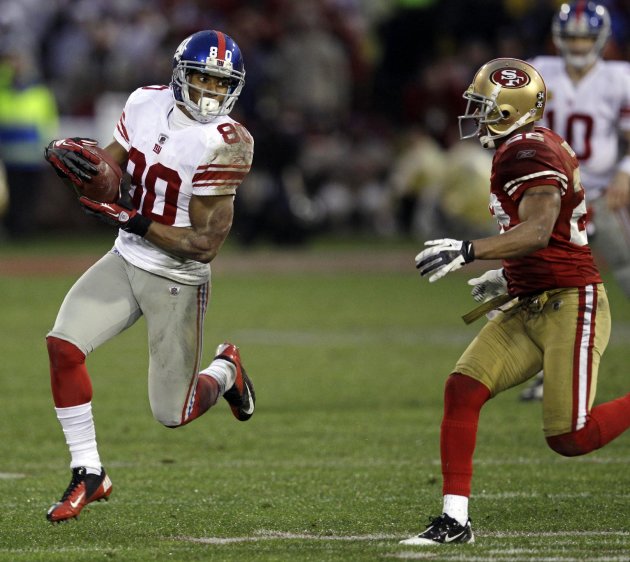
Recently, I stumble on a new vat of unique descriptors. With the help of two fanatic football co-workers, (Ben and Marc) I was able to research devotee football commentators whose descriptors paint unique, specific, sharp pictures of "up to the moment play action":


Sunday's Superbowl
Giants vs Patriots


I started watching football as a child with my dad. Not until recently did I notice the rich descriptors given during the game. Whether you're a viewer or a listener, you'll have instant video images in your head thanks to the announcers/commentators.


This Sunday, a wealth of vivid descriptions will nuke the sauerkraut taste of football away for non football folk.


Here are some amazing descriptors gleamed from recent games: (I turned down the crowd noises to help you hear the announcers/commentators)


He's about a third grader shy of what he should weigh
...But not losing his feet (player ran close to the sideline)
He pinballed him backwards
He sledgehammered that play
They need to stop this Juggernaut of an offense. (I had to look that up!)

Look at the real estate! (referring to the open space the quarterback had to throw the ball)
Pin point accuracy
He's got a convoy with him (a pack of opposing players trailing)
He just took him and fork lifted him.
With a buck fifty three left on the clock

Smith, their burner (fastest runner)
The safety came down like a robber
It's like Ali punching Frazier
The high fives are so firm no one better miss or they'll take it in the face.
Williams blasted into him.

The Ravens are knocking on the door
An electric stadium
He's not taking his foot off the gas
There's a nice gaping hole there
This defense is playing lights out (sleeping on the job)
That's a first down in traffic
He got waffled


What a great way to amplify and clarify words like: tackle, pass, running, fumble, audience excitement, and etc.


Grab your tacos, Cheetos, Doritos, Fritos, Tostitos, or burritos and laptop. Sit with the football fans in your life and gleam a storehouse full of vibrant descriptors not only from the announcers but also from the body language of those in your living room.


Warning: Do not watch a football game alone. Excitement unshared may not be good for your health. 4 out of 5 doctors recommend joining a spouse, brother, social group, father, sister, husband, neighbor, or someone else special in your life while viewing football.


How about you--what creative situation have you found amazing descriptors lurking?


**********************************
This blog post is by Mary Vee- a foot ball fan.

Mary lives in Montana with her husband and loves to hear from her three college kids. She writes Christian young adult fiction (pirate tales, missionary and Bible adventure stories).
She thinks of writing as: Stepping into Someone Else's World.
To learn more about Mary, visit her blog http://www.mimaryvee.blogspot.com