
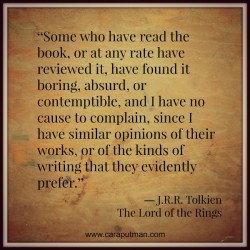
 Periodically, I'll get to spend time with readers or developing writers. I absolutely love it. There's something so fun about rediscovering books through the eyes of a book club. Or to talk about why they want to write with new writers. Often it will come up that they'd like to help and encourage their favorite authors, but they don't always know how.
One super easy way is to write a review. It can be as easy as leaving a 5 star mark on Amazon or as detailed as telling people why you liked a book.
Writing a review can be intimidating but it doesn't need to be. I’m always glad to help people feel more comfortable spreading the word about books they love. I love to tell everyone about books that I love…and now that I’m an author, I know just how much a well written review — even if it’s a few sentences (or stars) can help authors.
Many readers use the number of reviews as one way to decide whether or not to try a book or a new to them author. It’s really easy to write reviews! Really.
I’ve never taken a course on book reviews, and actually fell into writing them almost by accident.
So after I started a blog more years ago than I want to think about, it made sense to have books be a large part of that blog.
About the same time I joined ACFW. Through it’s e-loop, I got to know many authors. Often they ask for influencers — people who will read a book and if they like it tell people about it. I love to connect people. If you’ve read The Tipping Point, I fall clearly into that category. I am enthusiastic about anything I can do to connect people with a person or product I love.
That’s how I started, and now I can’t imagine not doing it. So, here’s a review I wrote recently and I’m going to insert explanation throughout to explain why I wrote what I did….
 1) First Paragraph: A quick summary: Happy, happy sigh. This reader was swept away by Courtney Walsh‘s delightful Paper Hearts. It is one of those sweet romances that just has it all! (This is a way to quickly introduce the book and tell a bit about the book in general. Now on to the meat.)
2) Second Paragraph: set the stage. Abigail Pressman has a dream to expand her bookstore set in a tourist town in the Colorado mountains. All she needs to do is scrape together the funds to buy the building. Before she can do that a new doctor swings into town with the cash to buy her building. Before she really meets him, she knows he could threaten her future plans and happiness…not to mention her livelihood. Jacob didn’t intend to destroy her life, he just wanted to create a new one for himself and his daughter. Think You’ve Got Mail. But then the Valentine Volunteers get involved — think a Greek Chorus ala Letters to Juliet, and all kinds of shenanigans happen. (Now I’m telling a little about the characters and the plot. What resonated with me? Why might someone else like these elements? My goal is to give enough to intrigue and give a sense of the story…but never, ever, ever giveaway plot points! Those are sacred for the reader to discover on their own.)
3) Third Paragraph: Dive deeper into themes. This book is rich with secondary characters who beg to have books of their own, yet keep from stealing the show. Abigail is the kind of heroine I would love to sit down with and share cups of her special Love Peak brew. And the paper hearts are an excellent reminder to keep an eye on my personal romance and ways to keep it alive through good and bad times. (Sometimes if there’s a strong spiritual thread that resonated with me, I will include that here. This book has great themes, but the charm of it for me is the characters and the paper hearts. So that’s where I focused. But I always try to dig deeper than a plot summary. You can get that from the about the book section of most online retailers. What’s key here is to give the readers peeks into what makes this book special, memorable, perfect for them.)
4) Fourth Paragraph: the perfect summary and reader. This is a romance perfect for those who love a contemporary story filled with heart, characters you’ll adore, and a romance laced with enough angst and ahhhs to keep you reading. (I always try to summarize really quickly who the book is perfect for. I read very broadly, so all books I like aren’t for all readers. So I describe the reader who will like this type of book. )
Now here’s an older review:
ADAM by Ted Dekker
 1) Setting the stage: I signed up – reluctantly – to read Ted Dekker. You see, I enjoyed some of his earlier books, then hit a point where they just weren’t my thing. Plenty of other people love them, but I had more than enough other books to invest my time in. (This beginning was important to me — I wanted to let readers understand that I used to like Dekker and then stopped. His plots became the same in a way that was important to me. I think knowing my frame of mind when I started reading the book lends credibility to what I will say about it next) Then ADAM arrived in yesterday’s mail. 8 hours later, I had consumed the book after some careful ribbing from my husband. That’s okay, he’ll consume it just as quickly on his next flight. (How much does a book grip me? Is it easy to put down? Do I read it almost obsessively? There are many books I enjoy, but can read over a week or more. Then there are others that I HAVE to read. If you read enough of my reviews, you quickly get a sense which category a book falls into)
2) Setting the Stage: Daniel Clark is a FBI behavioral scientist who is famous for his well-reasoned arguments that religion is one of society’s greatest antagonists. He’s killed by a serial killer but resuscitated. He and a fellow FBI agent go to extremes to try to recapture his memories of the moments prior to death. (These two short paragraphs give a sneak look at the plot. Especially with suspense, I am EXTREMELY careful not to give away key plots. I try to use the synopsis as a teaser…here’s a bit about the main character and the plot…do you want to know more?)
3) What I like about the book: The book has marvelous pacing – I literally couldn’t put it down. The only good news was I didn’t have anything else I had to get done last night! And the characters have great conflict. The plot is filled with twists that I didn’t anticipate, yet fit the classic Dekker book mold.(This sentence lets current Dekker readers know he hasn’t changed his stripes, ala John Grisham. But it also lets you know that it kept me, a suspense writer, guessing.)
Dekker uses magazine articles interspersed between chapters to fill in the gaps and make the serial killer more than a shadow. From page one you are learning the tragedy of his early years. It reminded me of the technique Brandilyn Collins used extremely well in her Kanner Lake series. (This is a unique plot device that is showing up more often in books. Some use it very well. Others not so much. This let’s readers know that it’s there — so if it really bugs you, this book may not be for you. But it also compares it to another author who uses this technique very effectively.)
The book also deals with the reality of the supernatural realm and the American viewpoint that it doesn’t really exist. The Catholic church is the main religion highlighted, and it is handled in a positive light. (Because it branches into some controversial religious topics I highlight them quickly without giving away the take and twists. I usually highlight the spiritual or some other aspect of growth in the characters.)
4) Perfect Audience: While I wouldn’t recommend this book for young teens, due to content, if you like a thriller with plenty of supernatural twists thrown in, then you will enjoy this book. (I included this because I think it is my duty to let others know if there is a reason I wouldn’t want someone to unknowingly hand it to a young person. I very rarely put caveats like this on a book, but I want people to trust my reviews. For example, right now I don’t think I would let A read this when she’s 14. She’s 7 now. But that may change. Other young teens may be able to handle the material, but parents need to know it could be an issue.)
So that’s how I write book reviews. What do you like to see in reviews? What makes them helpful for you?


An award-winning author of twenty books, Cara is a lecturer on business and employment law to graduate students at Purdue University’s Krannert School of Management. Putman also practices law and is a second-generation homeschooling mom. She lives with her husband and four children in Indiana.


