Showing posts with label Writing masters. Show all posts

Wednesday, July 20, 2011

On Being Mentored-Point of View

The point of view (POV) we chose for our WIP/manuscript can make or break our story's success.

Master writers select a character to tell a compelling story. The chosen one has the most obstacles, the most to lose, the greatest need, and the reason to move forward.

Consider The Three Little Pigs. This short story, told from the pigs' POV, compels readers to side with the pigs and disapprove/fear the wolf. Many children and adults have enjoyed re-readings of this story.

But on March 1, 1996, Lane Smith authored The True Story of the Three Little Pigs from the Wolf's point of view.  This book has earned high reviews and possibly is as well known to children today as The Three Little Pigs. I must admit--I liked this book more.

As I sat down to write this post, I realized The True Story of the Three Little Pigs would not have grabbed my vote had The Three Little Pigs not been written first. So I asked myself, would I have enjoyed the Wolf's POV had I not known the Little Pig's POV?  Probably not.

Let's look at a few works by master writers to examine why he/she chose their character's POV:

Gone With the Wind by Margaret Mitchell - POV chosen:  Scarlett O'Hara - Civil War romance novel


Does Scarlet really prove to be the best choice for POV? 
Here is the test, (feel free to add your comments at the end of the post)


Reason to Move Forward: Survive affects of the war, find true love
Needs: Romance, wealth, attention, status, security
Losses: home, husbands, child, stability, wealth, 
Obstacles:  ego, Ashley married Melanie, Brett's true love, Civil War


Contenders for POV:
1. Ashley:  NO! His story would be boring, whimpy, whiney
2. Rhett:     No. Life came to easy for him. He had everything he wanted and few if any obstacles
3. Melanie: NO! Melanie's story would be too sweet, gushy, positive
4. Mammy: Perhaps, but her POV would write a different story. I think I'd like to read it.
5. Scarlett: Yes. Only Scarlett could tell this story.


The Husband Tree by Mary Connealy - POV: Belle Tanner
Western historical romance


Here is Belle's test:
Reason to move forward: Move surplus cattle to auction before winter, protect ranch, no more lazy-money grabbing husbands
Needs: true companion, honesty, trust, ranch hand
Losses: ranch, cattle, home, access to way home, daughter, ranch help
Obstacles: handsome lazy-money grabbing men, winter, too many cattle, needed major repairs for home


Contenders for POV:
1. Lindsey (Belle's daughter): No. She did not return home which would have changed the ending. While she had some of the needs, losses, reasons to move forward, she did not have the greatest.
2. Silas: Possible. Most humor material would be lost, his character would tell a gruffer story, may not lasso readers into the story.
3. Belle: Yes. Humor, rugged spirit, gooey heart, independent, in need of help more than she realized.

Redeeming Love by Francine Rivers - POV:  Angel (aka Sarah) A retelling of the Bible book, Hosea


Here is Angel's test:
Reason to Move forward: survival 
Needs:  escape from evil, a reason for hope, commitment, saving, home, security, true love, dependability
Losses: home, parents, respect, freedom, love, choice
Obstacles: money, captors, imprisonment, lack of life skills, anger


Contenders for POV:
1. Duke or Duchess: NO. Both caused serious problems and neither wanted to move away from their negative setting.
2. Michael: possible, but essential beginning story line would be lost, did not have greatest needs/obstacles, would be told from hero's POV
3. Angel: YES. Her story yanks every emotion into play.

Let's also consider a true reporting of this event: 
Consider your answers for David, or for your own POV


David and Goliath by God - POV: David
Historical battle

Here is David's test
Reason to move forward:
Needs:
Losses:
Obstacles:.


Contenders for POV:


What if you chose a different character for your WIP? 
Could this change bring spice, sassy, salt, suspense, page turning interest?

Wednesday, July 6, 2011

On Being Mentored-First Sentences

Today we'll focus on first sentence components/learning from master writers.

Sometimes I get trapped in the I don't know what I don't know syndrome.

I've attended editing classes, read books on editing, and even had critique groups tell me what's wrong with my work. 

I've opened my WIP document, stared at the computer screen/paper and thought...what's wrong?  I couldn't see.

And then I realized my problem wasn't determining what was wrong with my work; rather, I needed to know what was right with master author/writer's works. What makes their product good?

I decided to look at many components of their writing in future posts. Today I will address: First Sentences.


Let's take a look at a few first sentences from well-know works:

1. "It is a truth universally acknowledged, that a single man in possession of a good fortune must be in want of a good wife."  Pride and Prejudice by Jane Austen

You may look at this sentence in a different light depending on whether you've read Pride and Prejudice or not. Either way, please dialogue with me through the comment section. I'm learning with you.


A good first sentence should lead you to ask questions. What question does this first sentence lead you to ask? 


Here are some ideas: What does the wealthy man look like?  Who are the candidates for his wife?  Why did the author use the word "want" instead of "need"?  What other questions could you ask or hope to answer while reading the book based on this first sentence?


A good first sentences introduces the main character:
Quite clearly, the main character is not the single man in possession of a great fortune, because a main character would never say such a sentence. Rather the main character must be the one who hopefully ends up as his wife.


A good first sentence provides a tantalizing taste of the story.
What can you surmise about the book?  Duh, it must be a romance novel. The single, rich guy realizes he needs to lavish his great wealth on the woman who will be his wife. Secondly, the story must be from the point of view of the perfect woman who supposedly will fill the great need of this single, rich guy.  The initial conclusions can be wrong, but that's OK. A story is more exciting when we have to switch gears.


A good first sentence provides hints to setting.
Without a specific word about the setting spoken, I surmise the story is historical.  People simply don't talk that way today.  I'd guess Victorian period simply by the word choice and importance placed on the mentioned cultural expectations.


A good first sentence entices.
I can't set this book down after reading this first sentence.  Does he find a wife? Is she a Cinderella in need of his wealth? How do they meet?  (I did end up reading this book:) )


Let's try another....

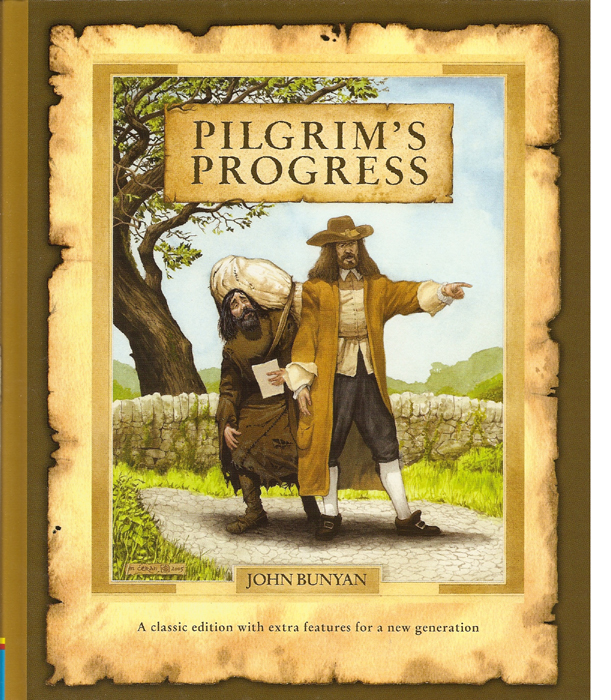
2.  "As I walk'd through the wilderness of this world, I lighted on a certain place, where was a Den; and I laid me down in that place to sleep: and as I slept I dreamed a dream." Pilgrim's Progress by John Bunyan


A good first sentence should lead you to ask questions.
Why did a den catch the narrator's attention? Most dens would produce anxiety. Is there a wild bear, a ferocious raccoon, a stinky skunk hidden in the den? Why did the narrator feel comfortable enough to sleep near the den? What did the narrator dream about? 

A good first sentences introduces the main character:
The main character narrates this story. I don't know at this point if he/she is male or female but I do know they like to walk in nature and feel comfortable sleeping in natural settings.

A good first sentence provides a tantalizing taste of the story.
The story probably centers around the narrator's dream, this should include unusual characters and unusual settings. 

A good first sentence provides hints to setting.
The wording leads me to think the setting originates in the period of Enlightenment (hence the dream). Probably will be philosophical in nature, yet inviting due to the dream setting.


A good first sentence entices.
I'd like to know why the narrator could sleep by a den. Was the narrator tired, burdened, overworked, sad? Why was the narrator sleepy? What did the narrator dream? Did he dream give an answer, direction, hope?  I must read this book.  (Actually, I have, several times!)


Here is the last sentence we'll look at:


3.  "Once there was a boy named Eustace Clarence Scrubb, and he almost deserved it." The Voyage of the Dawn Treader by C.S. Lewis


A good first sentence should lead you to ask questions.
What did Eustace do to almost deserve his name? What trouble did he do after the first page? Did he stay a trouble maker? What effect will his trouble making have on the story? Is this an adventure story?


A good first sentences introduces the main character:
Eustace is a boy. He causes mischief. Others don't like him. He might be an only child.


A good first sentence provides a tantalizing taste of the story.
I'd really like to know what Eustace did and what he will do next. I think h'ill make me laugh and yet cause me to feel sorry for him... at points. There'll probably be great adventures.


A good first sentence provides hints to setting
The character's name leads me to think this is an English story. It takes place somewhere where children live. Perhaps he is from a large family, or in a place where other children are somehow involved and who think he's deserving of such a name.


A good first sentence entices.
I'd like to know what Eustace did. What will come of the antics he creates? This sounds like a fun, adventuresome story. I'd like to read this book to find out, (and I did!)


Here is one for you to try.  This is from a well known nonfiction book:


4.  "In the beginning, God created the Heavens and the Earth."  Genesis 1:1 by God


A good first sentence should lead you to ask questions.
A good first sentences introduces the main character (person):
A good first sentence provides a tantalizing taste of the story.
A good first sentence provides hints to setting
A good first sentence entices.


Answer as many as you can, or answer the same questions about the first sentence of your WIP.


Let's dialogue...